
One major issue is likely holding up the Packers and Tucker Kraft, and it’s not an easy problem to solve
The rising tight end is entering the final year of his rookie deal, and both sides want a new contract in place before the season.


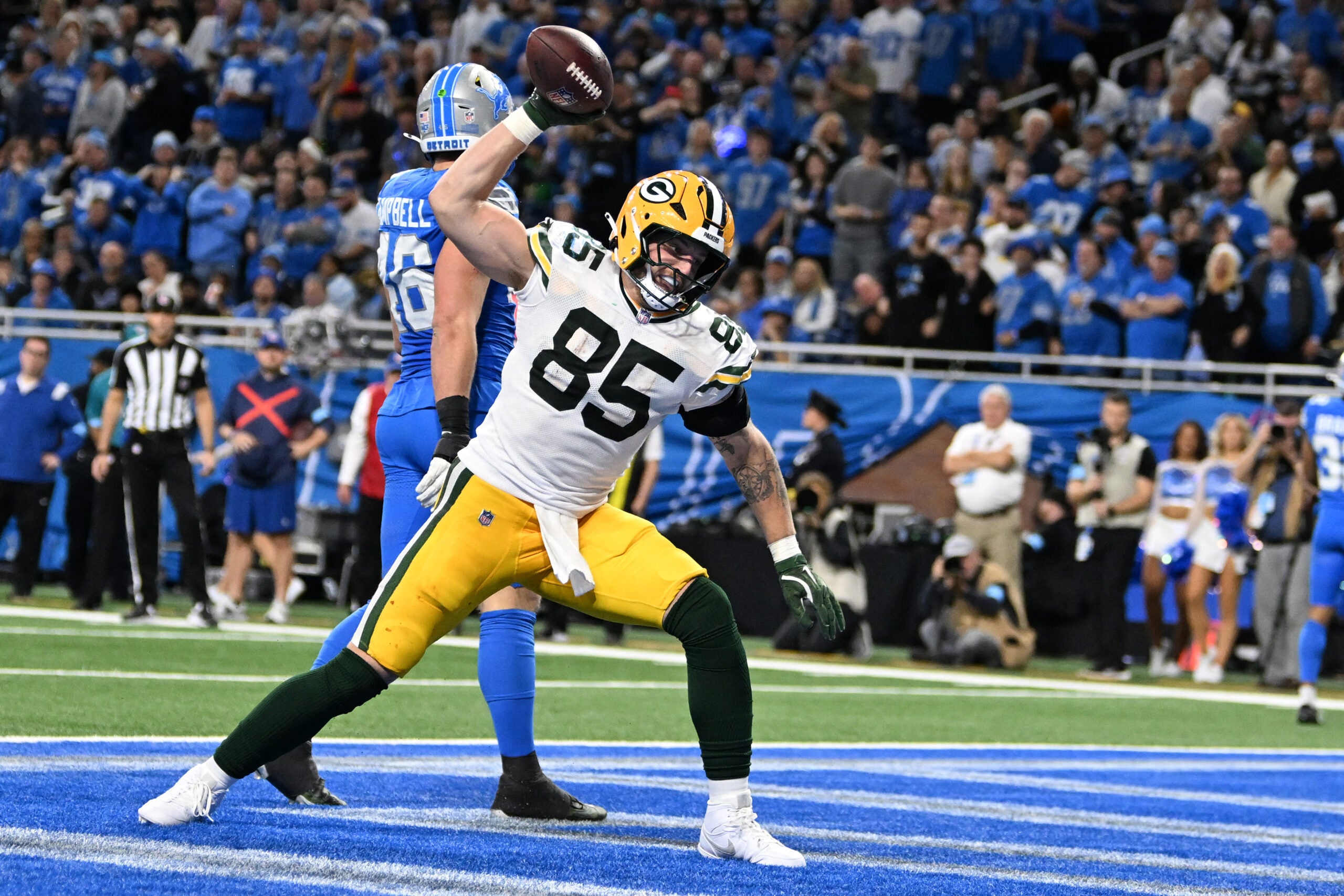
The Green Bay Packers and tight end Tucker Kraft both want a new deal done. Ideally, an extension would land before the season opener against the Minnesota Vikings on Sunday. But as the Week 1 timeline tightens, the two sides remain at a standoff according to ESPN insider Jeremy Fowler, and the holdup probably has less to do with the yearly average salary than most people would think. Guarantees and contract structure are likely the sticking point.
The conversation around Kraft’s extension naturally gravitates toward whether he will become the highest-paid tight end in football, potentially reaching $20 million per year. That number, though, is likely the simplest piece of the puzzle for both sides to solve. The harder negotiation involves precedent for the Packers and long-term financial security for Kraft.
Green Bay’s front office has operated with a specific contract philosophy for decades. The Packers structure their guarantees exclusively through the signing bonus for most players. If the team wants to move on from a player after two or three years, it can do so. There will be dead money, but no remaining guarantees beyond that initial signing bonus. That approach is the organization’s modus operandi. General manager Brian Gutekunst and executive vice president/director of football operations Russ Ball have shown little appetite to deviate from it.
The exceptions won’t change the Packers’ mind
Only two categories of players have received guarantees beyond Year 1 in Green Bay’s recent history: quarterbacks and Micah Parsons. Quarterbacks represent a unique market where the total value is substantially higher and the position commands different financial treatment across the league, so it has been different for Brett Favre, Aaron Rodgers, and Jordan Love. Parsons, meanwhile, was acquired via trade from the Dallas Cowboys and carried significant leverage in that situation because his deal was not an internal extension.
For every other player, the signing bonus has been the guarantee. That structure is also the primary reason the Packers struggle to attract top external free agents. They compete against organizations willing to guarantee money into Years 2 and 3, and Green Bay simply does not do that, for better or worse.
In extension negotiations, the team holds more leverage than in free agency because the player cannot negotiate with other franchises simultaneously. Players in that position tend to accept a higher average per year and a larger signing bonus in exchange for the lack of rolling guarantees.
Kraft, however, has reasonable arguments on his side. He is still a young player and is also coming off a major knee injury, which makes financial security beyond Year 1 particularly important for him. The tight end could point directly to the Parsons contract as evidence that the Packers already broke their own precedent for non-quarterbacks.
The Packers could counter that Parsons’ deal was not an internal extension, making it fundamentally different. Maintaining the existing structure matters for the front office because it sets the framework for every future negotiation with homegrown talent. To preserve that precedent, Green Bay might need to offer a bigger signing bonus or a higher total contract value than the market would otherwise dictate.
The franchise tag factor
Even though Kraft is entering a contract year, which would typically give the player more leverage, the Packers have the franchise tag in their back pocket. Green Bay does not necessarily plan to use it, but it serves as a negotiating tool. The team will not allow him to reach free agency regardless, so the leverage gap is not as wide as it might appear. Finding a reasonable middle ground while protecting the organizational precedent remains the priority.
As Gutekunst has said, these negotiations take time. There is no certainty that an extension gets done before Sunday’s opener or even during the 2026 season. But it is difficult to envision a scenario where the Packers and Kraft go their separate ways any time soon. The question is which side bends first on the guarantee structure that has defined how Green Bay does business.
