
New York Jets finally land their franchise QB, his new best friend, and remake the defense in 7-round 2027 NFL mock draft
The latest 2027 NFL mock draft gifts the New York Jets an insane haul of talent. That includes a brand new franchise quarterback.

The New York Jets have a chance to completely reshape their roster in the 2027 NFL Draft, and this seven-round simulation gives them a little bit of everything. New York addresses quarterback with its first selection, adds a potential difference-maker at wide receiver, and comes away with three defensive players in the first four rounds.
The mock was completed using the A to Z Sports Mock Draft Simulator, with the draft order determined by current Super Bowl odds rather than the NFL standings. With the college football season still underway, both the draft order and the outlook for individual prospects will continue to change.
The Jets received a B overall grade from the simulator (I disagree!), but there are a few selections here that could make this an especially interesting class for New York.
New York Jets 2027 NFL mock draft picks
| Round | Pick | Player | Position | School |
| 1 | No. 4 | Drew Mestemaker | QB | Oklahoma State |
| 1 | No. 11 | Charlie Becker | WR | Indiana |
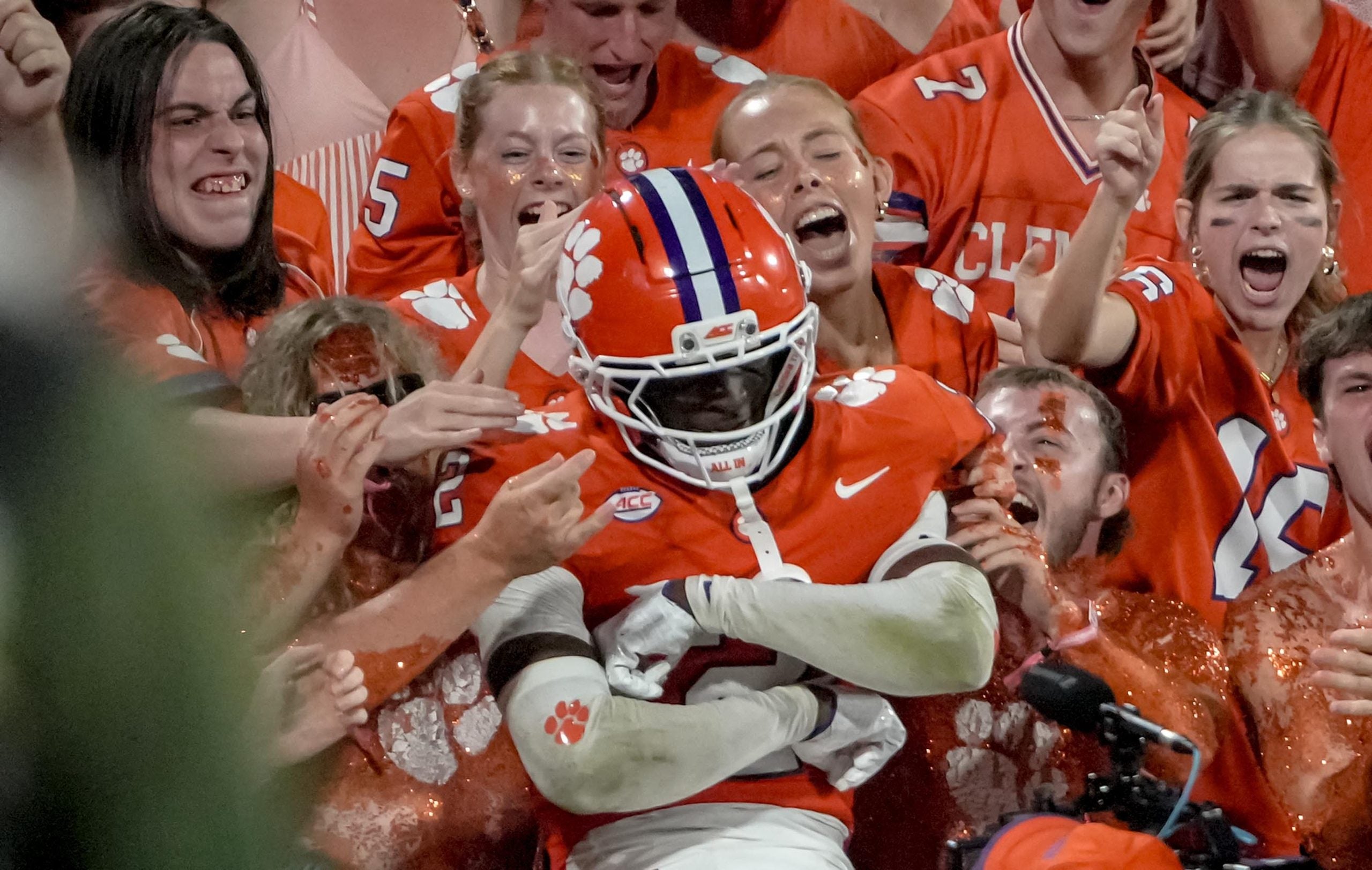
| 1 | No. 16 | Ashton Hampton | CB | Clemson |
| 2 | No. 36 | Kyngstonn Viliamu-Asa | LB | Notre Dame |
| 3 | No. 68 | Tavion Gadson | DT | Kentucky |
| 4 | No. 105 | Cael Winter | IOL | Iowa |
| 5 | No. 142 | Justice Haynes | RB | Georgia Tech |
| 6 | No. 195 | Jontez Williams | CB | USC |
| 6 | No. 207 | Isaiah Jones | LB | Indiana |
New York’s three first-round picks give it a chance to make a major impact early. The most important decision, naturally, is whether to use one of those premium selections on a potential franchise quarterback.
Round 1, Pick No. 4: Drew Mestemaker, QB, Oklahoma State
The Jets don’t have the luxury of ignoring the quarterback position if they want to build a legitimate contender, and Drew Mestemaker gives them a potential long-term answer under center.
Mestemaker has become one of the biggest stories in the 2027 NFL Draft class. After emerging at North Texas, he followed his coaching staff to Oklahoma State and continued to build his draft stock. His arm talent, ability to move around the pocket, and willingness to make plays outside the structure have helped push him into the first-round conversation.
There are still things to clean up, particularly his decision-making and turnover numbers, but the upside is obvious. Through the statistics tracked in the latest draft rankings, Mestemaker had thrown for 2,326 yards, 20 touchdowns, and six interceptions.
Taking a quarterback this early always comes with risk. However, the Jets need to find a player they can build around for the next decade. If they believe Mestemaker is capable of becoming that guy, No. 4 is the time to make the move.
Round 1, Pick No. 11: Charlie Becker, WR, Indiana
The Jets follow their quarterback selection by giving the offense another potential weapon in Charlie Becker. The Indiana wide receiver has the size, catch radius, and downfield ability to develop into a legitimate NFL target.
Becker’s production has backed up the excitement. He entered the latest draft rankings with 42 receptions for 726 yards and eight touchdowns, averaging 17.3 yards per catch. Those are impressive numbers for a receiver who can threaten defenses vertically while also winning contested catches.
For New York, this is about giving its potential franchise quarterback more help. A young quarterback needs receivers who can make difficult catches, create separation, and turn routine throws into explosive plays. Becker has shown the ability to make an impact in all three areas.
The Jets would be investing heavily in their offense with these first two selections, but it would be a worthwhile approach if they come away with both a quarterback and a potential top target.
Round 1, Pick No. 16: Ashton Hampton, CB, Clemson
New York turns its attention to the secondary with its third first-round selection, bringing in Clemson cornerback Ashton Hampton.
Hampton has the physical profile teams look for at the position, standing around 6-foot-3 and 200 pounds. He has also been productive in coverage, recording 19 tackles, nine passes defended, and an interception in the statistics listed by the latest draft board.
The nine pass breakups stand out. They suggest a defender who has been involved in plenty of contested passing situations and has made his presence felt on the ball.
The Jets can use another young corner capable of handling outside assignments and competing against bigger receivers. Hampton would give the coaching staff another option to develop alongside the team’s existing defensive backs.
Getting a quarterback, a wide receiver, and a cornerback with three first-round picks would be a strong start to the weekend.
Round 2, Pick No. 36: Kyngstonn Viliamu-Asa, LB, Notre Dame
This is my favorite selection of the Jets’ entire draft class.
Kyngstonn Viliamu-Asa is a physical linebacker from Notre Dame who would give New York another young piece to build around defensively. He has the potential to contribute against the run while developing into a more complete three-down linebacker.
Viliamu-Asa has been on the NFL Draft radar because of his combination of size, athleticism, and experience in Notre Dame’s defensive system. He is also a familiar name for anyone following the Fighting Irish, where he has been part of a defense known for producing NFL-caliber talent.
At No. 36, the Jets would be getting a player who could eventually become an important part of their defensive identity. The second round is a reasonable spot to invest in a linebacker with that kind of potential, particularly if the first three picks have already addressed the biggest offensive needs.
This is the type of selection that could look even better a few years down the road if Viliamu-Asa develops into a dependable starter.
Round 3, Pick No. 68: Tavion Gadson, DT, Kentucky
The Jets stay on defense with Kentucky defensive tackle Tavion Gadson, adding another body to the interior defensive line.
Gadson is an intriguing option because teams can never have enough depth up front. Interior defenders are asked to handle double-teams, disrupt the running game and collapse the pocket, and finding players who can contribute in those areas is essential to building a reliable defense.
Gadson has also appeared on the radar of draft evaluators, making him a prospect worth monitoring as the 2027 NFL Draft approaches.
The third round is a good time for New York to address the defensive front. Even if Gadson doesn’t immediately become a starter, he could compete for rotational snaps and give the Jets another option when they need fresh bodies along the line.
Round 4, Pick No. 105: Cael Winter, IOL, Iowa
After spending its first five picks on quarterback, wide receiver, and defense, New York finally addresses the offensive line with Iowa interior offensive lineman Cael Winter.
This is an important addition to a draft class built around the development of a young quarterback. Finding a quarterback is only part of the equation. The Jets also need to make sure he has enough time to work through his progressions and deliver the football.
Iowa has a long history of emphasizing physical offensive line play, making its linemen worth monitoring as the draft process develops. Winter would have an opportunity to compete for a role on the interior and provide depth at guard or center, depending on where the coaching staff sees his best fit.
The fourth round is a sensible place to take a chance on an offensive lineman who could grow into a starting role. If Winter develops into a reliable contributor, this pick could prove valuable for the Jets’ offense.
Round 5, Pick No. 142: Justice Haynes, RB, Georgia Tech
New York adds another offensive piece in the fifth round, selecting running back Justice Haynes out of Georgia Tech.
Haynes gives the Jets another option in the backfield and a chance to improve their overall offensive depth. Running backs take plenty of punishment over an NFL season, so having multiple players who can handle carries is important.
The value of this selection will depend on how Haynes continues to develop as a runner and pass catcher. If he can offer something on early downs while also contributing in passing situations, he could carve out a role in the rotation.
With Mestemaker potentially leading the offense, adding a young running back would help New York build a more balanced attack rather than putting everything on its quarterback.
Round 6, Pick No. 195: Jontez Williams, CB, USC
The Jets double up at cornerback by taking Jontez Williams in the sixth round.
Adding Hampton earlier gives New York a potential high-end defensive back, but taking another corner later in the draft makes sense. Teams need depth at the position, especially when injuries and matchup-specific assignments start affecting the lineup.
Williams would have a chance to compete for a roster spot and earn opportunities on special teams while learning the defensive system. A sixth-round selection isn’t guaranteed to become a starter, but teams often find useful contributors in this part of the draft.
The goal here is to bring in another developmental player who can push the existing depth chart and potentially become a rotational option.
Round 6, Pick No. 207: Isaiah Jones, LB, Indiana
New York closes out its seven-round mock draft by selecting Indiana linebacker Isaiah Jones.
The pick follows the same approach as the selection of Williams: add competition, improve depth, and give the coaching staff another young player to evaluate throughout training camp.
Jones would join a linebacker group that already gained a potential impact player in Viliamu-Asa earlier in the draft. While the Notre Dame linebacker would be the more significant investment, Jones could work his way into a role on special teams and provide additional depth behind the starters.
At this stage of the draft, finding a player who can contribute in a specific role is a worthwhile outcome. Jones would have an opportunity to prove he can do that.
Final grade: B
The Jets’ draft class starts with the two selections that matter most for a potential offensive rebuild: Drew Mestemaker and Charlie Becker.
Mestemaker would give New York a chance to find its next franchise quarterback, while Becker would provide a potential difference-maker at wide receiver. Ashton Hampton adds a promising cornerback, and Viliamu-Asa is the selection that could become a defensive building block if he develops as expected.
The middle rounds also address several important areas. Gadson adds depth to the defensive line, Winter provides help on the interior offensive line, and Haynes brings another running back into the mix. The two sixth-round picks add further competition in the secondary and at linebacker.
There are risks, of course. Mestemaker would need to prove he can translate his college success to the NFL, and the Jets would be relying on several later-round picks to develop into contributors. The offensive line investment also comes relatively late, which could be a concern if protecting the new quarterback becomes an immediate priority.
Still, the overall strategy makes sense. The Jets leave this simulation with a potential starting quarterback, a new receiving weapon, and multiple young defensive pieces. If the top three selections hit, this could be the kind of draft class that changes the direction of the franchise.
