
Houston Texans’ biggest offseason gamble has turned out to be a massive disaster for CJ Stroud and the offense
The Houston Texans paid real draft capital for a rookie guard they trusted as a floor setter. How has that investment looked so far?

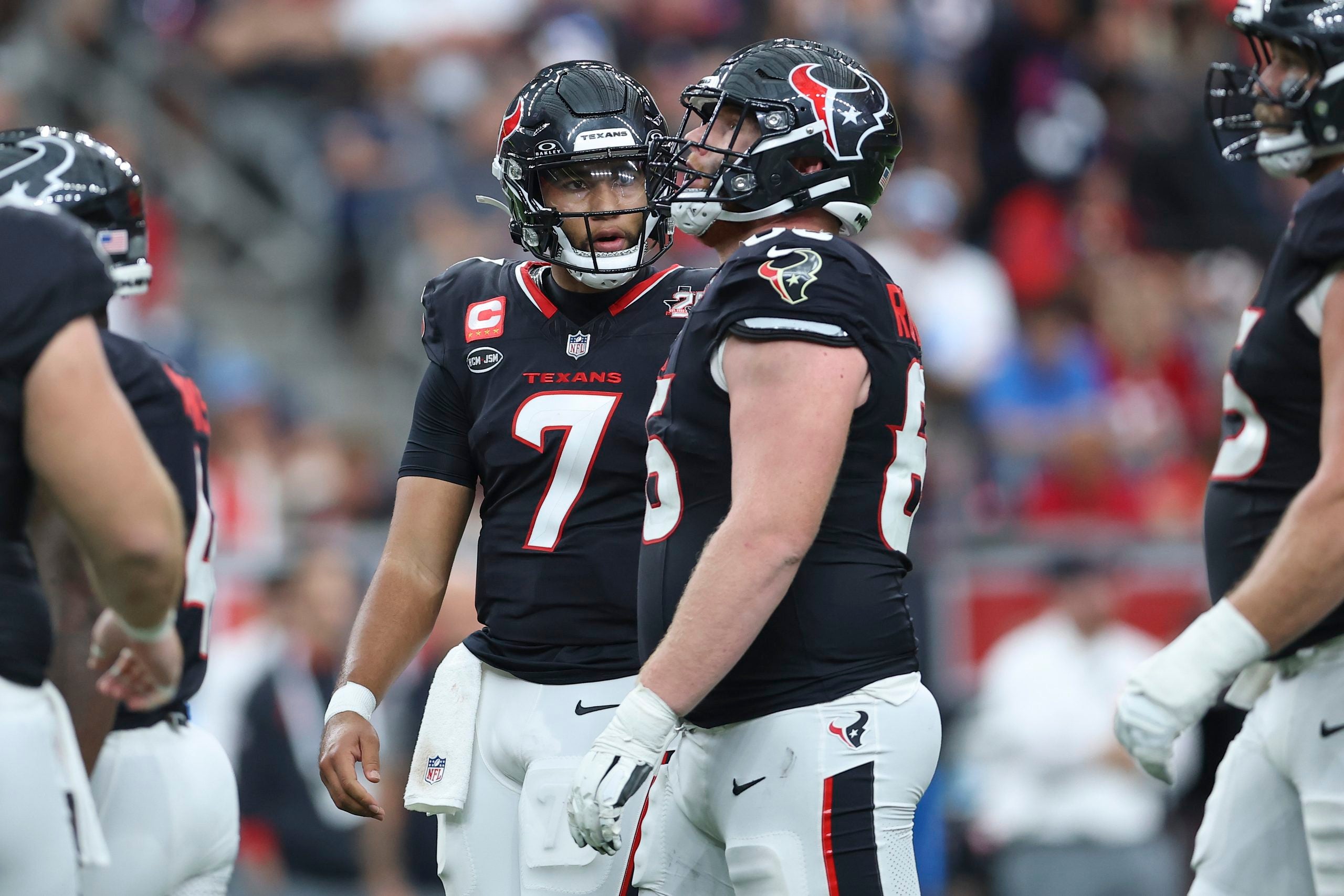
The Houston Texans made one of the more aggressive moves of the 2026 NFL Draft when they traded back into the first round for Georgia Tech guard Keylan Rutledge. Halfway through his rookie season, that move looks like one of the biggest disappointments of the entire class.
Drafting a running back in the top five without the right support around him is a bad process (shoutout to the Arizona Cardinals and Jeremiyah Love). I also think giving up a substantial amount of draft capital to trade back into the first round for a guard is a luxury. Rutledge has been legitimately bad so far, and that makes the price Houston paid look even worse.
If he were a good starter, or even a solid one, the Texans could live with the cost. That isn’t what has happened.
Keylan Rutledge has not been the floor setter Houston wanted
The Texans convinced themselves that Rutledge was a floor setter for an offensive line room that badly needed one. They wanted a guy they could simply count on.
Houston never moved him to center like some speculated. He is playing guard, the same position he played in college, so this is not a case of a rookie learning a new spot on the fly.
Through the first half of the season, Rutledge has allowed 21 quarterback pressures. That puts him on pace for more than 40 pressures, which would be a crazy number for a guard.
I am not a big fan of PFF, but it can at least give you a general understanding of how a player has performed. Rutledge has a 34.1 pass-blocking grade among interior offensive linemen. One thing is very clear: his game has not translated yet.
I didn’t like Rutledge much as a prospect overall. I especially didn’t like the idea of trading multiple assets to go back into the first round for a guard who did not have a substantial floor, and he hasn’t shown one yet. Right now, it looks like a massive miss by the Texans.
What the Texans gave up
Here’s the cost. Houston sent the 28th pick, the 69th pick, and a fifth-rounder to move up two spots to the 26th pick, and got the 91st pick back in the deal.
The Patriots ended up using the 28th pick. The 69th pick changed hands four times before the Bears finally used it on Sam Roush, which is funny on its own. The Raiders made their selection at 91.
That is a lot of third-round real estate to surrender. It is fair to say that Houston traded legitimate draft capital to land a floor raiser who has had no floor so far in his career.
Nobody was buying Rutledge for his ceiling. The appeal was the floor, along with a reputation as a guy who chews on glass and plays with a mean streak. The vibe was great. The production hasn’t matched it.
The Tennessee Titans were in the Rutledge conversation too
The Rutledge saga matters for the Tennessee Titans, too. Tennessee was in the mix for Rutledge before the draft and had planned to trade up in the first round to make him its starting right guard.
Whether Houston outbid the Titans or simply jumped them, the Texans got their guy, and it has gone poorly.
The Titans still pulled the trigger on a first-round trade up for a trench player. They just did it on the other side of the ball with defensive lineman Keldric Faulk.
That leads to a fun, completely unfalsifiable question from Easton Freeze. Would both rookies be off to better starts if they swapped teams?
On the Tennessee side, the case is about stability. Rutledge would get to line up next to JC Latham in a more consistent offensive line situation than the revolving door in Houston.
The Faulk case doesn’t hold up quite as cleanly. He lined up next to Jeffery Simmons for a stretch in Tennessee, and that didn’t move the needle much. The Texans’ defensive line is talented, though, and learning from Will Anderson Jr. and Danielle Hunter would be a pretty cool possibility for a young pass rusher. So would working with DeMeco Ryans, who comes from the same cloth as Robert Saleh.
The expectations were also different. Rutledge was billed as a floor setter. The Titans sold Faulk as a project from the moment they picked him, and he has been treated that way.
Would a swap fix anything?
If you ask me, I think the two would look pretty similar if they traded places. I’m not out on either one, figuring it out.
It is still a premise worth chewing on. The Titans got jumped for a guard who has struggled, while the Texans paid a hefty price for a player who has not delivered the one thing they drafted him to provide. The second half of the season will show whether Rutledge can start building the floor Houston was banking on.
