
2027 NFL Mock Draft: Early QB run creates chaos while the Eagles, Browns, Titans, and Jets land massive hauls
A guest nonconformist, two Arch Manning-sized surprises, and a frozen simulator shaped this week’s mock. Where did the Fighting Irish trio land on draft night?

Our latest 2027 NFL mock draft on Best Pod Available took a few unexpected turns, and that’s exactly what made it entertaining.
My co-host Joe DeLeone and I brought in A to Z Sports’ own Sean Anderson, our Washington Commanders host, for a full first-round mock draft. Sean is a former roommate of Joe’s, and if there’s one thing I can tell you about him, it’s that he doesn’t necessarily evaluate players or approach roster construction the same way Joe and I do.
That made for some interesting debates throughout the first round.
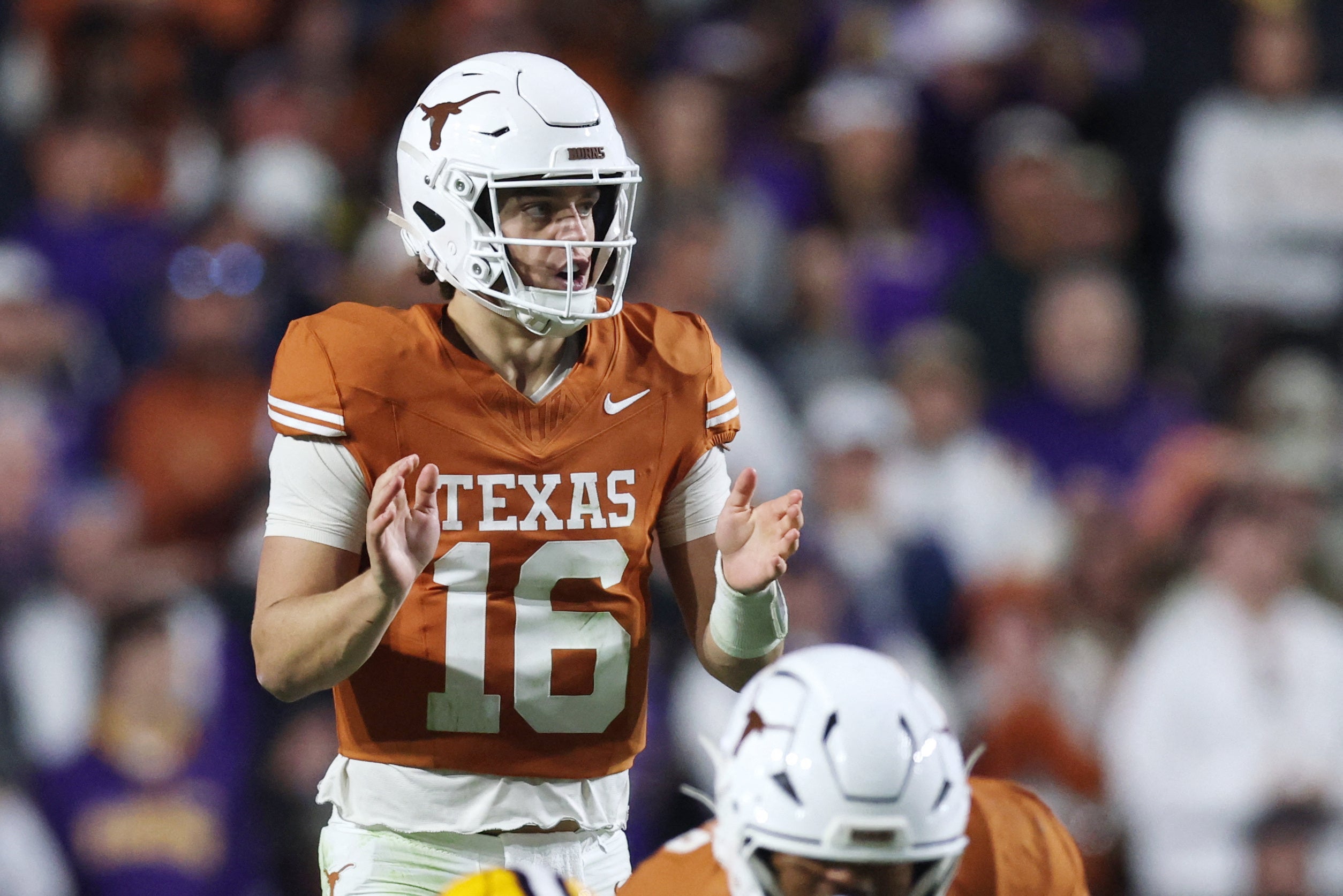
The biggest storyline was the quarterback movement. Four quarterbacks came off the board within the first seven selections, including Oklahoma State’s Drew Mestemaker to the Tennessee Titans with No. 1 overall. Texas quarterback Arch Manning landed with the New York Jets at No. 4, while Notre Dame’s CJ Carr went third overall to the Miami Dolphins.
There were also some interesting decisions involving premium defensive prospects, a couple of offensive line investments, and several selections that sparked disagreements between the three of us.
Three Notre Dame players ultimately landed in the first round, but this mock was about much more than the Irish. Here’s a pick-by-pick breakdown of all 32 selections.
This is our A to Z Sports Mock Draft Simulator exercise, not a projection of the actual draft order. The analysis considers each selection’s team fit, positional value, and the needs entering the 2027 offseason. The mock began with Anderson, followed by me, and then DeLeone in that order. So plan your criticism accordingly.
Picks 1-10: Four quarterbacks headline a wild start
1. Tennessee Titans — Drew Mestemaker, QB, Oklahoma State
Sean opened the draft with the selection that immediately got everyone’s attention. He sent Oklahoma State quarterback Drew Mestemaker to Tennessee, essentially suggesting the Titans move on from Cam Ward and start over at the position.
It’s an aggressive decision, especially considering the investment Tennessee has already made in Ward. But if the organization determines that it needs a different long-term answer, it can’t afford to be sentimental about the position. Mestemaker’s production has put him into the early first-round conversation, and Sean was willing to make him the first player off the board.
I probably would have gone in a different direction. Taking a quarterback first overall is a franchise-altering decision, and I’m not convinced that’s the best use of this selection for Tennessee.
2. Los Angeles Chargers — Jeremiah Smith, WR, Ohio State
This was my pick, and it didn’t require much deliberation.
Jeremiah Smith is the best overall player in this draft class in my evaluation. He’s a physically imposing receiver with the ability to win vertically, make contested catches, and create after the catch. His combination of size, athleticism, and ball skills gives him the potential to become a true No. 1 receiver at the next level.
The Chargers need to give Justin Herbert more help, and Smith would immediately change the outlook of their passing game. I would have taken him No. 1 overall if I had Tennessee’s selection. There’s no need to overcomplicate it.
3. Miami Dolphins — CJ Carr, QB, Notre Dame
Joe grabbed Carr with the third overall selection, making him the second quarterback off the board.
His reasoning was pretty straightforward. Carr’s performance against Miami was a signature moment, and Joe believes he has more to gain than any other quarterback during the College Football Playoff. If Carr finishes the season with another efficient performance and continues making high-level throws downfield, Joe thinks he could ultimately become QB1.
The tools have always been there. What we were waiting for was the big moment, and Carr delivered against the Hurricanes. The Matt Ryan comparison keeps coming up for a reason.
Sean wasn’t buying it.
“Notre Dame quarterbacks aren’t NFL quarterbacks for the most part, at least first-rounders,” Anderson said.
That kicked off a conversation about helmet scouting, which isn’t something we put much stock into. Rick Mirer was the last Notre Dame quarterback selected in the top three, going No. 2 overall to Seattle in 1993. His NFL career didn’t meet expectations, but that history shouldn’t determine Carr’s evaluation.
Miami has a significant decision to make at quarterback, and Carr would give the organization a potential new franchise centerpiece.
4. New York Jets — Arch Manning, QB, Texas
Sean followed with the pick of the night, sending Arch Manning to the Jets.
His argument was that New York would be willing to take a swing on the Manning name, regardless of what its scouting department says. Sean admitted it was a reach, but he believes the Jets would be an organization willing to make that kind of move.
There is more to Manning than his last name. He has the physical tools and pedigree to generate plenty of NFL interest, but his development and consistency will ultimately determine where he belongs in the draft.
The Jets need to find a long-term answer at quarterback. Taking Manning at No. 4 would be a massive bet on his potential, but that’s sometimes what it takes to land a franchise quarterback.
5. Philadelphia Eagles — Colin Simmons, EDGE, Texas
I went with Texas pass rusher Colin Simmons for Philadelphia.
The Eagles have some questions to answer along their defensive front. The Jonathan Greenard trade hasn’t worked out the way the organization hoped, Jalyx Hunt has dealt with injuries, and Nolan Smith is approaching free agency after the season.
Simmons would give Philadelphia another young pass rusher with the potential to become a cornerstone of the defense. He’s one of the most talented defensive prospects in the class, and getting him outside the top four would be an excellent outcome for the Eagles.
This is also a position where investing premium draft capital makes sense. You can never have too many players capable of consistently pressuring opposing quarterbacks.
6. New York Jets — Leonard Moore, CB, Notre Dame
Joe doubled down on Notre Dame players with his second selection for the Jets, taking Fighting Irish cornerback Leonard Moore.
This is an excellent value selection. Moore has established himself as one of the premier defensive prospects in the class, with the coverage ability and instincts to develop into a high-level NFL cornerback.
The Jets would be getting a potential difference-maker in the secondary after taking Manning with the fourth pick. New York has enough draft capital to address multiple major roster needs, and this would be a strong start to the process.
Moore lasting until No. 6 is also a reflection of how quickly quarterbacks can change the board. When four quarterbacks go in the top seven, elite defensive prospects are going to slide.
7. Arizona Cardinals — Darian Mensah, QB, Miami
The quarterback run continued with Miami’s Darian Mensah going to Arizona.
The Cardinals have questions about their long-term direction at quarterback, and this selection would give them another opportunity to find their answer. Mensah has demonstrated the ability to produce at a high level, and his inclusion in this early first-round conversation speaks to how much the quarterback class has developed.
Arizona would be taking a significant swing here, but the position is too important to ignore if the organization isn’t convinced it has its long-term starter.
8. Atlanta Falcons — Chris Cole, LB, Georgia
I don’t typically love taking an off-ball linebacker in the top 10, but I made an exception for Cole.
He’s an impact defender who offers considerably more than traditional linebacker responsibilities. Cole can rush off the edge, blitz through the interior, and play on the second level. His background as a high school safety also gives him some interesting coverage instincts.
Sean initially questioned whether Cole would be more than a 40-tackle player at the next level, but he eventually came around to the argument.
Atlanta has several defensive needs, and adding a versatile defender who can be moved around the formation would give the coaching staff plenty of options. Cole’s versatility is what makes this selection worth considering so early.
9. Houston Texans — Zereoue Williams, OT, Utah
Houston addresses its offensive line with Utah tackle Zereoue Williams.
The Texans have invested heavily in their offensive talent, but protecting the quarterback has to remain a priority. Williams would give them another option at one of the most important positions on the offensive line.
I like the idea of Houston continuing to build around its offensive core rather than waiting for the line to become a bigger problem. Finding a dependable tackle is never a bad investment.
10. Tampa Bay Buccaneers — Dylan Stewart, EDGE, South Carolina
Sean grabbed one of the most intriguing defensive prospects in the class with Stewart.
The South Carolina edge rusher has the athletic profile to become a disruptive NFL pass rusher. His upside is significant, and Tampa Bay would be adding a player who could eventually become a centerpiece of its defensive front.
Stewart was a player I would have liked to consider at No. 11, so Sean taking him one selection earlier forced me to adjust my plans.
The Buccaneers need more impact along their defensive front, and this is the kind of selection that could pay off in a big way if Stewart reaches his ceiling.
Picks 11-20: Defensive help, offensive line investments and more quarterback questions
11. New Orleans Saints — Ashton Hampton, CB, Clemson
I originally wanted Dylan Stewart here, but Sean took him one pick earlier. I pivoted to Clemson cornerback Ashton Hampton, giving New Orleans another potential building block in the secondary.
Hampton is an interesting prospect because of his ability to make plays on the football. The Saints have several defensive needs to address, and adding a young cornerback would help a secondary that could look different after the offseason.
I would have preferred Stewart, but Hampton is a pretty good consolation prize.
12. Washington Commanders — Trey’Dez Green, TE, LSU
Joe went with LSU tight end Trey’Dez Green for Washington.
Green gives the Commanders a different type of receiving option. His size creates the potential for mismatches against linebackers and safeties, and adding another weapon to the passing game could help diversify the offense.
I like the idea of giving the quarterback another option over the middle of the field, particularly with the way NFL offenses are using tight ends to attack defensive matchups.
13. New York Jets — KJ Bolden, S, Georgia
The Jets make their third selection of the first round, this time addressing the secondary with Georgia safety KJ Bolden.
After taking Arch Manning and Leonard Moore, adding another defensive back makes sense. Bolden has the versatility to contribute in multiple roles, giving the Jets another young piece to build around.
The Jets have a tremendous opportunity to reshape their roster with multiple first-round selections. They have already addressed quarterback and cornerback, and this pick continues that approach.
14. Baltimore Ravens — Xavier Gilliam, DT, Tennessee
I went with Tennessee defensive tackle Xavier Gilliam for Baltimore.
Sean, who has never met a first-round defensive tackle he liked, wasn’t particularly enthusiastic about this selection. I understand the hesitation because interior defensive linemen aren’t always the most exciting first-round investments.
However, Gilliam offers the type of interior disruption that can make a defense significantly better. Baltimore has traditionally valued physicality along its defensive front, and adding another young defensive tackle would help maintain that identity.
I like the fit, even if Sean would have preferred going in another direction.
15. Las Vegas Raiders — Charlie Becker, WR, Indiana
The Raiders add another offensive weapon with Indiana wide receiver Charlie Becker.
Las Vegas needs to continue improving its receiving group, and Becker would bring another potential playmaker into the offense. He’s a productive receiver with the size and ability to make plays downfield.
This is a selection that makes sense from a roster-building standpoint. The Raiders need to give their quarterback more reliable options, and investing in a young receiver would help accomplish that.
16. New England Patriots — Jadan Baugh, RB, Florida
New England adds Florida running back Jadan Baugh.
The Patriots have several ways they could approach this selection, but adding a physical running back would give their offense another dimension. Baugh has the ability to contribute as a ball carrier and provide another option in short-yardage situations.
I don’t necessarily love using a first-round pick on a running back, but there are situations where a talented player can make a meaningful difference. New England would be betting on Baugh becoming a central piece of its offensive identity.
17. Seattle Seahawks — Jamari Johnson, TE, Oregon
Seattle goes with Oregon tight end Jamari Johnson.
I like the idea of adding another pass-catching option for an offense that can benefit from creating mismatches in the middle of the field. Tight ends who can threaten defenses vertically while also contributing underneath are valuable pieces of modern NFL offenses.
Seattle has other needs to consider, particularly along the offensive line and defensive front, but Johnson gives the offense another potential weapon.
18. Cleveland Browns — Greg Johnson, IOL, Minnesota
Cleveland addresses the interior offensive line with Minnesota’s Greg Johnson.
Regardless of what direction the Browns take at quarterback, they need to make sure the player under center has enough protection to succeed. Adding a young interior offensive lineman would help provide some stability and give the offense another building block.
I like this selection more than people might initially realize. Teams can spend years searching for reliable offensive line play, and finding a long-term starter in the first round can pay dividends.
19. Carolina Panthers — Jordan Seaton, OT, LSU
Carolina gets an opportunity to add a potentially important piece to its offensive line with Jordan Seaton.
Protecting the quarterback and improving the running game should remain priorities for the Panthers. Seaton gives them a chance to invest in a premium position and potentially secure a long-term starter at tackle.
I like the positional value here. Carolina needs to keep building around its young offensive talent, and that starts with making sure the offensive line can hold up.
20. Cleveland Browns — LaNorris Sellers, QB, South Carolina
This was another one of my favorite selections.
I sent South Carolina quarterback LaNorris Sellers to Cleveland, giving the Browns another opportunity to find their long-term answer at the most important position in football.
Sellers has an intriguing physical profile. His size, arm strength, and mobility give him a different type of upside than some of the other quarterbacks in this class.
There are still areas of his game that need development, particularly consistency and decision-making. However, I think the potential is worth investing in at this point of the first round.
Todd Monken’s background working with athletic quarterbacks makes Cleveland an interesting landing spot. I like the idea of giving him an opportunity to develop Sellers and build an offense around his strengths.
Cleveland already invested in the offensive line earlier in this mock, which makes the pairing even more appealing. If the Browns can get the quarterback position figured out, they have an opportunity to build something sustainable.
Picks 21-32: The final stretch brings more interesting fits
21. Dallas Cowboys — Boubacar Traore, EDGE, Notre Dame
Joe brought the third Notre Dame player into the first round by sending defensive end Boubacar Traore to Dallas.
Traore has been one of the biggest risers of the season, and his pass-rushing upside makes him an interesting prospect for the Cowboys. He has the athletic ability to develop into a disruptive edge defender, and there’s still plenty of room for his game to grow.
Sean would have preferred going with a cornerback here, especially considering some of Dallas’ recent struggles evaluating and developing edge rushers.
I understand the argument, but I like the upside of Traore in this spot. Dallas needs more players who can consistently affect opposing quarterbacks, and Traore has the potential to become that type of defender.
22. New York Giants — Will Echoles, DT, Ole Miss
The Giants address their defensive front with Ole Miss defensive tackle Will Echoles.
Interior defensive line help is a logical direction for New York, particularly when looking at the long-term construction of the defense. Echoles gives the Giants another young player to develop along the defensive front.
I like the positional value here. Finding disruptive interior defenders can make life easier for the entire defensive unit, especially when it comes to creating opportunities for the edge rushers.
23. Pittsburgh Steelers — Trinidad Chambliss, QB, Ole Miss
I sent Ole Miss quarterback Trinidad Chambliss to Pittsburgh.
The Steelers are an interesting team to monitor at quarterback, and I think this would be a reasonable opportunity to take a swing on a potential long-term starter.
Chambliss has generated plenty of attention with his play at Ole Miss, and his NFL evaluation will be an interesting one. Pittsburgh has traditionally valued stability at quarterback, and finding the next player to lead the franchise is one of the organization’s biggest challenges.
At No. 23, the Steelers wouldn’t have to use a premium top-five selection to take a chance on a quarterback. I like the fit and the opportunity for Chambliss to develop in Pittsburgh.
24. Denver Broncos — Luke Reynolds, TE, Virginia Tech
Denver adds Virginia Tech tight end Luke Reynolds.
The Broncos have an opportunity to give their passing game another weapon, and tight end is a position that can create matchup problems for opposing defenses.
Reynolds would give Denver another option in the middle of the field and potentially help the offense become more versatile. I don’t think this is the most exciting selection of the round, but it addresses a position that could use additional investment.
25. Cincinnati Bengals — Kade Pieper, IOL, Iowa
Cincinnati continues to invest in its offensive line with Iowa’s Kade Pieper.
The Bengals have spent plenty of time trying to find the right combination up front, and adding another young interior lineman would help provide some long-term stability.
When you have an investment in an elite quarterback and talented receivers, protecting the pocket has to be a priority. Pieper gives Cincinnati another opportunity to improve that area of the roster.
26. Philadelphia Eagles — Trevor Lauck, OT, Iowa
I went back to the offensive line with my second selection for Philadelphia.
Lauck is an intriguing option because of his ability to play both tackle and guard. That versatility is something I value in offensive line prospects, particularly for a team that could be facing some significant changes up front.
The Eagles have built much of their identity around their offensive line. Adding a player who can compete at multiple positions gives the organization flexibility while helping prepare for potential departures.
Philadelphia already landed Colin Simmons at No. 5, so coming away with a potential defensive difference-maker and an offensive line prospect in the first round would be a strong result.
27. Minnesota Vikings — Jelani McDonald, S, Texas
Minnesota goes to the secondary with Texas safety Jelani McDonald.
The Vikings have several areas they could address, but adding another versatile defensive back would give them some additional options on the back end.
McDonald gives Minnesota a young player to develop in a defense that needs to continue finding ways to create turnovers and limit explosive plays. It’s a reasonable selection this late in the first round.
28. Tennessee Titans — Kelley Jones, CB, Mississippi State
Tennessee returns to the defensive side of the football with Mississippi State cornerback Kelley Jones.
After taking Drew Mestemaker No. 1 overall, the Titans use their second first-round selection to address the secondary.
I like the approach. If Tennessee is making a major investment in a new quarterback, it needs to continue building the rest of the roster around him. Adding a young cornerback gives the defense another potential long-term piece.
29. Kansas City Chiefs — Reed Harris, WR, Arizona State
This was another one of my selections, and I really like the fit.
Harris is listed at 6-foot-4 and 220 pounds, giving Kansas City the type of size it could use in its receiving room.
The Chiefs have always found creative ways to get their playmakers involved, but adding a bigger target who can compete for contested catches would give Patrick Mahomes another dimension in the passing game.
I like the idea of pairing a receiver with Harris’ physical profile with the creativity of Kansas City’s offense. At this point in the first round, it’s an interesting way to add a different type of weapon.
30. Detroit Lions — Ellis Robinson IV, CB, Georgia
Detroit adds Georgia cornerback Ellis Robinson IV.
The Lions have built a competitive roster, but continuing to invest in the secondary is important. Cornerback is a position where depth can become a major issue quickly, and adding another young player gives Detroit some insurance for the future.
Robinson would have an opportunity to develop in a defense that could use additional talent in the defensive backfield. I like the value of addressing the secondary here.
31. San Francisco 49ers — Yhonzae Pierre, EDGE, Alabama
San Francisco goes with Alabama edge rusher Yhonzae Pierre.
The 49ers have consistently valued their defensive front, and adding another young pass rusher makes sense. Getting pressure without having to send extra defenders is one of the most important parts of building a successful defense.
Pierre would give San Francisco another player to develop along the edge and potentially help address a position that could look different after free agency.
32. Buffalo Bills — Nick Marsh, WR, Indiana
The final selection came with a little help from technology.
Our simulator froze toward the end of the draft and handed Buffalo the final pick. Indiana wide receiver Nick Marsh was the selection at No. 32, and honestly, he probably would have been my pick there anyway.
Buffalo could use another young receiving option, particularly as it continues building around its passing game. Marsh gives the Bills an opportunity to add another target without having to spend a premium top-10 selection.
It’s a nice way to close out the first round, even if the simulator needed a little assistance getting there.
Biggest takeaways from our first-round mock
There were plenty of interesting storylines, but a few things stood out to me after going through all 32 selections.
The quarterback class could make this a fascinating draft. Four quarterbacks going in the top seven is aggressive, but it’s not difficult to envision a scenario where teams become desperate to find their next franchise quarterback. Carr, Manning, Mensah and Mestemaker all went inside the top seven, while Sellers and Chambliss gave us two more first-round quarterbacks.
Jeremiah Smith is my No. 1 overall prospect. I don’t think there’s much of a debate when it comes to his overall talent. Getting him at No. 2 for the Chargers was an easy decision, and I would have made the same pick at No. 1.
The Jets could completely change their roster. Three first-round selections gave New York an opportunity to land Arch Manning, Leonard Moore, and KJ Bolden. That’s a pretty impressive haul, particularly if Manning develops into the franchise quarterback the organization has been searching for.
Notre Dame has a strong draft outlook. Three first-round selections are an impressive showing for the Irish, with Carr, Moore, and Traore all landing in the opening round. Carr at No. 3 is obviously the biggest storyline, but Moore going sixth is another indication of how highly regarded his talent is.
The offensive line still matters. Philadelphia, Houston, Cleveland, and Cincinnati all invested in the position, and I particularly liked the Eagles coming away with Colin Simmons and Trevor Lauck.
Ultimately, that’s what made this mock draft so much fun. We had different approaches, some disagreements on positional value, and a few selections that probably wouldn’t have happened if all three of us were making the decisions together.
That’s the point of bringing different perspectives into the room.
And if nothing else, Sean gave us plenty to talk about by sending Drew Mestemaker No. 1 overall and Arch Manning to the Jets.
