
Christian Parker’s honest admission exposes just how rare and awkward the Cowboys’ defensive setup has become
The Dallas Cowboys handed defensive play-calling duties to Mike Pettine this week. One day later, Christian Parker faced reporters, and what he said raises real questions about where this goes next.


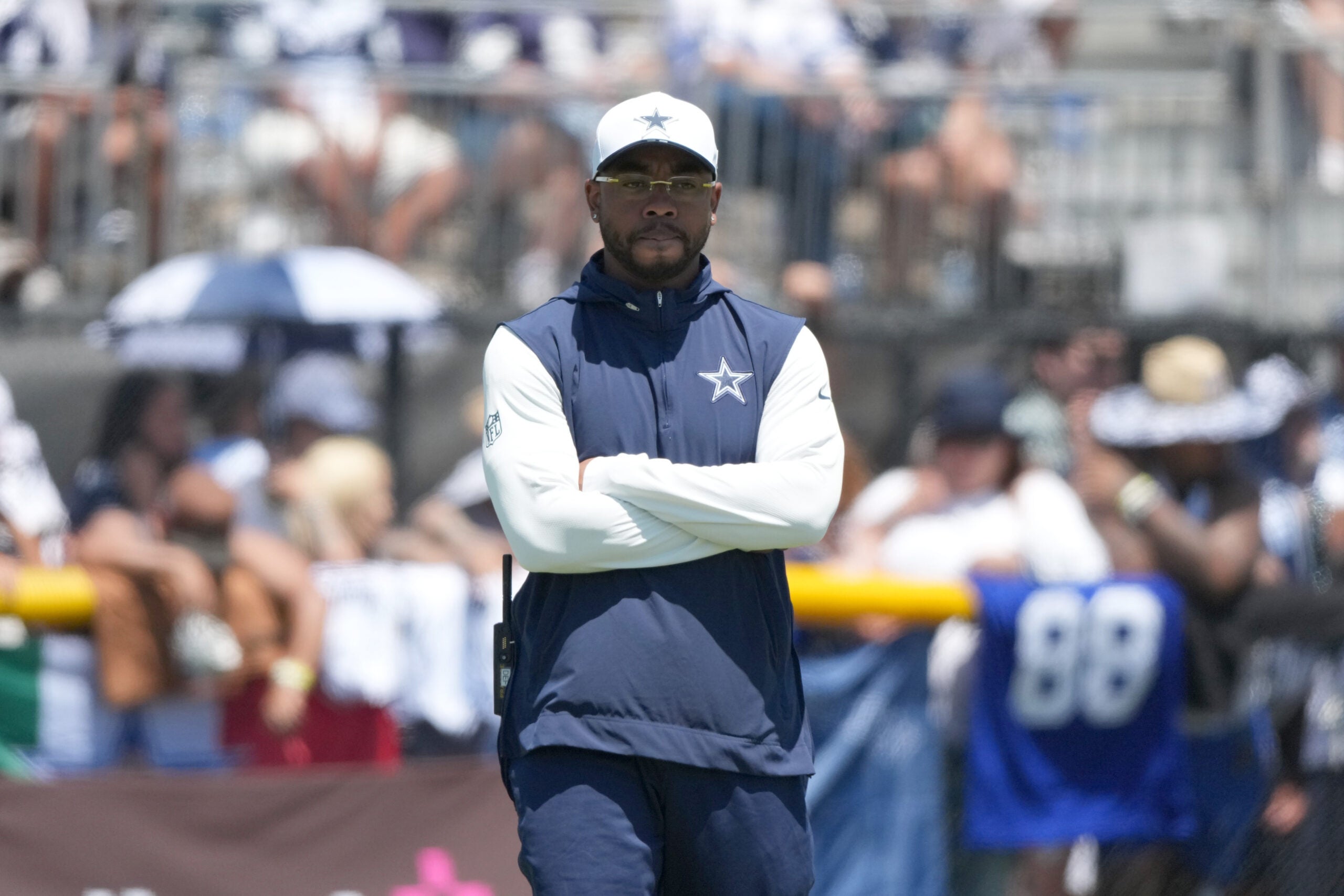
Dallas Cowboys defensive coordinator Christian Parker spoke to reporters Thursday, one day after Cowboys coach Brian Schottenheimer announced Mike Pettine would take over defensive play-calling duties. Parker’s comments revealed just how rare this coaching setup is in the NFL.
Parker admitted he considered leaving the Cowboys’ staff after losing play-calling duties. That’s a big admission to make.
Schottenheimer’s praise doesn’t fix the awkwardness
Schottenheimer went out of his way to praise Parker when he met with reporters Wednesday. He described Parker in glowing terms: “He’s a special individual who really wants what’s really best for this team.”
He also called Parker a huge part of the solution moving forward. Schottenheimer described Parker’s responsibilities as being exactly the same except for not calling plays on, on game day.
Even so, Dallas has created an unusual arrangement. A head coach stripping his defensive coordinator of play-calling duties and giving them to another assistant rarely happens in the NFL. The closest comparison is the Philadelphia Eagles in 2023, when Sean Desai lost play-calling duties to Matt Patricia.
Usually, when a coordinator loses play-calling duties, the head coach takes over or the coordinator gets fired. In the Cowboys’ case, Schottenheimer taking over wasn’t an option because he’s already the offensive play-caller. That left Dallas with a middle ground that satisfies nobody, and Parker admitting he considered walking away proves it.
Who is really in charge of the Cowboys’ defense?
Here’s the thing about play-calling: it isn’t just a game-day job.
The Cowboys can say Parker remains the defensive coordinator and will handle everything except calling plays Sunday. But if Pettine is calling the plays, then he’s the one calling the shots in the building. Game plans have to be tailored to the play-caller, and the play-caller needs to be heavily involved in building them. That’s how good football teams operate.
Parker’s title may stay the same, but his authority won’t.
To be fair, Dallas put Parker in a tough spot from the start. The Cowboys needed him to succeed quickly, but he was a first-year coordinator and a first-year play-caller. Patience was required. Unfortunately, patience is one thing a win-now team like Dallas never has to spare.
In hindsight, that raises questions about the decision to hire him in the first place, even though Parker was viewed as a promising candidate around the league. Some even saw him as a future NFL head coach.
Parker’s future in Dallas looks murky
Schottenheimer said the Cowboys view Parker as someone with a future on the team beyond the 2026 season. Parker didn’t exactly echo that confidence when asked about it.
“We’ll cross that bridge when we get there,” Parker said.
As I wrote earlier this week, it’s tough to envision Parker in Dallas beyond 2026. I see two likely paths, and neither ends well for him.
The first path: Pettine turns the defense around. If that happens, questions will follow about why it couldn’t work with Parker but could work with a coach who arrived mid-season (Pettine was hired before Week 5).
The second path: The defense doesn’t improve, the Cowboys keep losing games, and Schottenheimer’s own job comes into question. If Dallas decides to move on from the entire coaching staff, would the front office have seen enough from Parker to ask a new head coach to keep him around? That’s a hard case to make about a coordinator who just had play-calling duties taken away.
Parker’s comments aren’t surprising. But they are telling of how questionable the Cowboys’ approach is heading into Week 11.
