
What to Expect From Mike Pettine? The new Cowboys playcaller has a clear philosophy, and he comes with a flaw not new to Dallas
Dallas Cowboys handed the defensive headset to a consultant who arrived before Week 5. What can we learn from him looking at his play-calling tenure in Green Bay?

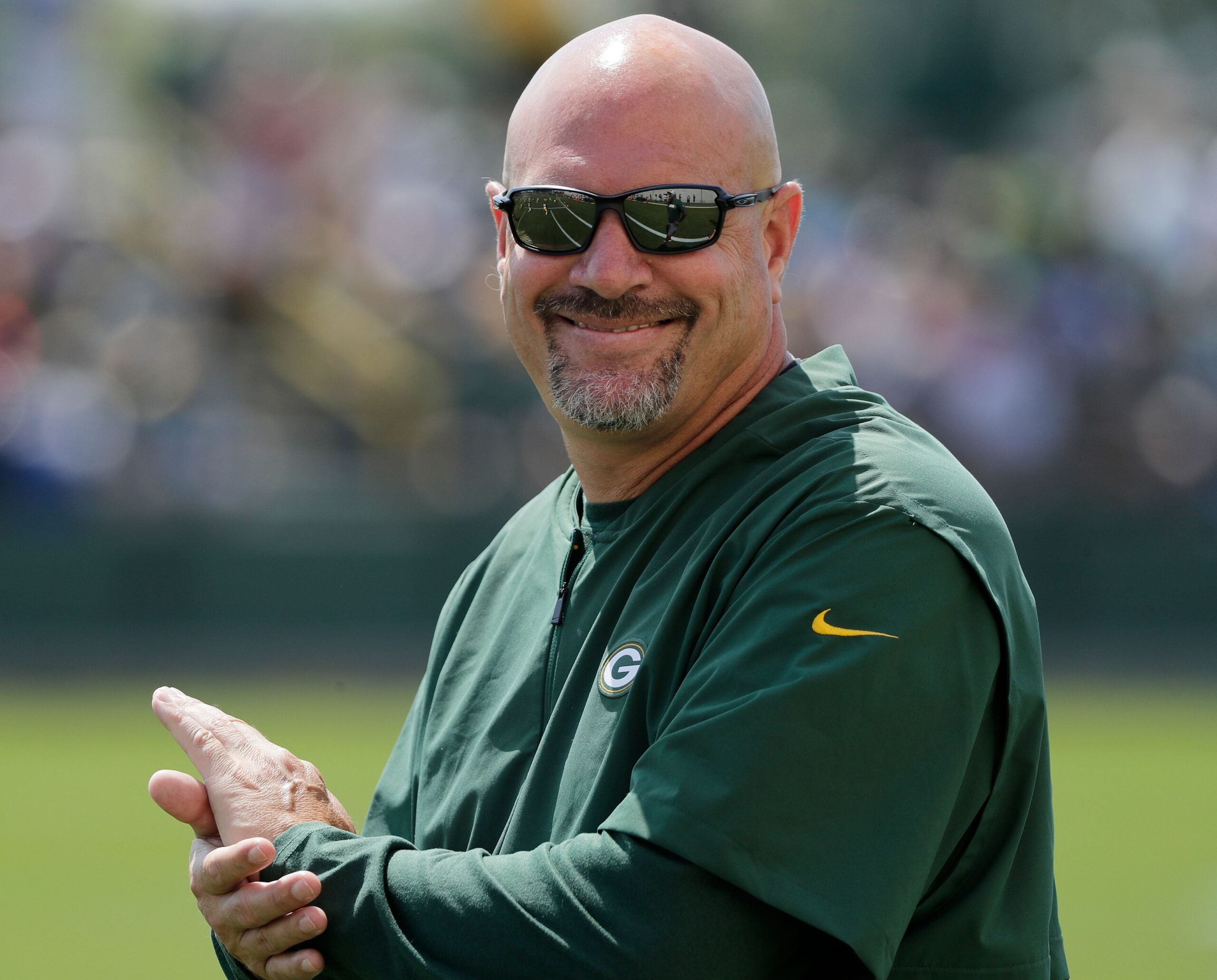
The Dallas Cowboys have a new defensive play caller. Christian Parker will remain the Cowboys’ defensive coordinator, but Mike Pettine will call plays on game day for the rest of the season, according to ESPN’s Todd Archer.
Pettine arrived in Dallas as a consultant before Week 5, following a slow start to the season. Now he takes play-calling duties away from Parker, a first-year coordinator who was also calling plays for the first time.
This move raises plenty of questions. They include the Cowboys’ long-term plans, how head coach Brian Schottenheimer handled the situation, the team’s inability to stick to a plan, and the risks of hiring a first-time coordinator and play caller. All of that can wait for a moment. The more pressing question is what the Cowboys should expect from Pettine with the headset on.
To find out, I reached out to A to Z Sports’ Wendell Ferreira, who covered Pettine during his time as the defensive play caller for the Green Bay Packers. Let’s break it down.
What Pettine brings to the Cowboys defense
During Pettine’s tenure, the Packers ranked 17th in EPA per play on defense. The defense ranked 24th in 2018 and then 12th in both 2019 and 2020. Green Bay fired him after the 2020 season. The main reason was the shameful performance against the San Francisco 49ers in the 2019 NFC Championship Game, along with some questionable playoff results in 2020.
As a defensive designer, Pettine’s main priority was to scheme pressure, and he excelled at it. The Packers got excellent results from Za’Darius Smith and Preston Smith early in his tenure because Pettine could manufacture pressure by sending extra bodies and exotic looks. He learned that adaptive approach from Rex Ryan. Brian Flores uses a somewhat similar style now, with creative blitzes and unusual pressure schemes. Pettine replicated it as the Cleveland Browns’ head coach and later in Green Bay.
He also got the most out of his secondary. Darnell Savage, for example, had the best years of his career under Pettine and then regressed under Joe Barry. With Pettine calling plays, the Packers were usually a viable pass defense, and at times a top-10 unit against the pass.
For the Cowboys, the biggest takeaway has to be that Pettine’s defenses center on rushing the passer. That is what he believes in. He is known for schemed-up pressures, and that is a shift from Parker, a secondary-first coach whose background in the defensive backfield shaped how he approached this season.
Expect a more aggressive one-gap approach compared to Parker’s scheme, though Pettine will have to find a middle ground considering what this defense was taught in the offseason.
Pressure is also where Pettine can help the most. Dallas ranks 19th in pressure rate, and that number looks inflated once you turn on the film. The Cowboys generate pressure, but they have struggled to bring the quarterback down.
The exception came against the San Francisco 49ers, when they sacked Brock Purdy five times. For most of the season, though, they haven’t finished those plays. Injuries haven’t helped. Donovan Ezeiruaku missed the 49ers game with an injury, and first-round edge rusher Malachi Lawrence is on injured reserve.
If you ask me, the biggest change could come in blitz rate. The Cowboys rank 31st in the NFL in that category. Pettine’s reputation is built on manufacturing pressure, so I expect that number to climb drastically with him calling plays.
The Cowboys run defense question doesn’t go away
When the Cowboys traded away Micah Parsons, they did it in the name of boosting the run defense. Since then, Matt Eberflus and Christian Parker have tried to do that. Here’s where Pettine’s arrival gets complicated. One of the Cowboys’ biggest problems on defense is stopping the run, and he may not be the fix.
Pettine had a classic saying that summed up his philosophy.
“A wise coach told me a long time ago, you can fly to Miami a lot faster than you can walk there.”
His preference was to stop big plays and slow down the passing game. Stopping the run was an afterthought.
Eventually, those struggles against the run became a killer for the defense. In the 2019 NFC Championship Game, the 49ers threw the ball only eight times, and Jimmy Garoppolo completed six passes. San Francisco still dominated the game and scored 37 points because Raheem Mostert rushed for 220 yards. That type of performance ultimately complicated Pettine’s continuity in Green Bay.
Curiously enough, the Packers replaced him with Joe Barry, who was a worse defensive coordinator, especially against the run. Green Bay only found an answer at the position in 2024 with Jeff Hafley, and then an even better one with Jonathan Gannon in 2026.
The numbers are ugly for Dallas:
- 31st in EPA per play against the run
- 22nd in success rate against the run
- 34 runs of 10 or more yards allowed, which ranks 30th in the NFL
- 31st in stuff rate, which measures how often a defense stops the ball carrier for no gain or a loss
A long layoff from the headset
One more fact must be pointed out. Pettine hasn’t called plays in the NFL since the 2020 season, his last in Green Bay. Dallas is betting he can shake off that rust in the middle of a season, without a full offseason to install his system.
Dallas is getting a creative coach who can manufacture pressure and maximize his defensive backs. If you compare those trends with a respectable run defense, the Cowboys gamble on a coordinator who has been away from play calling for years could work.
Pettine’s first test comes Sunday against the Tennessee Titans, who rank 26th in the NFL in EPA per play on offense. On paper, it’s a favorable matchup for his debut. Paper hasn’t seemed to matter a whole lot for the Cowboys defense, though.
