
Texas Tech Red Raiders are built to repeat as Big 12 champions, but questions at quarterback could limit the ceiling
Just how good will Texas Tech be going into the 2026 CFB season? Here is a deep dive look at the Red Raiders, strengths and potential weaknesses.

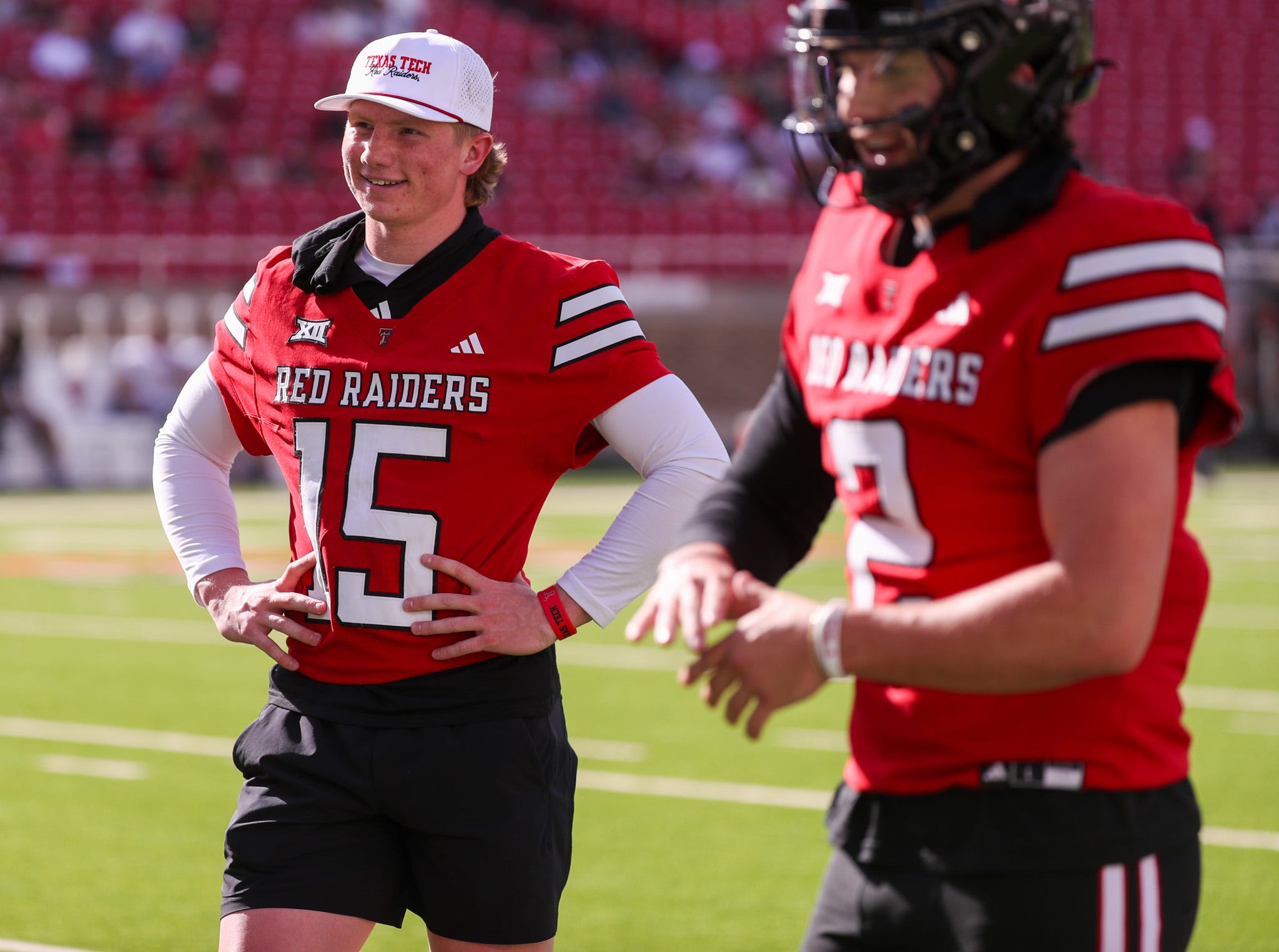
Texas Tech football enters the 2026 season as the defending Big 12 champion with one of the deepest rosters in the conference.
The Red Raiders return a loaded running back room led by Quinten Joyner, Cameron Dickey, and J’Koby Williams, a veteran offensive line anchored by center Sheridan Wilson and tackles Howard Sampson and Jacob Ponton, and a defensive front built through the transfer portal.
The biggest question surrounds quarterback Will Hammond, who steps into the starting role after Brendan Sorsby’s departure and his own injury recovery. Texas Tech’s path back to the Big 12 title game runs through its trenches on both sides of the ball, and the margin for error at quarterback may determine whether the Red Raiders can make a deeper run in the College Football Playoff.
The running back room may be the best in college football
The conversation about Texas Tech’s offense starts in the backfield. Dickey, Williams, and Joyner give the Red Raiders what might be the best three-deep at running back in the country. Any one of those players could function as a bell cow if given the opportunity.
Joyner is the wild card. After transferring from USC, where Lincoln Riley underutilized him, Joyner generated massive excitement last preseason before a devastating injury wiped out his 2025 campaign.
At USC in 2024, Joyner showed his versatility as a gadget weapon. The Trojans lined him up in the slot, gave him reverses, and even direct-snapped the ball to him at times. If healthy, Joyner could become the do-it-all weapon in Texas Tech’s offense, splitting out wide, catching passes, and adding an explosive element that Dickey and Williams complement with their own distinct skill sets.
Dickey is the patient, shorter back who hides behind the offensive line. Williams is the more downhill, physical runner. That diversity creates schematic possibilities, including potential 21-personnel looks that get two of those backs on the field simultaneously.
The depth at running back is especially critical because it takes pressure off Hammond and whatever growing pains he experiences early in the season.
Will Hammond controls the ceiling and the floor
Hammond is more physically gifted than Behren Morton and possesses arm talent comparable to Sorsby’s physical tools. The difference is development and experience. Sorsby had started to hit his stride as a playmaker and was ready to make an immediate impact. Hammond is a redshirt sophomore coming off an injury with only a handful of career starts.
There are legitimate reasons for optimism. Hammond has a live arm and averaged roughly 7 yards per carry in limited opportunities last season. When he stepped in during the 2024 season as a true freshman, flashes of his upside were evident. But there were also stretches where the floor showed, and the shakiness crept in.
The injury compounds the concern. Hammond missed the spring and summer on-field reps that would have been critical for his development. Coming back from a knee injury raises questions about his mobility and confidence in the early part of the season. Playing Houston early in the schedule does not help, either. If Hammond is not fully mobile, that matchup becomes a significant test.
Behind Hammond, the depth chart is unsettled. Kirk Francis has generated some buzz through the program’s PR machine, and there is a young quarterback in Lloyd Jones III who is a dynamic athlete. But if something happens to Hammond, the floor falls out quickly. That reality makes this a volatile situation.
The saving grace is everything around Hammond. A veteran offensive line featuring Sampson, Ponton, Wilson, Hunter Zambrano, and portal addition Jordan Church gives him a clean pocket. The running game takes pressure off the passing attack. And the pass-catching group has talent.
Wide receivers and tight end Terrence Carter Jr.
Kenny Johnson arrived from Pitt as a near 700-yard receiver and serves as a floor-setter in the room. Coy Eakin returns as a downfield, contested-catch threat. Donte Lee Jr., Malcolm Simmons, and Jalen Jones add depth.
But the breakout candidate is Micah Hudson.
Hudson was a five-star recruit who shocked people by picking Texas Tech, then went through a back-and-forth with Texas A&M before returning. He has not produced at a level matching his recruiting ranking, but the talent is undeniable. Hudson was in the same high school class as Jeremiah Smith and had the look of an Odell Beckham-type prospect coming out, with springiness, explosiveness, and elite movement skills.
If he is locked in and fully connected to the program, Hudson has breakout star potential.
Tight end Terrance Carter Jr. deserves recognition as well. Carter was one of the more productive tight ends in college football, posting back-to-back 600-yard seasons at Louisiana and Texas Tech. He is a yards-after-catch monster who makes a quarterback’s life significantly easier.
The defense wins through the trenches again
Texas Tech’s defensive identity is built through transfer portal evaluation in the trenches. The Red Raiders brought in Adam Trick from Miami of Ohio and Trey White from San Diego State as high-floor defensive ends. Neither is a flashy pro prospect, but both have been consistently productive.
The style will look different from last year’s explosive edge rushers. These players win with nuance, hustle, and effort.
The upside play is defensive tackle Mateen Ibirogba. A former FCS player at Georgetown who spent time at Wake Forest, Ibirogba is still developing physically after reaching 300 pounds. He has the highest ceiling of anyone in the defensive line group and could emerge as a top-50 draft selection with a breakout season.
AJ Holmes returns as a reliable interior presence, and the combination of gap-shooting tackles in front of downhill linebackers in Ben Roberts and Austin Romaine creates a physical front seven.
Cornerback Brice Pollock is quietly one of the best zone corners in college football. He does not have the explosive athletic profile of a Leonard Moore or Ellis Robinson, but his ability to jump short passing windows, create turnovers, and consistently be in the right position makes him an incredibly savvy player. Pollock’s Mississippi State roots connect him to a pipeline that has produced Emmanuel Forbes, Martin Emerson, and Kelley Jones.
The verdict
Texas Tech has the best offensive line in the Big 12, the best defensive line in the conference, and the best front seven. When you own the trenches at the top of your conference, you need to be disastrously bad at one position to lose it. Hammond is talented enough to keep this ship afloat and get the Red Raiders back to the Big 12 championship game.
The concern is what happens beyond that.
The distractions of the offseason, Hammond knocking off rust, and the limited margin for error at quarterback create a ceiling that likely prevents a deep College Football Playoff run. BYU figures to push Texas Tech hard in the Big 12 title game, and the gap between the two programs is narrower than it was a year ago. Texas Tech is a Big 12 contender capable of winning the conference, but whether the Red Raiders should be considered the clear favorite is a legitimate debate.
If Texas Tech wants to go all the way, 2027 might be the year. This season is about proving that the program’s foundation is strong enough to sustain success even when the quarterback position is not fully settled.
