
Tennessee football has an elite foundation under Josh Heupel, but 2026 is a building year before the Volunteers can truly contend
What are the real expectations for Tennessee heading into the 2026 CFB season? The debates continue and lead to a consensus.

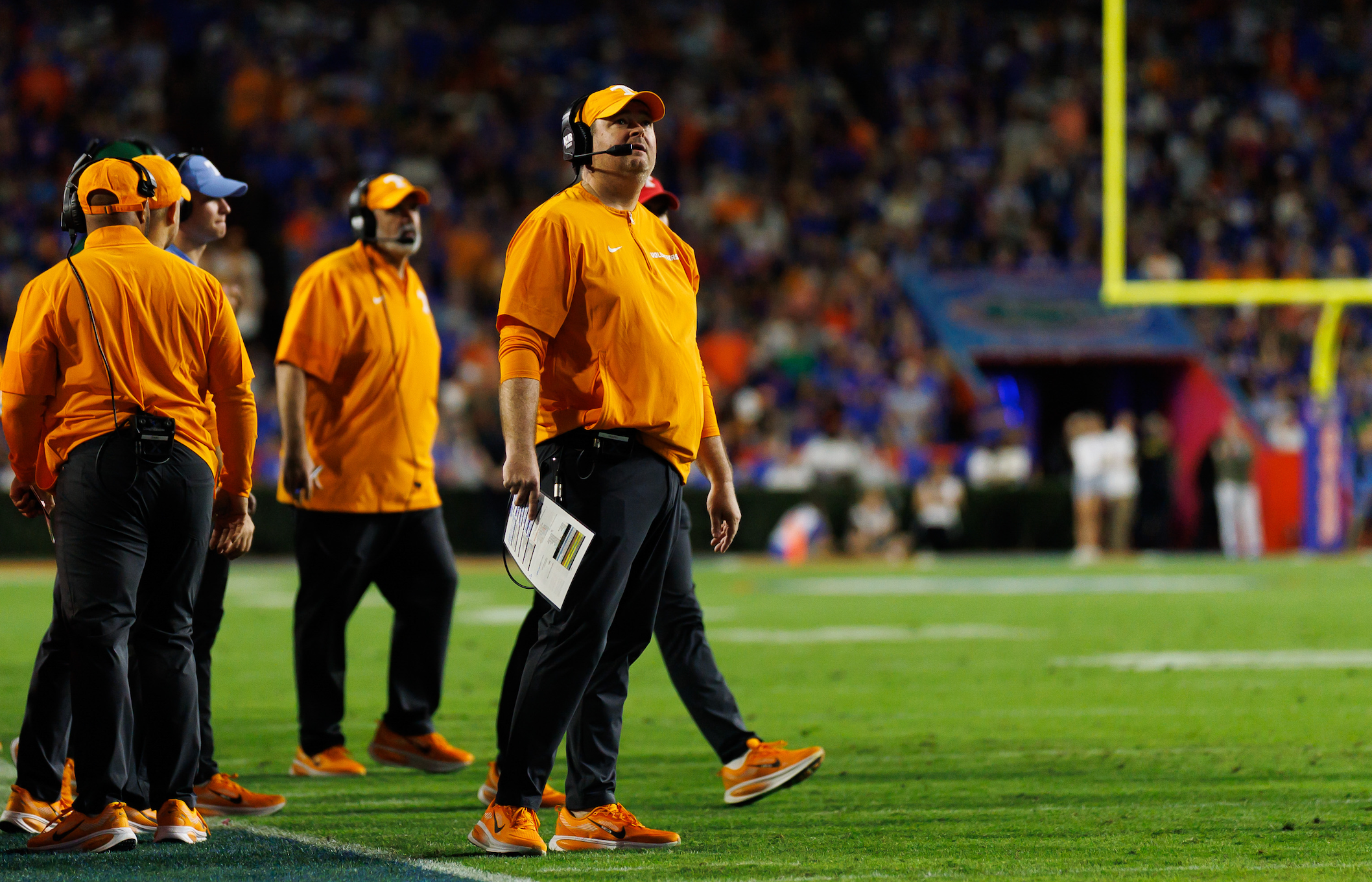
Tennessee football enters the 2026 season with legitimate talent across the roster, but massive question marks at quarterback and pass rusher make the Volunteers a team better suited for a foundational year than a College Football Playoff push.
Head coach Josh Heupel has the pieces in place for a strong future, with an underrated offensive line, explosive skill players, and a secondary that could emerge as one of the better units in the SEC. The ceiling for this program, however, likely arrives in 2027.
The offensive weapons are ready
The skill position group surrounding whoever wins the starting quarterback job should make for a smooth transition.
Running back DeSean Bishop is one of the more underrated backs in the country, combining explosiveness with the ability to create chunk plays.
Wide receiver Mike Matthews, a former five-star recruit, has substantially improved over the past two seasons. Braylon Staley averaged roughly 20 yards per catch as a big-play threat. True freshman TK Keys should contribute immediately, and tight end Ethan Davis could be a breakout player as a redshirt junior after averaging 12 yards per catch for 257 receiving yards a year ago.
The offensive line might be the most underappreciated unit on the roster.
Wendell Moe Jr. brings a mauling presence at guard, and David Sanders Jr. steps into the left tackle spot vacated by Lance Heard’s departure to Kentucky. Sanders is a prototype tackle with elite flexibility and movement skills for his size. If he continues adding good weight to his frame, he profiles as a potential top-10 pick in the 2028 NFL Draft.
Sam Pendleton, who transferred in from Notre Dame, showed real growth after transitioning to center during the 2025 season, bringing toughness and physicality to the interior. Jesse Perry settling into the right guard spot, where his skill set is better suited than at offensive tackle, rounds out a group with both talent and a solid floor.
Heard’s departure shouldn’t alarm anyone. He never established the ceiling many expected, and his unwillingness to move positions when the coaching staff wanted Sanders at left tackle created a situation where the loss is negligible at worst, addition by subtraction at best.
The quarterback question demands patience
The George MacIntyre versus Faizon Brandon quarterback competition will define Tennessee’s ceiling. I evaluated both as high school recruits, and Brandon was the more talented prospect coming out.
Reports from spring practice suggest Brandon has blown people away with his mental maturity, poise, and leadership. If it is close between the two, I would defer to Brandon because the ceiling is higher, and the way to reach that ceiling is by getting him on the field.
Heupel’s offense is not the most complicated system, so the gap between a redshirt freshman and a true freshman in terms of system knowledge is not a major differentiator. The more important consideration is the long-term future. Whoever loses this competition is most likely not going to be part of the program long-term. Tennessee needs to be mentally prepared for that reality.
The 2024 season proved this team can survive shaky quarterback play. Nico Iamaleava struggled through his first year as a starter despite the offense being designed to simplify decision-making. Tennessee still reached the College Football Playoff that season by leaning on the run game and a reliable defense.
The pass rush is a genuine concern
The defensive side presents real problems, specifically along the edge. The Chaz Coleman situation left a gaping hole in what was supposed to be an explosive pass rush. Jordan Ross also departed for LSU. Losing both creates a situation where Tennessee has to manufacture pressure rather than generate it naturally.
At SEC Media Days, a question was raised about whether linebacker Arion Carter has been getting reps on the edge this offseason. From the sound of it, both Carter and Jeremiah Telander have been working as situational pass rushers. That is a move born out of necessity. Carter is a productive linebacker who wins because he is good in a phone booth with solid instincts, but asking him to be something he is not is not where you want to be as a program.
The interior defensive line has promise, with Xavier Gilliam arriving from Penn State via the transfer portal and Daevin Hobbs showing flashes as a former highly recruited prospect. The linebacker room is deep and experienced with Carter, Amare Campbell from Penn State, and Telander.
Cornerback Ty Redmond could emerge as a star in his sophomore season, and Kayin Lee from Auburn brings legitimate cover skills to the secondary. The back end of this defense has a chance to be a strong unit.
The verdict
Tennessee is an 8-4 or 9-3 team.
They are not making the College Football Playoff, and they are not winning the SEC. That record, depending on how it looks, could still be a positive for the program’s trajectory. Heupel establishes a strong floor as a coach, and comparing him to James Franklin’s ceiling questions at Penn State feels premature.
The year to watch is 2027, when Brandon (or whoever wins the job) will have a full season of experience, the offensive line could return significant talent, and the skill positions will remain stacked under Heupel’s system. This is a stepping stone season, and Tennessee fans should view it as one.
