
2027 NFL Mock Draft: Early QB run dominates the top-10 while Jeremiah Smith is reunited with an old friend
The Best Pod Available crew ran through the full first round again. Where do Jeremiah Smith, Arch Manning, and the rising quarterbacks land this time?

The 2027 NFL Draft picture continues to evolve as the college football season unfolds, and this latest first-round mock draft features a quarterback-heavy top of the board, several potential franchise-altering selections, and plenty of intriguing fits for teams looking to reshape their rosters.
Oklahoma State QB Drew Mestemaker headlines the class at No. 1 overall, landing with the Miami Dolphins, while Ohio State wide receiver Jeremiah Smith is the first non-quarterback off the board at No. 2. Four quarterbacks come off the board in the first four picks, and five are selected inside the top 12.
The draft also features premier defensive prospects, offensive line help, and several Notre Dame connections, including Leonard Moore and Kyngstonn Viliamu-Asa.
As always, these projections are fluid. The draft order reflects the current order used in the A to Z Sports Mock Draft Simulator, which is based on Super Bowl odds rather than the NFL standings. With the college season still underway, prospect evaluations and team needs will continue to change.
My co-host Joe DeLeone took the odds. I took the evens. So, yell accordingly.
2027 NFL Mock Draft: First-Round Picks and Analysis
1. Miami Dolphins — Drew Mestemaker, QB, Oklahoma State
The Dolphins swing for the fences at quarterback by selecting Mestemaker, one of the most intriguing risers in the 2027 class. His arm talent, pocket movement, and ability to create plays outside the structure give him an appealing long-term ceiling. After his breakout at North Texas and move to Oklahoma State, he has emerged as a legitimate first-round conversation.
2. Tennessee Titans — Jeremiah Smith, WR, Ohio State
Tennessee lands a potential superstar at wide receiver. Smith has the size, speed, route-running ability, and ball skills to become a true No. 1 target in the NFL. He can win at every level of the field and give a young quarterback a receiver capable of changing games. If Smith declares, he has a compelling case to be the first non-quarterback selected.
3. Arizona Cardinals — Trinidad Chambliss, QB, Ole Miss
The Cardinals invest in a quarterback with tremendous playmaking ability. Chambliss brings mobility, creativity, and the ability to deliver accurate passes while moving outside the pocket. His size may generate questions during the evaluation process, but his production and ability to make difficult plays have pushed him firmly into the first-round discussion.
4. New York Jets — Arch Manning, QB, Texas
The Jets get another opportunity to find their long-term answer at quarterback with Manning. His arm talent, athleticism, and pedigree make him one of the highest-upside prospects in the class. However, his recent struggles against Oklahoma, including two costly interceptions, highlight the inconsistency he must overcome before becoming a consensus top pick.
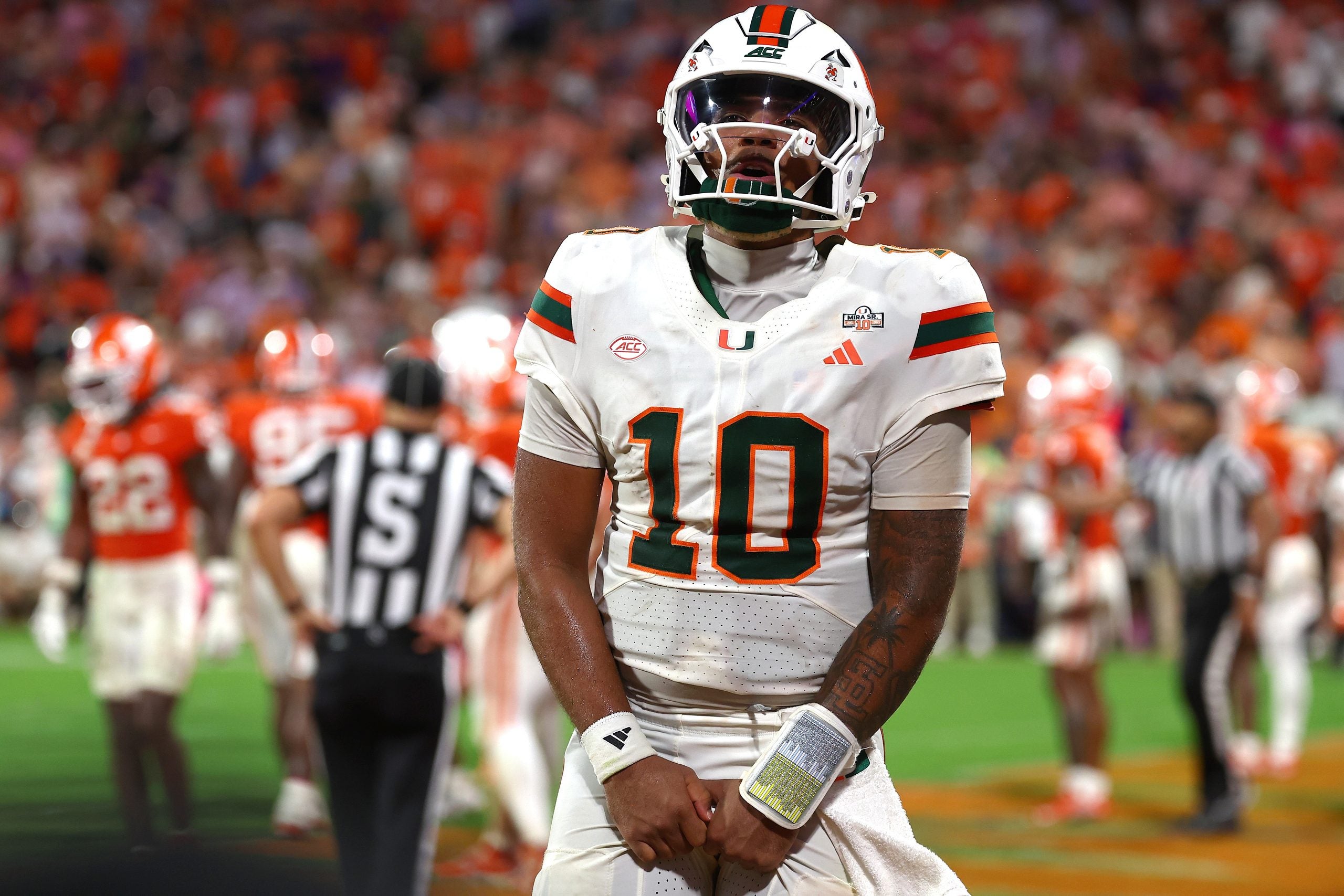
5. Cleveland Browns — Darian Mensah, QB, Miami
Cleveland adds a quarterback with the potential to become the centerpiece of its offense. Mensah has been building his draft stock through his accuracy and ability to operate a productive passing attack. With quarterback questions always looming for the Browns, investing in a passer with first-round upside would give the franchise a chance to reset at the most important position.
6. Los Angeles Chargers — Colin Simmons, EDGE, Texas
The Chargers add an explosive pass rusher who could become a centerpiece of their defensive front. Simmons brings the kind of first-step quickness and disruptive potential teams covet when searching for a consistent threat off the edge. Pairing him with Los Angeles’ existing defensive talent would give the team another young player capable of making life difficult for opposing quarterbacks.
7. New York Giants — Leonard Moore, CB, Notre Dame
The Giants land one of the premier defensive backs in the class. Moore combines size, physicality, and impressive coverage instincts, with the ability to challenge receivers in man coverage and make plays on the football. His length and competitiveness give him the tools to develop into a true shutdown corner, making this an attractive selection for a defense seeking a long-term answer in the secondary.
8. New Orleans Saints — Dylan Stewart, EDGE, South Carolina
New Orleans invests in a disruptive edge defender with tremendous physical upside. Stewart’s explosiveness and ability to win with speed make him a dangerous pass-rushing prospect, while his development against the run could help him become a more complete defender. The Saints would be betting on his ability to turn those traits into consistent NFL production.
9. Washington Commanders — Charlie Becker, WR, Indiana
Washington adds another weapon to its passing attack with Becker. The Indiana wideout has worked his way into the first-round conversation, offering the potential to stretch defenses and create opportunities for his quarterback. Adding another young receiver would give the Commanders more flexibility with their offensive personnel and help build a deeper group of pass catchers.
10. Tampa Bay Buccaneers — Jamari Johnson, TE, Oregon
The Buccaneers strengthen their offense by adding a versatile tight end. Johnson could provide a useful option between the numbers, with the potential to contribute as both a receiver and an in-line player. In an offense looking to create mismatches against linebackers and safeties, his versatility would give Tampa Bay another way to attack opposing defenses.
11. New York Jets — Ashton Hampton, CB, Clemson
The Jets double down on improving their secondary by selecting Hampton. The Clemson cornerback has the opportunity to develop into a valuable coverage piece, bringing another young option into a defensive backfield that needs to compete against increasingly talented passing attacks. His development and consistency will determine how quickly he can become a dependable NFL starter.
12. Pittsburgh Steelers — Austin Simmons, QB, Missouri
Pittsburgh takes a swing at quarterback, selecting Simmons as a potential long-term solution under center. The Steelers have consistently sought stability at the position, and this selection would give them another young passer to develop. His accuracy, decision-making, and ability to handle NFL pressure will be key factors in determining whether he can become a franchise quarterback.
13. Las Vegas Raiders — Ryan Coleman-Williams, WR, Alabama
The Raiders add another playmaker to their receiving corps with Coleman-Williams. Alabama continues to be a strong environment for developing NFL-caliber wideouts, and Las Vegas would be investing in the potential for a receiver who can grow into a larger offensive role. The goal would be to give the Raiders another target capable of separating from coverage and producing explosive plays.
14. Atlanta Falcons — Chris Cole, LB, Georgia
Atlanta stays close to home to select Cole, a linebacker from Georgia. The Falcons could use a young defender who can contribute against the run while developing into a more complete three-down player. Cole would bring another option to the middle of the defense as Atlanta looks to improve its physicality and consistency.
15. Carolina Panthers — Trey’Dez Green, TE, LSU
Carolina adds size and versatility to its passing game with Green. A tight end who can threaten defenses down the seam and provide a target in the red zone can make life easier for a young quarterback. The Panthers would be betting on Green’s ability to become a consistent contributor and add another dimension to their offensive attack.
16. New York Jets — Reed Harris, WR, Arizona State
The Jets continue to surround their quarterback room with offensive talent, selecting Harris to add depth and potential upside at wide receiver. A young receiver who can develop into a reliable target would help the offense create more favorable matchups and give the coaching staff additional flexibility in its passing concepts.
17. Houston Texans — Jordan Seaton, OT, LSU
Houston invests in protecting its quarterback by selecting Seaton. Offensive tackle remains one of the most valuable positions in the draft, and adding a potential long-term starter would help the Texans maintain a stronger foundation up front. Seaton’s development as a pass protector and run blocker would be central to his ability to anchor the line.
18. Philadelphia Eagles — Greg Johnson, IOL, Minnesota
Philadelphia continues its tradition of investing in the trenches. Johnson would provide an option on the interior offensive line, potentially helping the Eagles maintain their physical identity and prepare for future changes along the front. Interior depth can be especially valuable for a team with postseason aspirations and a demanding offensive system.
19. Dallas Cowboys — Kyngstonn Viliamu-Asa, LB, Notre Dame
Dallas addresses its linebacker group with Viliamu-Asa. The Notre Dame defender offers an opportunity to add youth and athleticism to the middle of the defense. His ability to diagnose plays, contribute against the run, and develop in coverage will determine his eventual role, but the Cowboys would be investing in a position that can help stabilize the entire unit.
20. New England Patriots — Cam Coleman, WR, Texas
New England gives its offense another potential difference-maker with Coleman. The Texas wideout has the physical tools to create mismatches, particularly with his size and ability to win contested catches. Adding a receiver with his upside could help the Patriots build a more dangerous passing attack and give their quarterback another target capable of making plays downfield.
21. Minnesota Vikings — Dante Moore, QB, Oregon
Minnesota finds significant value by selecting Moore late in the first round. He entered the season with considerable draft buzz, and his arm talent and ability to operate a modern passing offense give him an intriguing NFL projection. The Vikings could use this selection to add competition and long-term insurance at quarterback, though Moore’s consistency will remain an important part of his evaluation.
22. Detroit Lions — Kelley Jones, CB, Mississippi State
Detroit adds help in the secondary with Jones. A young cornerback who can compete for playing time and develop into a reliable coverage option would help the Lions manage the demands of facing high-powered passing offenses. His ability to handle different receiver types and remain consistent in coverage will be important to his NFL outlook.
23. Cincinnati Bengals — Ellis Robinson IV, CB, Georgia
Cincinnati selects Robinson to strengthen its defensive backfield. The Georgia cornerback offers the kind of upside teams seek when investing in young coverage talent. The Bengals would be looking for him to develop into a dependable outside corner who can compete against the top receivers in the AFC and help the defense get off the field in critical situations.
24. Denver Broncos — Xavier Gilliam, DT, Tennessee
Denver adds interior defensive line help with Gilliam. A disruptive defensive tackle can create opportunities for edge rushers by collapsing the pocket and preventing quarterbacks from stepping up comfortably. The Broncos would be investing in the potential for Gilliam to become a valuable part of their defensive rotation and contribute to a more consistent pass rush.
25. Chicago Bears — Will Echoles, DT, Ole Miss
Chicago bolsters its defensive front with Echoles. Adding a young defensive tackle could help the Bears improve their ability to control the line of scrimmage, disrupt running plays, and generate interior pressure. If Echoles develops into a consistent presence against both the run and pass, he could become an important piece of the defense.
26. Jacksonville Jaguars — Trevor Goosby, OT, Texas
Jacksonville uses its first-round selection to reinforce the offensive line. Goosby offers the Jaguars a potential long-term option at tackle, where athleticism and pass-protection technique are essential. Strengthening the line would help the offense maintain consistency and give its quarterback more time to operate.
27. Seattle Seahawks — Yhonzae Pierre, EDGE, Alabama
Seattle adds another potential pass-rushing weapon with Pierre. The Alabama defender gives the Seahawks a developmental edge prospect who could contribute to their pressure packages while working toward a larger role. His ability to turn athletic traits into consistent production will determine how valuable this selection becomes.
28. Kansas City Chiefs — Nick Marsh, WR, Indiana
Kansas City adds another receiver to its offense with Marsh. The Chiefs have long valued pass catchers who can create separation and give their quarterback options at multiple levels of the field. Marsh would have an opportunity to develop within a creative passing system and potentially grow into a larger role as his route running and consistency improve.
29. Baltimore Ravens — Kade Pieper, IOL, Iowa
Baltimore invests in the interior offensive line with Pieper. The Ravens’ physical offensive identity places a premium on winning up front, and adding a young interior lineman could help protect the quarterback while creating running lanes. Pieper would have a chance to develop into a dependable piece of the offensive front.
30. San Francisco 49ers — Trevor Lauck, OT, Iowa
San Francisco continues to build through the trenches by selecting Lauck. Offensive line depth is essential for maintaining a productive offense over a long season, and a young tackle could provide both immediate competition and a potential future starter. The 49ers would be hoping his technique and physical development translate into a reliable NFL presence.
31. Buffalo Bills — KJ Bolden, S, Georgia
Buffalo strengthens its secondary with Bolden, a safety from Georgia. The Bills would be adding a young defensive back with the potential to contribute in multiple roles, helping the defense handle both deep coverage responsibilities and plays closer to the line of scrimmage. His versatility could be particularly valuable against the varied offensive attacks in the AFC.
32. Cleveland Browns — Clev Lubin, EDGE, Louisville
Cleveland closes the first round by adding another pass rusher in Lubin. The Louisville edge defender has generated attention for his disruptive production, and his ability to pressure quarterbacks gives him a chance to carve out an important role at the next level. Adding another young defensive lineman would give the Browns more options to rotate rushers and attack opposing protections.
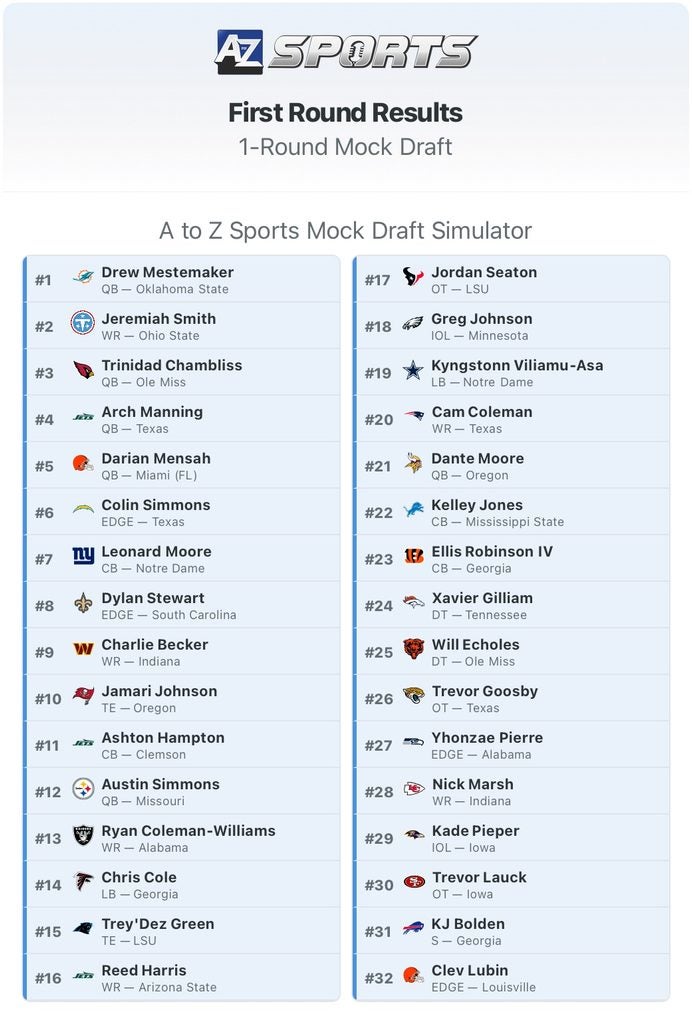
Biggest storylines from the first round
- Quarterbacks rule the top five. Mestemaker, Chambliss, Manning and Mensah all land inside the first five picks, reflecting the premium NFL teams place on finding a franchise quarterback.
- Jeremiah Smith is the draft’s premier non-QB prospect. The Ohio State star goes second overall and could immediately become a focal point of an NFL passing game.
- Notre Dame has two first-round selections. Cornerback Leonard Moore goes seventh overall, while linebacker Kyngstonn Viliamu-Asa lands with Dallas at No. 19.
- The defensive line remains a priority. Simmons, Stewart, Gilliam, Echoles, Pierre and Lubin all come off the board in the first round, showing the value placed on building a disruptive front.
- The late first round offers quarterback value. Moore’s slide to Minnesota at No. 21 gives the Vikings a chance to add a potential long-term starter without spending a top-five pick.
These are projections rather than confirmed draft outcomes. Several prospects’ eventual draft eligibility, team needs, and evaluations will depend on how the remainder of the 2026 college football season unfolds.
