
2027 NFL Mock Draft: Dolphins, Cardinals, Jets, and Browns find QBs, while Jeremiah Smith is reunited with an old friend
The latest 2027 NFL mock draft delivers new franchise quarterbacks to the Miami Dolphins, Arizona Cardinals, New York Jets, and Cleveland Browns.

The 2027 NFL Draft is still months away, but the quarterback position is already shaping the conversation at the top of the board. With several intriguing prospects emerging as potential first-round picks, the decisions teams make under center could have a major impact on how the rest of the first round unfolds.
On the latest episode of Best Pod Available, my co-host Joe DeLeone and I worked through the first round using the A to Z Sports mock draft simulator. The exercise produced four quarterbacks in the top 10, several potential franchise-altering selections, and a few surprises as we worked our way toward the end of the first round.
The Miami Dolphins opened the draft by selecting Oklahoma State quarterback Drew Mestemaker, while the Tennessee Titans added Ohio State wide receiver Jeremiah Smith to their offense. Notre Dame cornerback Leonard Moore went fourth overall to the New York Jets, and Fighting Irish edge rusher Boubacar Traore landed with the Seattle Seahawks at No. 29.
There were no trades in this mock draft. Here’s a breakdown of all 32 selections, including the reasoning behind each pick and how the prospects could fit with their new teams. DeLeone took the odd selections, while I handled the evens.
Picks 1-10: Quarterbacks take center stage
1. Miami Dolphins: Drew Mestemaker, QB, Oklahoma State
The Dolphins get the first crack at finding their next franchise quarterback, and Mestemaker is the selection. After conversations with draft experts Jordan Reid and Dane Brugler on the show, the Oklahoma State signal-caller has emerged as a serious candidate to be the first quarterback selected, with a legitimate chance to go No. 1 overall.
Mestemaker brings an appealing combination of size, arm strength, and athleticism. Those physical tools give him a high ceiling, while his ability to threaten defenses in multiple ways makes him an intriguing option for a franchise looking for a long-term answer at the most important position in football.
There is still plenty of football to be played before the draft, and the evaluation process will become much more intense over the next several months. But if Mestemaker continues to develop, Miami could have a difficult time passing on him.
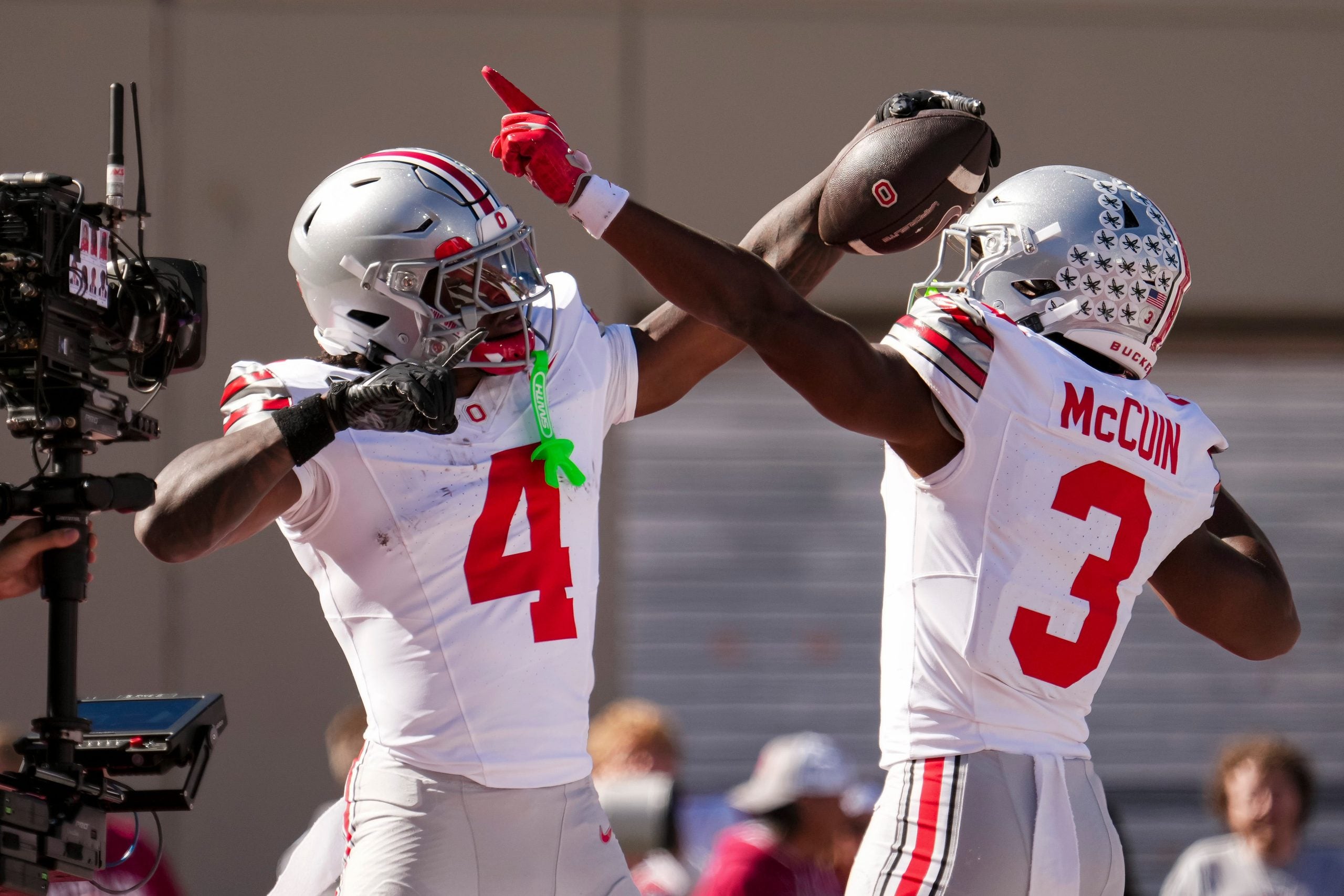
2. Tennessee Titans: Jeremiah Smith, WR, Ohio State
The Titans have plenty of needs to address, but pairing Cam Ward with arguably the most talented offensive player in the class is an appealing way to continue building the offense.
Smith is a physically imposing receiver who can win at every level of the field. He has the size to make contested catches, the explosiveness to create separation, and the ability to turn routine completions into significant gains. He would give Ward a legitimate go-to target capable of changing the way opposing defenses approach Tennessee.
Wide receiver might not be the Titans’ most pressing need, but rebuilding teams cannot afford to ignore elite talent simply because another position needs attention. Smith would give Tennessee a potential cornerstone for years to come.
3. Arizona Cardinals: Darian Mensah, QB, Miami (FL)
The Cardinals decide they cannot afford to keep postponing the quarterback conversation and select Mensah third overall.
Mensah is an interesting evaluation because his supporters and skeptics see very different outcomes. His supporters believe the talent is there for him to become a high-level NFL starter, while the concerns surrounding his overall consistency make his projection less straightforward than that of some other prospects.
Still, Arizona needs to find a long-term answer at quarterback if it wants to build a sustainable contender. Mensah’s selection would signal that the organization believes his upside outweighs the risks.
Taking a quarterback this early is never a decision to make lightly. But if Arizona’s front office believes Mensah can develop into a franchise player, this is the kind of opportunity the team needs to consider seriously.
4. New York Jets: Leonard Moore, CB, Notre Dame
The Jets land one of the premier defensive prospects in the class by selecting Moore fourth overall.
Moore has the length, explosiveness, and ball skills teams look for in an outside cornerback. His ability to make plays on the football stands out, and his production at Notre Dame gives evaluators plenty of film to study. Although recent injuries have interrupted his season, they do not erase the qualities that make him such an appealing prospect.
New York has a clear opportunity to strengthen its secondary with a corner capable of matching up against some of the NFL’s best receivers. Moore has the physical profile to handle that responsibility, and his instincts around the football could make him an impact player early in his career.
The Jets have multiple needs to address, but finding a potential long-term answer at cornerback this high in the draft would be a strong start.
5. Los Angeles Chargers: Colin Simmons, EDGE, Texas
The Chargers add an explosive pass rusher in Simmons, a player who could eventually help fill the void left by Khalil Mack.
Simmons has the traits to become a disruptive presence off the edge. His burst, ability to attack offensive tackles, and potential to win one-on-one matchups make him an attractive option for a defense that needs to think about its future along the defensive front.
The comparison to Houston Texans star Will Anderson Jr. speaks to the kind of impact Simmons could have, particularly in terms of his projected ability to pressure quarterbacks. That does not mean their playing styles are identical, but the expectation is that Simmons could become a foundational piece of a defense.
With Mack approaching the latter stages of his career, the Chargers would benefit from adding a young pass rusher who can develop into a regular contributor and eventually take on a larger role.
6. New York Jets: Trinidad Chambliss, QB, Ole Miss
The Jets double down on their future by taking Chambliss sixth overall after selecting Moore at No. 4.
Chambliss is an older and shorter prospect than the traditional first-round quarterback, but those characteristics should not automatically eliminate him from consideration. His arm talent and ability to create outside the structure of a play make him an intriguing option for a team searching for stability at quarterback.
The question is whether his playmaking translates consistently against NFL defenses. Quarterbacks who rely on movement and improvisation can be dangerous, but they also need to demonstrate that they can operate efficiently when the initial read is unavailable.
New York would be betting on Chambliss’ ability to make plays and develop into a dependable starter. If he reaches that potential, the Jets could come away with two important building blocks on opposite sides of the ball in the first six picks.
7. Philadelphia Eagles: Charlie Becker, WR, Indiana
The Eagles select Becker to add another dimension to their passing attack.
Philadelphia has the pieces to be dangerous offensively, but adding a big outside receiver would give the offense another way to create mismatches. Becker offers the kind of target who can stretch the field vertically while also giving the quarterback a reliable option when the ball goes up in contested situations.
The Eagles have traditionally valued receivers who can threaten defenses in different ways. Becker would give them another player capable of forcing defensive coordinators to account for the entire width and depth of the field.
South Carolina edge rusher Dylan Stewart was another intriguing possibility here, but Philadelphia opts to address the offense. If Becker develops as expected, he could become a valuable complement to the team’s existing playmakers.
8. New Orleans Saints: Dylan Stewart, EDGE, South Carolina
The Saints get a potential difference-maker on defense in Stewart, who has the talent to warrant consideration near the top of the draft.
Stewart is one of the most intriguing defensive prospects in this class because of his physical tools and pass-rushing potential. His ability to generate pressure off the edge gives him a path to becoming an impact player, particularly if he continues refining his technique and consistency.
New Orleans has reason to consider its long-term options at defensive end. Carl Granderson remains part of the picture, while Chase Young’s inconsistency makes it difficult to assume the current group will provide a dependable answer for years to come.
Stewart would give the Saints another young defender to build around. The upside is significant, and a team in need of more consistent pressure on opposing quarterbacks could justify making this investment.
9. Washington Commanders: Ashton Hampton, CB, Clemson
Washington adds a potential shutdown cornerback in Hampton.
The Clemson defender has the tools to develop into a player who can handle difficult assignments on the outside. Finding corners who can consistently survive against top NFL receivers is one of the more challenging tasks for a front office, which is why Hampton’s upside makes him an appealing option this high.
The Commanders need to continue building a defense capable of competing with the league’s better offenses. A young cornerback with the potential to take away one side of the field would give the coaching staff more flexibility with its coverage schemes and pressure packages.
Hampton still has to prove he can deliver consistently at the next level, but his ceiling makes him a reasonable top-10 candidate.
10. Cleveland Browns: LaNorris Sellers, QB, South Carolina
The Browns finally address the quarterback position by selecting Sellers at No. 10.
Sellers is a fascinating prospect because of his physical ability. He has the size and athleticism to create problems for defenses as a runner, and his arm gives him the potential to make throws that many quarterbacks cannot. The challenge is turning those tools into consistent passing production.
Cleveland needs to determine whether it has a quarterback who can lead the franchise for the foreseeable future. If the Browns believe Sellers can develop into that player, his upside makes him worth serious consideration.
This would be a projection based heavily on potential rather than a guarantee of immediate success. Still, teams rarely get the opportunity to select quarterbacks with Sellers’ physical traits outside the top of the draft, and Cleveland takes its shot.
Picks 11-20: Offensive weapons and defensive building blocks
11. Las Vegas Raiders: Ryan Coleman-Williams, WR, Alabama
The Raiders give Fernando Mendoza another potential weapon by selecting Coleman-Williams.
Coleman-Williams has become a more appealing prospect as his hands have improved this season. Reliable receiving is critical for a young quarterback, and the Alabama wideout’s ability to make plays after the catch would give Mendoza an additional option to work with.
Las Vegas needs to build an offense that makes life easier for its quarterback. That means adding receivers who can separate, catch the football consistently, and create yards without requiring perfect throws every time.
Coleman-Williams would give the Raiders another young piece to develop alongside Mendoza. If his recent progress continues, he could become a useful contributor in an offense that needs more explosive plays.
12. Tampa Bay Buccaneers: Jadan Baugh, RB, Florida
This is one of the more unconventional selections in the mock draft, but Baugh would bring an interesting physical dimension to Tampa Bay’s backfield.
The Florida running back could complement Bucky Irving by offering a different style of runner. A bigger back who can handle contact and contribute between the tackles would give the Buccaneers more options when they want to establish the ground game.
There are fair questions about using a first-round pick on a running back, particularly when other positions can have a more substantial impact on a team’s overall success. Tampa Bay would need to believe Baugh is a special enough talent to justify that investment.
Still, the idea of pairing two backs with different strengths has merit. Baugh could help Tampa Bay build a more versatile rushing attack and reduce the workload on Irving.
13. New York Giants: Xavier Gilliam, DT, Tennessee
The Giants continue investing in the defensive line by selecting Gilliam.
Gilliam projects as a powerful interior defender who could help control the middle of the field. His fit would be especially interesting in a defense that has shown encouraging signs under defensive coordinator Dennard Wilson.
Interior defensive linemen do not always receive the same attention as edge rushers, but the ability to hold up against the run and create disruption inside is essential. A dependable presence in the middle can free up linebackers and make life more difficult for opposing offenses on early downs.
Gilliam would give New York another young player to develop along the defensive front. The Giants would be betting that his physical style and potential make him a long-term fit in the middle of their defense.
14. Pittsburgh Steelers: Ellis Robinson IV, CB, Georgia
Pittsburgh adds young talent to its secondary with Robinson, a cornerback who could help address the team’s long-term needs in coverage.
The Steelers have traditionally built their identity around physical defense, and they need enough talent in the secondary to maintain that standard. Robinson has the opportunity to develop into a starting-caliber corner who can contribute against the increasingly talented receiving groups across the AFC.
Cornerback depth becomes particularly important when teams face offenses capable of spreading the field and creating favorable matchups. Pittsburgh would benefit from having another young defender who can grow into a larger role rather than relying exclusively on its existing personnel.
Robinson’s selection would represent an investment in the future of the secondary, with the potential to pay dividends as he gains experience.
15. Atlanta Falcons: Jordan Seaton, OT, LSU
The Falcons land one of the most appealing offensive line prospects in the class in Seaton.
At this point in a draft, finding a potential long-term answer at offensive tackle is a significant opportunity. Seaton has the profile to compete for a starting job at right tackle early in his career, with a possible path to eventually replacing Jake Matthews on the left side.
Atlanta needs to keep investing in the protection surrounding its quarterback. A strong offensive line makes the passing game more efficient and gives the running game a better chance to succeed.
Seaton would not necessarily need to become a left tackle immediately. The Falcons could develop him at right tackle while preparing for the eventual transition on the other side. That flexibility makes this selection particularly attractive.
16. Carolina Panthers: Trey’Dez Green, TE, LSU
Carolina adds a potential mismatch weapon at tight end in Green.
His size and catch radius could give the Panthers another way to attack defenses, particularly in the red zone and on intermediate throws over the middle. Tight ends who can create matchup problems against linebackers and safeties are valuable because they force defenses to make difficult personnel decisions.
For Carolina, the next step is continuing to surround its quarterback with reliable targets who can contribute in different areas of the field. Green would offer a different skill set from a traditional outside receiver and could help open up opportunities for the rest of the offense.
The Panthers would need to develop his all-around game, but his physical profile gives him an intriguing ceiling as a receiving tight end.
17. Houston Texans: Trevor Lauck, OT, Iowa
The Texans turn to the offensive line with Lauck, a prospect who could help establish a more physical identity up front.
Houston needs to give its offense more consistency in the running game while ensuring its quarterback has dependable protection. Those objectives are closely connected. A stronger offensive line can improve the ground attack, keep the offense in manageable situations, and reduce the pressure on the passing game to carry every possession.
Lauck’s appeal is his potential to provide the kind of physical presence Houston wants along the line. The Texans would be looking for a player who can move defenders off the ball and contribute to a more reliable rushing attack.
If he develops into a consistent starter, Lauck could help address an important part of Houston’s offensive foundation.
18. New York Jets: Chris Cole, LB, Georgia
The Jets make their third selection of the first round by adding Cole to the defense.
After taking Moore at No. 4 and Chambliss at No. 6, New York continues to address the future of its roster. Cole would add athleticism and versatility to the linebacker room, giving the defense another young player to develop.
Modern NFL linebackers need to do more than tackle running backs. They must recognize route combinations, cover space against tight ends and running backs, and communicate effectively before the snap. Cole’s potential in those areas makes him an interesting fit.
The Jets would be investing heavily in their future in this scenario, using three first-round selections to address quarterback, cornerback, and linebacker. Whether that strategy pays off would depend on the development of all three prospects, but the positional variety makes sense.
19. Dallas Cowboys: KJ Bolden, S, Georgia
Dallas addresses its secondary with Bolden, a safety who could provide a much-needed boost to the defense.
The Cowboys have struggled defensively, and improving the back end should be part of the solution. A safety with the ability to cover ground, communicate assignments, and help prevent explosive plays can make a meaningful difference, especially when the front seven is still working to generate consistent pressure.
Bolden would give Dallas another young defender to build around. His versatility could allow the coaching staff to use him in different alignments depending on the matchup, rather than limiting him to one narrow role.
The Cowboys have several areas that need attention, but adding a potential long-term starter at safety would be a sensible step toward improving the overall defense.
20. New England Patriots: Reed Harris, WR, Arizona State
The Patriots continue building around Drake Maye by selecting Harris.
New England needs to keep giving Maye reliable targets who can stretch the field and win against NFL coverage. Harris brings length and vertical ability, offering the potential to become a receiver who can threaten defenses downfield while creating opportunities underneath for his teammates.
The Patriots’ offense will benefit from having multiple receivers who can win in different ways. Harris would give Maye another option outside the numbers and could help prevent defenses from focusing too heavily on the team’s established playmakers.
There is still development required before Harris can be counted on as a consistent NFL starter, but his physical traits make him an intriguing addition to New England’s receiving room.
Picks 21-32: Defensive reinforcements and a late first-round pass rusher
21. Minnesota Vikings: Jelani McDonald, S, Texas
The Vikings select McDonald to address a position that could soon require a long-term succession plan.
Harrison Smith has been a fixture in Minnesota’s secondary for years, but the Vikings cannot afford to wait until a veteran’s departure becomes an immediate problem before considering the future. McDonald would give them a young safety to develop while potentially adding more athleticism to the back end.
His position on the A to Z Sports draft board suggests that this would be an aggressive selection. However, teams frequently value prospects differently based on their scheme, roster needs, and long-term plans.
If Minnesota believes McDonald can become a versatile starter, using a first-round pick on him could make sense. The Vikings would be prioritizing a position that can have a significant impact on communication and coverage across the defense.
22. Cincinnati Bengals: Kingston Lopa, S, California
Cincinnati adds an intriguing defensive back in Lopa, whose size gives him an unusual profile for a safety.
At 6-foot-5 and 210 pounds, Lopa has the physical dimensions to offer flexibility in the secondary. His size could be useful against bigger receivers and tight ends, while his overall versatility would give Cincinnati options in how it deploys him.
The Bengals need to continue improving a defense that has had difficulty consistently limiting opposing offenses. Adding young talent to the secondary is one way to begin addressing those concerns.
Lopa would need to prove that his size translates into consistent coverage ability at the next level. But if Cincinnati can develop his range, instincts, and tackling, he could become a valuable piece of the defensive backfield.
23. Denver Broncos: Jamari Johnson, TE, Oregon
The Broncos add another potential weapon to Sean Payton’s offense with Johnson.
Payton has a history of finding creative ways to use tight ends, and Johnson could give Denver another option in the passing game as the team plans for the future behind Evan Engram.
A productive tight end can create problems for defenses because of the range of matchups he presents. Linebackers may struggle to handle his receiving ability, while defensive backs can have difficulty matching his size and strength.
Johnson would give Denver another player to work into its offensive concepts, potentially contributing on intermediate routes, in the red zone, and as part of formations designed to create mismatches.
The Broncos would need to determine how quickly he could contribute, but his potential fit in Payton’s system makes this an appealing selection.
24. Detroit Lions: Kelley Jones, CB, Mississippi State
The Lions address a major need in the secondary by selecting Jones.
Detroit has built much of its identity around a physical offensive line and a defense capable of creating pressure. However, that pressure becomes less effective if opposing quarterbacks can consistently find open receivers in coverage.
Jones would give the Lions another young cornerback to develop in a position where quality depth is essential. The team needs players who can handle difficult assignments outside while giving the coaching staff flexibility with its coverage schemes.
Interior offensive lineman Greg Johnson was another possibility, but the need at cornerback makes Jones the more compelling choice in this mock draft. Improving the secondary would give Detroit a better chance to turn defensive pressure into incomplete passes and turnovers.
25. Chicago Bears: Will Echoles, DT, Ole Miss
The Bears get a potentially impactful interior defender in Echoles, who would address one of the more important areas of the defensive front.
Chicago needs more disruption from its defensive line, particularly from players who can generate pressure without requiring extra rushers. An interior defender who consistently penetrates the backfield can disrupt timing, force quarterbacks off their preferred spots, and create opportunities for edge rushers.
Echoles’ ability to get into the backfield makes him an appealing fit for a team looking to improve its defensive front. His presence could also help the Bears become more effective against the run by preventing opposing offenses from consistently establishing themselves between the tackles.
This is a strong opportunity for Chicago to add a player who could make a difference on early downs and in obvious passing situations.
26. Jacksonville Jaguars: Zereoue Williams, OT, Utah
Jacksonville selects Williams to strengthen its offensive line and potentially secure a long-term answer at tackle.
The more film evaluators get on Williams, the more interesting his projection becomes. He has the potential to climb significantly as the draft process progresses, particularly if his performances continue to demonstrate that he can handle the physical demands of the position.
The Jaguars need to protect their quarterback while maintaining a productive running game. Offensive tackle is one of the most important positions to address because a reliable starter can improve the offense in multiple ways.
Williams is a projection here, and the Jaguars would be betting on his development rather than simply selecting a player with an established first-round consensus. If his game continues to progress, he could become one of the more intriguing offensive line prospects in the class.
27. Baltimore Ravens: Greg Johnson, IOL, Minnesota
The Ravens add a physical interior offensive lineman in Johnson.
Baltimore’s offensive identity has long benefited from a strong running game and an offensive line capable of creating movement at the point of attack. Johnson’s mauling style and versatility would fit that approach, giving the team another option along the interior.
He could provide depth initially before competing for a starting role, depending on the state of the offensive line when he arrives. His ability to handle different interior positions would also give Baltimore more flexibility when injuries or roster changes occur.
The Ravens have consistently valued offensive linemen who can hold up physically and contribute to a balanced attack. Johnson would be another investment in that philosophy.
28. Cleveland Browns: Yhonzae Pierre, EDGE, Alabama
The Browns return to the defensive front with their second first-round selection, taking Pierre after selecting LaNorris Sellers earlier in the round.
Pierre brings an explosive first step that could help Cleveland generate more pressure off the edge. His ability to threaten offensive tackles quickly would give the Browns another potential weapon in passing situations, particularly if he can develop a more complete collection of pass-rush moves.
Adding an edge rusher would make sense for a team looking to build a more disruptive defense. Consistent pressure can help the secondary by forcing quarterbacks to make decisions before routes have time to develop.
Cleveland’s decision to select a quarterback at No. 10 and an edge defender at No. 28 would allow it to address two premium positions in the same round. Pierre’s development would determine how much of an immediate impact that investment produces.
29. Seattle Seahawks: Boubacar Traore, EDGE, Notre Dame
Seattle adds a productive pass-rushing prospect in Traore, who has been one of Notre Dame’s most intriguing defensive players.
Traore has shown the ability to disrupt opposing offenses, and his production gives him a strong foundation heading into the next stage of his development. His selection at No. 29 would reflect the value of adding another young edge defender to a roster that needs to plan beyond its veteran contributors.
DeMarcus Lawrence is in his 13th NFL season, making the long-term outlook at the position an important consideration. Even if Lawrence continues contributing, Seattle would benefit from having a younger player ready to take on a larger role.
Traore would have the opportunity to develop within a defensive front that could use another source of pressure. His first-round projection will depend on how he finishes the season and performs during the pre-draft process, but the combination of production and positional value makes him an interesting late-first-round option.
30. Kansas City Chiefs: Nick Marsh, WR, Indiana
The Chiefs add another potential weapon for their passing game by selecting Marsh.
At 6-foot-3 and 210 pounds, Marsh has the size to compete for contested catches while offering the potential to create yards after the reception. Those qualities would give Kansas City another type of receiver to work into its offense.
The Chiefs have shown how valuable it can be to have receiving options who can win in different situations. Marsh could provide a bigger target outside while allowing the offense to create mismatches through formation and route combinations.
His steadier production compared with some of the other high-profile receivers in the class makes him an appealing option here. Kansas City would be betting that his size and playmaking ability can translate into a dependable role at the next level.
31. Buffalo Bills: Kyngstonn Viliamu-Asa, LB, Notre Dame
Buffalo adds a versatile linebacker in Viliamu-Asa, giving its defense another young player who could contribute in multiple roles.
The modern linebacker must be able to handle responsibilities against the run while also contributing in coverage. Versatility becomes particularly valuable when defenses face offenses that use multiple tight ends, spread formations, and running backs as receiving threats.
Viliamu-Asa has the potential to provide that flexibility. Buffalo could use him as part of its rotation while developing him into a more substantial contributor as he gains experience.
The Bills have consistently needed to balance immediate defensive needs with long-term roster planning. Selecting a versatile linebacker late in the first round would give them another player who could fit into different packages and help maintain the defense’s flexibility.
32. San Francisco 49ers: Kade Pieper, IOL, Iowa
The 49ers close out the first round by adding Pieper, an interior offensive lineman whose movement skills could make him a natural fit in their offense.
San Francisco’s offensive system places a premium on linemen who can move effectively, reach their assignments, and create opportunities for the running game. Pieper’s athletic profile makes him an intriguing option for that approach.
There is one important caveat: his decision about whether to enter the 2027 NFL Draft remains a factor. If he declares, the 49ers could view him as a prospect whose skill set fits their offensive philosophy.
The offensive line is an area teams need to address before it becomes a major weakness. San Francisco would be investing in a player who could provide depth initially and potentially develop into a starter along the interior.
Final thoughts on the 2027 NFL Mock Draft
The biggest takeaway from this exercise is how much the quarterback position could influence the first round. Mestemaker, Mensah, Chambliss and Sellers all went inside the top 10, creating a run that pushed several talented defensive players and offensive weapons into different situations.
The draft also offered a reminder that teams do not always select strictly according to consensus rankings. Positional needs, long-term roster planning, and individual evaluations can produce surprising decisions, particularly when teams are picking near the top of the board.
For the Dolphins, the decision to take Mestemaker first overall would set the tone for the entire class. Tennessee would give its young quarterback an elite receiving target in Smith, while the Jets would make a major investment in their future with Moore, Chambliss and Cole.
There are also several intriguing fits later in the round. The Lions address their secondary with Jones, the Bears strengthen the defensive interior with Echoles, and the Seahawks add Traore as they look toward the future of their pass rush.
Of course, this is still October. Prospects will rise and fall, team needs will change, and the pre-draft process will reshape the conversation before April arrives. But this first-round exercise offers an early look at how the 2027 NFL Draft could unfold if quarterback demand drives the board and teams prioritize premium positions.
