
Arizona Cardinals face fascinating Marvin Harrison Jr. dilemma with an important franchise altering decision on the horizon
The Arizona Cardinals have some fascinating financial decisions to make after the 2026 season. Marvin Harrison Jr. remains a massive wildcard for the team’s future.

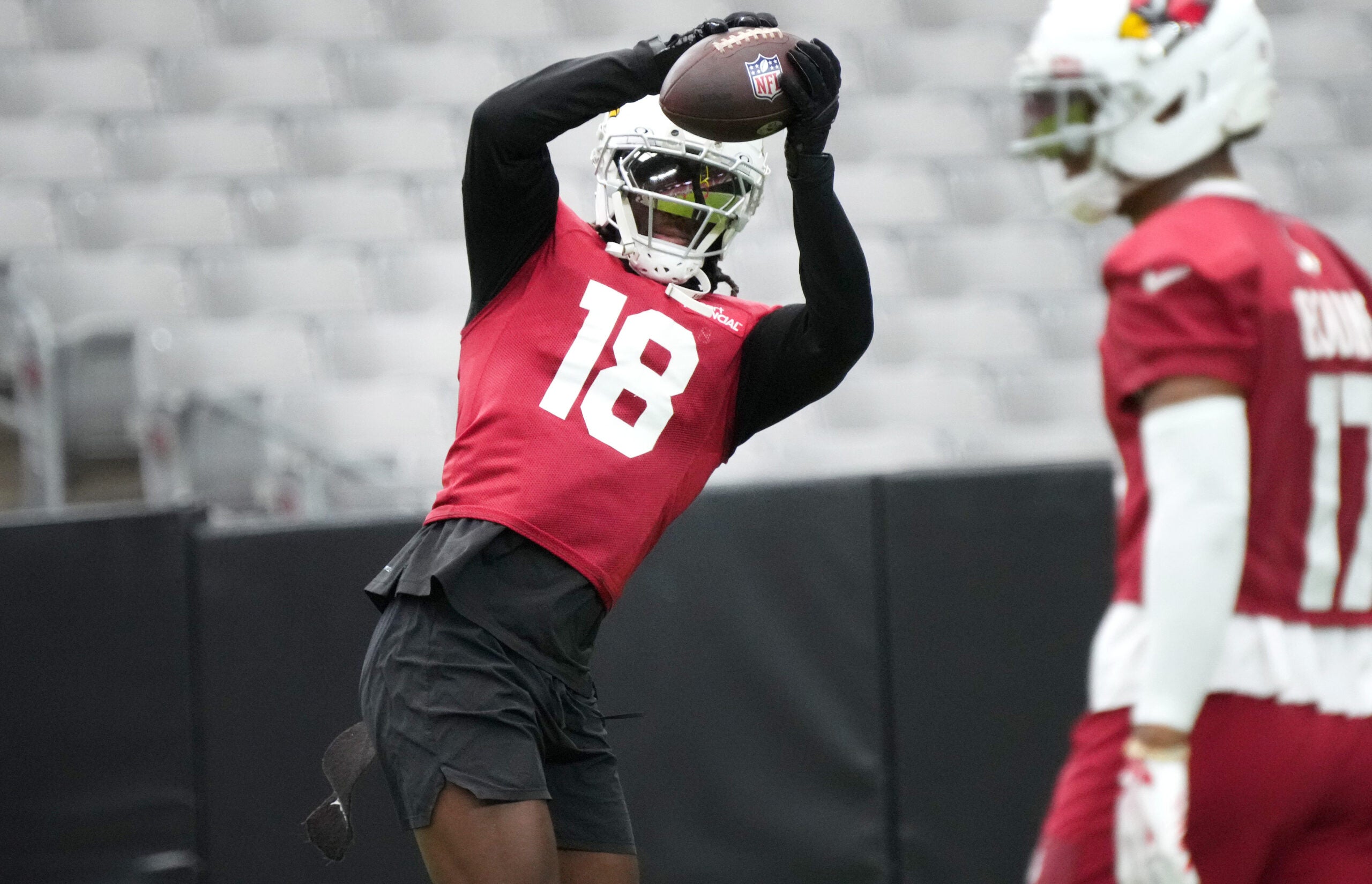
The Arizona Cardinals appear to be planning a long-term rebuild centered around landing an elite quarterback in the 2027 NFL Draft.
With the 2027 quarterback class shaping up to live up to its sky-high expectations, Arizona’s front office wants to position itself to have its pick of the litter. But that tank-for-a-quarterback strategy creates a ripple effect across the roster, and nowhere is the tension more fascinating than at wide receiver.
Marvin Harrison Jr.’s 5th-year option deadline arrives in the spring, right after the draft. The question facing the Cardinals is a layered one: what does Harrison need to show this season to earn that option, and how does he show it on a team committed to losing?
Arizona already has other weapons outperforming the former No. 4 overall pick, and that complicates things further.
The Marvin Harrison Jr. evaluation problem
There are two schools of thought on what a productive 2026 season looks like for Harrison in the context of Arizona’s rebuild.
The first scenario involves Harrison delivering 2 or 3 or 4 games where he looks like the star everyone expected when the Cardinals drafted him. Big splashes. Unmistakable dominance. The kind of performances that make you say the talent was always there.
The second scenario is quieter.
Harrison posts a relatively reserved but consistent season that matches the reality of a bad, irrelevant team. No fireworks, but no instability either. Steady production without the dramatic peaks and valleys that have raised questions about the former Ohio State standout.
Both paths lead to different decisions for the front office, and neither makes the 5th-year option call easy.
Michael Wilson adds another wrinkle
The part of this conversation that doesn’t get enough attention is Michael Wilson. He wants a new contract too. Wilson has been so productive that a genuine debate exists about who is the more valuable receiver for the Cardinals long-term.
A couple of years ago, nobody would have predicted that conversation would be real. It is very real right now. Wilson is good at football.
There’s even a question lurking beneath the surface about incentive alignment. Does Wilson, on some level, benefit if Harrison is merely good rather than great?
If Harrison doesn’t separate himself as a clear-cut franchise receiver, Wilson’s leverage in contract negotiations increases. His demand goes up. That dynamic is worth watching.
The financial puzzle gets ugly
The money side of this equation is where things get truly complicated.
The Cardinals are already paying tight end Trey McBride and have running back Jeremiyah Love on a significant deal, somewhere around top-7 money at the position. And the recent wave of receiver contracts has pushed the market even higher.
Three massive deals just reset the position’s value, and Love’s guarantee structure pushed the floor up even further.
If Arizona is looking at a 5-to-7-year true rebuild, Love figures to remain in those plans. He could command an even bigger deal down the line. Stack that on top of whatever Harrison and Wilson will cost, and the Cardinals are staring at the possibility of investing premium money into two wide receivers, a running back, and a tight end simultaneously.
What happens next?
The jockeying between Harrison and Wilson is going to be one of the most compelling subplots in the NFL this season.
If Harrison comes out and balls out, do the Cardinals let Wilson walk when he demands too much? Can they make both situations work? Is it wise to pour that much salary into skill positions when the franchise is still years away from having its quarterback of the future?
Jeremiyah Love is probably going to be a high-priced acquisition at some point, even higher than he is right now.
There are no clean answers here.
The Cardinals have built themselves into a roster construction puzzle where every decision at receiver impacts their ability to pay everyone else, and the tanking timeline only adds pressure. Arizona’s front office has a lot to sort out before that 5th-year option deadline arrives, and this season will determine whether Harrison’s future is in the desert or somewhere else entirely.
