
What to make of the Bears’ defensive performance in Week 1, including the silver lining that came from two rookie debuts
The Chicago Bears had an offensive explosion in Week 1, and the defense barely did just enough to hold up their end of the bargain. So, let’s break down the play of Dennis Allen’s unit.


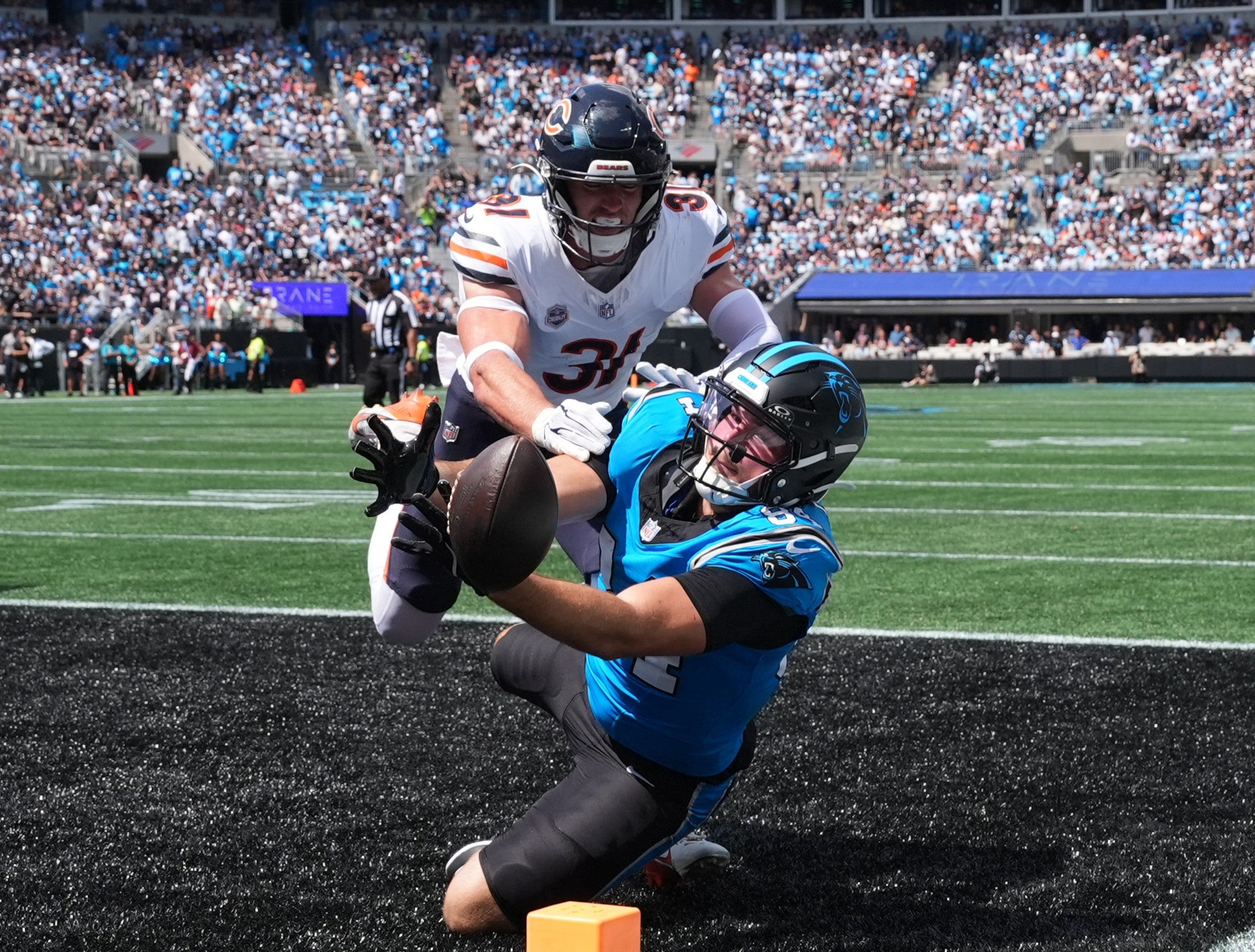
The Chicago Bears had a strong start to the 2026 season on offense after scoring 59 points, and leaving a lot more meat left on the bone for how that performance could have gone if everything was clicking.
Defensively, however, the Bears showed major signs of concern. This can’t be another season in which Ben Johnson’s offense has to score 30+ points a week to win games. Dennis Allen’s unit has to be better after allowing 37 points in Week 1.
“We definitely have a lot to clean up,” rookie cornerback Malik Muhammad said in the locker room after the game. “And I know that wasn’t good enough, especially on the defensive side. I know our coaches feel the same way too.”
So, let’s break down what we actually saw from the unit, both the good and the bad, along with the potential ways to improve.
I thought takeaways were fluky and not sustainable for the Chicago Bears?
Last season, the calling card for this defense was takeaways. Chicago led the NFL in total defensive takeaways, had the NFL’s interception leader, and constantly made up for bad plays by taking the football away. Everyone told me that wasn’t going to be sustainable, especially looking at the amount of takeaways that walked out of the door.
Well, the Bears had three total takeaways in Week 1 (including one on special teams). The other two were an interception by Muhammad and a forced fumble by cornerback Jaylon Johnson. Al Harris’ goal coming into the game was three takeaways and the Bears accomplished that, with a little help from the banana ball punt.
Concerns, and optimism, in the secondary
Chicago entered into this game a man down in the secondary after starting safety Xavier Woods (who was signed to replace an injured Coby Bryant) was ruled out ahead of kickoff. That forced the Bears to play Cam Lewis at safety and start Muhammad at nickel.
First off, Muhammad was excellent in his NFL debut. As a rookie corner in his first NFL start, you knew the Panthers were going to pick on him. Muhammad was targeted nine times, allowing five receptions for 67 yards between his time in the slot and outside. He had a nice diving interception before the half and had another great play on fourth down against Tetairoa McMillan to force an incompletion. He rose to the occasion.
The two that did not were the only two returning players in this entire secondary. Jaylon Johnson and Tyrique Stevenson were terrible in coverage on Sunday. Johnson allowed 127 yards in coverage, the most yards allowed by any cornerback through Week 1, on seven targets. Stevenson wasn’t much better allowing 77 yards and a perfect passer rating on five targets. I’m already at the point where I want to see Muhammad starting on the outside in Stevenson’s place once Woods returns and drop Lewis back down to nickel.
One player I’m not concerned about is first-round safety Dillon Thieneman. That guy is a heat-seeking missile out on the field that had a team-high six tackles while allowing 22 yards in coverage. He certainly looked the part and I’m excited to see Dennis Allen unlock more out of his game as the season continues.
But, still the point remains. Is it a good sign that your best secondary players are two rookies, or is that a bad sign?
Pass rush looks way too familiar from what we saw last year
As for the defensive line, the Bears totaled 22 pressures with 2.0 sacks on 43 dropbacks. Dayo Odeyingbo and Montez Sweat led the way with five pressures a piece while Sweat and Kentavius Street recorded the two sacks.
Overall, I wasn’t impressed with the performance and felt the pass rush was still too inconsistent for how this unit should look. And Dennis Allen was constantly shuffling guys in and out of the lineup and across the formation attempting to find something that worked. Eight defensive linemen recorded 10+ pass rush snaps on Sunday, Odeyingbo had the highest PFF pass rush grade with a 62.9. That’s not good.
The Bears plan this offseason was to improve the pass coverage to in theory help the pass rush. Neither looked good on Sunday and it’s on Allen to reassess, again, which area was the root cause for the 361 passing yards and three passing touchdowns quarterback Bryce Young had in this game.
Tail of two halves, plus being forced in tough positions
The first-half was the real struggle for Chicago’s defense. The Bears surrendered 24 first-half points and 14 of those can be attributed to short-field positions. Chicago’s first defensive drive started on Chicago’s 42-yard-line after the offense coughed up a fumble.
That doesn’t excuse the 11-yard and 26-yard completions that quickly set the Panthers up on the goal line before finally getting into the endzone.
Another drive for the unit started on Chicago’s 21-yard-line after the offense failed to convert on a fourth-and-short, a ballsy call by head coach Ben Johnson that he’d do again in a heartbeat after being frustrated with his play-call than the decision itself.
Again though, that doesn’t excuse the 14-yard completion allowed on the first play of the drive that set the Panthers up inside the 10. Eventually, the Panthers ended that drive with another touchdown.
“We know what kind of coach we’ve got: He’s going to be aggressive on fourth down and early downs,” Sweat said. “We just have to be better in that situation, and we will be.”
In the second-half, however, things did clean up for Allen’s unit. The Bears allowed 13 points in the second-half and played much of the final two quarters defending the lead against the pass. Still, a good defense in that situation would have slammed the door shut and made life hell for the opposing quarterback. Instead, Young had 168 passing yards with one touchdown and only took one sack in the second-half.
For a new-look unit in Week 1, there’s plenty to clean up, which is a good thing. And the best part is that the Bears walked away with a win. Now it’s a matter of what can actually be improved, and how quickly can it be fixed.
