
New York Jets take a massive QB gamble while overhauling its defense during the latest 7-round 2027 NFL mock draft
The New York Jets need to retool their roster this offseason. They do just that during the latest elite haul from the 7-round 2027 NFL mock draft.


The Jets are sitting at 2-8 and staring at the kind of draft capital that doesn’t come around often. Between their own high pick and the ones they landed from the Sauce Gardner and Quinnen Williams trades, they have three first-round selections in this A to Z Sports simulator mock—picks 4, 6, and 13.
That changes the math. Instead of stretching for one franchise-altering player, they can stack impact pieces and still address the quarterback question.
The overall grade was a solid B, although I think that is drastically underrating it. The early picks are clean. The later ones are more about developmental upside and depth than immediate starters.
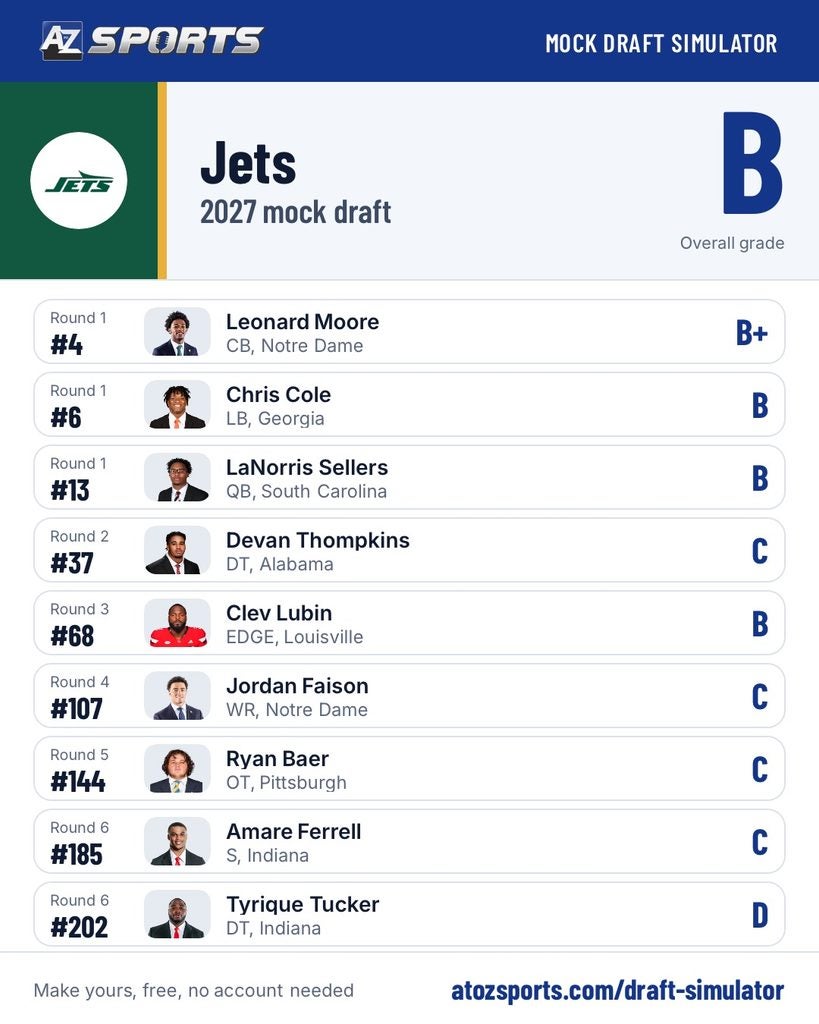
New York Jets’ 7-round mock draft
Round 1, No. 4: Leonard Moore, CB, Notre Dame
Moore is the clear top corner in most 2027 boards right now. He’s 6-2 with the length and fluidity to play press-man at a high level, and the production backs it up. He put up five interceptions and a 91.8 PFF grade in 2025, then kept playing at that level as a junior. Scouts have compared the combination of size and mirror ability to the best pure cover corners who have come out in recent years.
The Jets’ secondary still needs a true No. 1 after the Gardner trade. Taking Moore this high is straightforward: you lock in a potential lockdown outside corner who can immediately change how opposing quarterbacks attack the field. The only real questions are consistency in run support and tackling, but those are coachable issues next to the coverage traits.
Round 1, No. 6: Chris Cole, LB, Georgia
Cole has jumped into the first-round conversation with a strong 2026. The 6-3, 235-pound linebacker has the range and coverage ability that modern schemes want from an off-ball or hybrid linebacker. He’s been productive with tackles for loss and sacks, and Georgia has used him in multiple alignments. His athleticism shows up in space, and he has the frame to take on blocks better than pure speed linebackers.
There are still questions about his processing against the run and a minor off-field note from earlier in the year, but at this spot the upside is real. Pairing him with whatever the Jets already have on the second level gives the defense more speed and coverage flexibility.
Round 1, No. 13: LaNorris Sellers, QB, South Carolina
This is the swing. Sellers is a polarizing quarterback because the tools are elite and the consistency is not. He’s 6-3, around 240 pounds, with a strong arm and real running ability that lets him create when the play breaks down. He has had stretches in 2026 where he looks like a top-10 talent, then games where the decision-making and accuracy lag. Most boards have him as a second-round type or a late first, depending on the week.
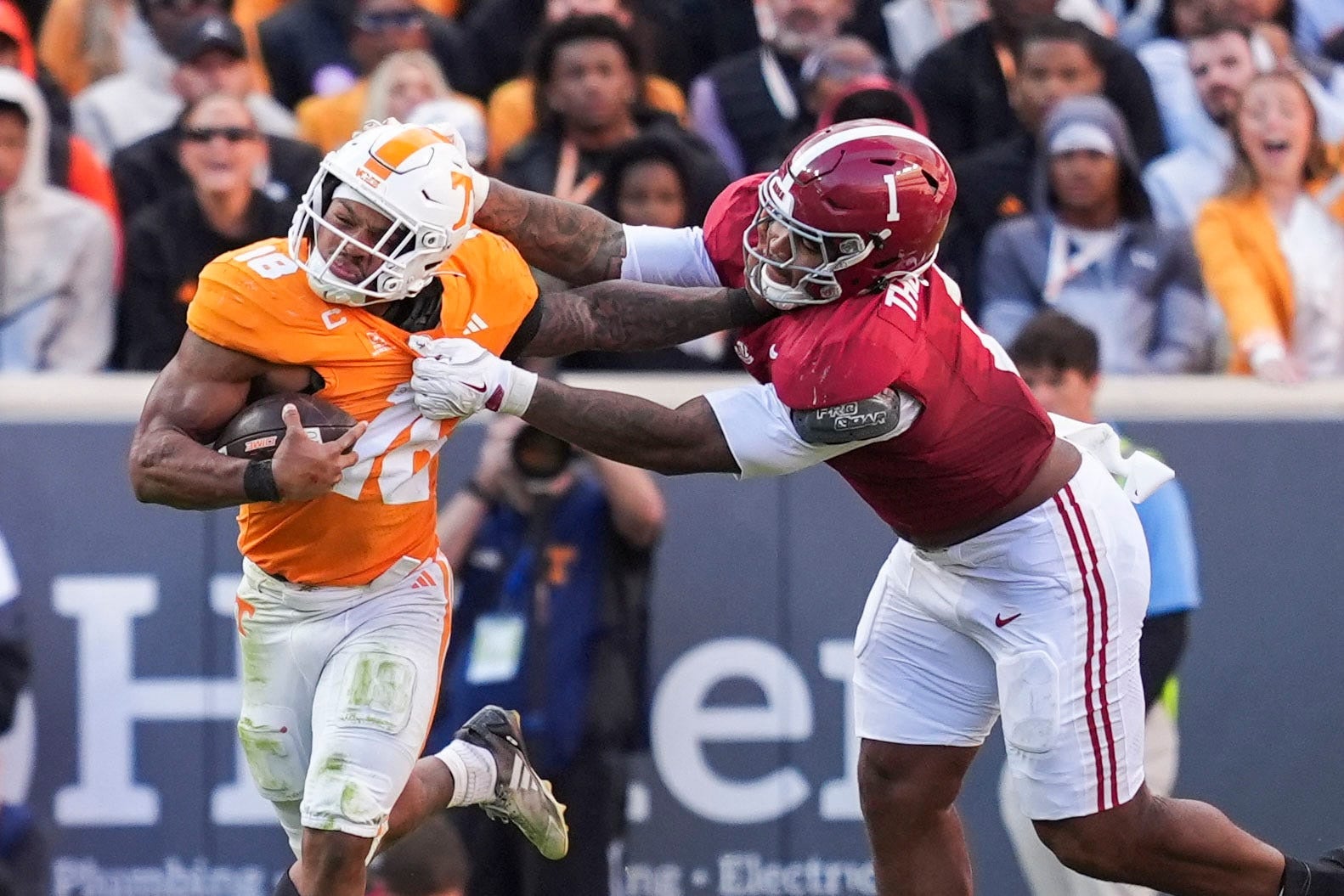
Round 2, No. 37: Devan Thompkins, DT, Alabama
Thompkins transferred from USC and has been productive as a disruptive interior or edge-ish defensive lineman for Alabama. He’s big (listed around 6-4/6-5, 290-plus) with enough movement to create pressure from inside. The grade is lower because the technique is still raw in spots and the production hasn’t been consistently dominant against top competition every week. Still, adding an athletic big man on the interior next to whatever remains of the defensive line is useful, especially after moving Quinnen.
Round 3, No. 68: Clev Lubin, EDGE, Louisville
Lubin is a power edge who has produced sacks and pressures at a high rate. He came up through junior college and Coastal Carolina before transferring to Louisville, and he has the first-step and effort that show up on tape. He’s not the longest or most flexible edge, which limits his ceiling against top tackles, but as a rotational or situational rusher who can set the edge and win on pure energy, this is solid value in the third. The Jets can use pass-rush depth.
Round 4, No. 107: Jordan Faison, WR, Notre Dame
Faison is a smaller, shifty slot receiver who has led Notre Dame in receiving. He has good route detail, reliable hands, and the quickness to work underneath. The size and pure speed aren’t ideal for every scheme, which keeps him from rising higher, but he’s a polished player who can contribute as a third or fourth option and on special teams. Reasonable developmental add at this point.
Round 5, No. 144: Ryan Baer, OL, Pittsburgh
Baer is a big, experienced tackle (6-7, 325) who has started a lot of games for Pitt. He’s more of a steady, durable presence than a high-upside athlete, and most boards have him as a late-round or priority free-agent type. For a team that can always use offensive line depth and competition, it’s a fine swing. He projects as a potential swing tackle or interior option with time.
Round 6, No. 185: Amare Ferrell, S, Indiana
Ferrell is a rangy safety with ball skills and experience in multiple roles for a strong Indiana defense. He has interception production and the size to play deep or in the box. The athletic testing and pure speed aren’t elite, which limits his projection, but as a late-round safety who can contribute on special teams and develop into a rotational piece, he fits. He’s been a reliable piece on a championship-level defense.
Round 6, No. 202: Tyrique Tucker, DT, Indiana
Tucker is a shorter, thick interior defender who had a strong 2025 with the Hoosiers (tackles for loss and sacks on a title team) but hasn’t shown the same production or athletic profile in 2026. He’s a leverage and effort player more than a high-upside athlete. At the end of the sixth, it’s a depth body; the D reflects the limited ceiling.
Overall, the mock uses the three first-round picks the way a rebuilding team with capital should: lock in a potential star corner, add an athletic linebacker, and take a calculated shot at a high-upside quarterback without forcing it earlier. The rest of the board is more developmental, with Lubin and a couple of the later defensive pieces offering the best chance to contribute sooner.
Whether the Jets actually take a quarterback at 13 depends on how the board falls and how they feel about Sellers after more tape, but the structure of the draft makes sense for where the roster sits heading into 2027.
