
Titans explain Robert Saleh’s unique zone defense to me like I’m 5, and why the learning curve could pay off big
Robert Saleh keeps swearing up and down his scheme will work with some time. His players believe it too. I asked them to explain why.

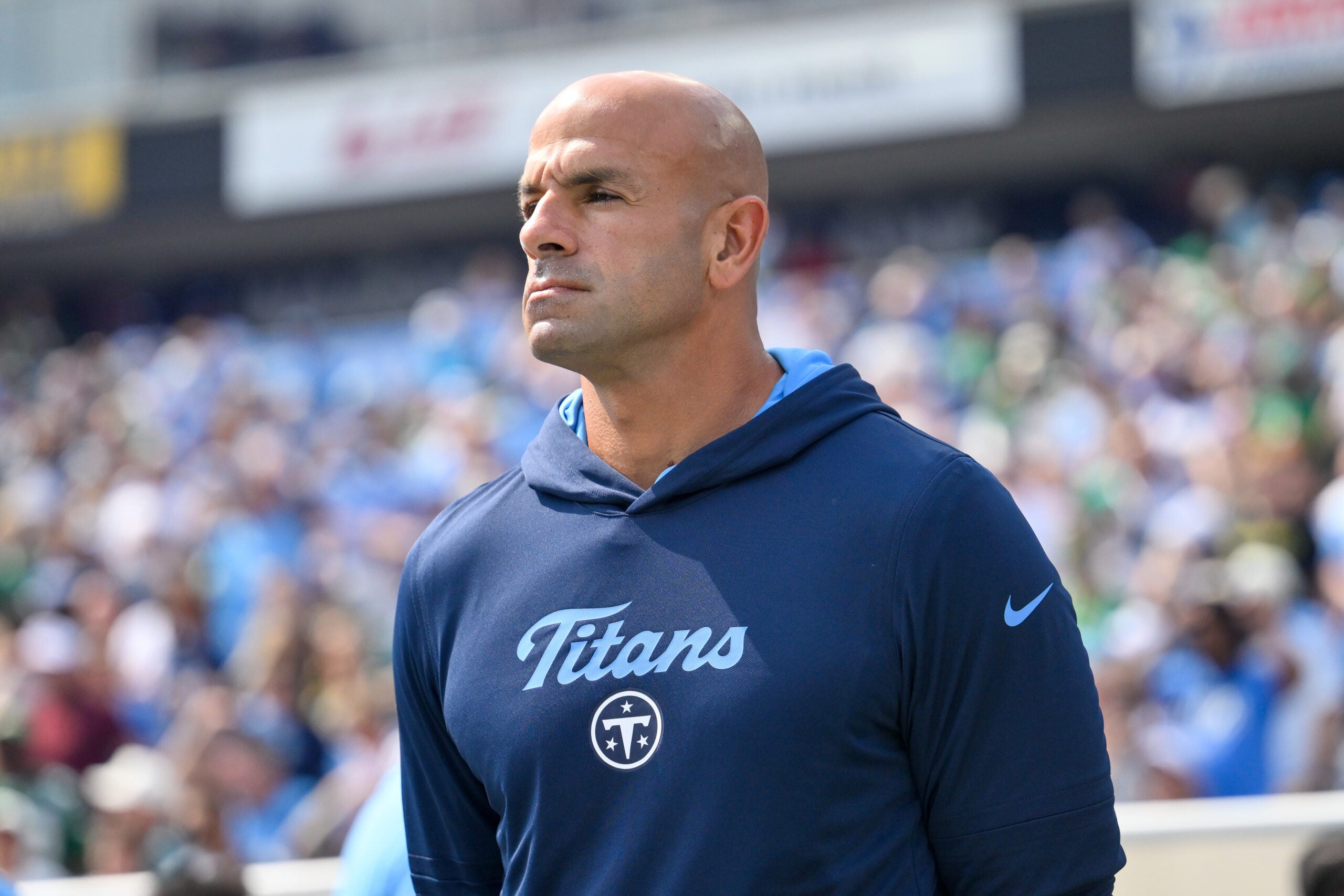
Tennessee Titans coach Robert Saleh has been saying the same thing for weeks, and he keeps saying it with his chest: his scheme will turn this defense into a monster.
As I wrote about here, Saleh is painting a target on his own back. He is putting the Titans’ defensive struggles on his own shoulders and trusting his scheme and his coaching to carry these players through.
We already know the “when.” By Saleh’s own estimation, Tennessee should start showing real progress by around Week 10. To be fair to him, he has also pointed out that his first year with the Jets was rough and things picked up dramatically in year two. The “how” is his scheme, and that’s where things get more complicated. So I tried my best to unpack it.
Robert Saleh explains what makes his zone system unique
Saleh laid out exactly why his defense looks so different from most of the league, and why it takes time to click. I’ve included the quote in full because I think the full context of his explanation is worth reading:
“Our zone system is unique. You know, a lot of people play match. A lot of people play man coverage. You know, that’s really the the main part of football is match and man, which is it is easy to coach. It’s easy to play. I got my guy and that’s it. And that’s one on one football. I’m better than you. So my guy’s going to match up on you.”
“We play more of a zone structure where we pass things off, and we pass things off mid-play, push people off in coverage. And so when you’re so used to, I got this guy and I’m here for the down, versus… I’ve got to be alert for possible shove calls, I’ve got to be alert to formations and what can happen pre-snap and post-snap. And there’s certain things that as they continue to get reps, they’ll start seeing that all these teams kind of attack us the exact same way. And they’ll start recognizing things before they ever happen.”
“It is different. Which I think is why we’ve had so much success in our scheme because over the years we’ve had a lot of top five defenses because it is unique, in my opinion, to the rest of the league in that we… We strain through the coaching aspect of what they need to recognize post-snap. We get them to a post-snap world where they’re thinking more about what the offense is doing to them rather than what their job is. And so schematically, it’s easy to learn what I have to do. And now it’s understanding what’s happening to me and how I have to adjust in play. That’s the hard part. And it’s a hard part that a lot of people don’t like going through. But once we master it, you’ll start seeing a lot of really, really, really dominant defense.”
Saleh also pointed to the Texans as a team running essentially the same scheme. We’ve all seen how dominant Houston can be when that defense is humming. And Saleh’s dominant defenses in the recent past are his calling card. In his eyes, all he needs is time.
Cody Barton breaks down ‘true zone’ versus match
So I went to Titans linebacker Cody Barton and asked him to explain it to me like I’m five years old. Why is this worth all the growing pains?
“Like you’re five, okay, so you’re in your zone. And if that guy runs into your zone and out of your zone, don’t chase it. It’s zone, you know what I mean? Just stay in your zone. But that’s easier said than done, you know what I mean? You have to trust that. Because there’s times where, hey, he’s starting to leave your zone, but this is a time where you can match it versus… You know what I mean? I mean, the games can get complicated, but just the overall picture is just trusting, you know, the dispersion of everyone on the field and just trusting that you’re in your zone. There’s routes coming through here, let it go to the next one, and trusting your teammate that he’s going to be in his zone, and he can be there because the next man’s in his. You know what I mean? It all just fits together,” Barton said.
When I asked what makes it so different from what most teams do, Barton kept it simple.
“Yeah, I mean, the only difference is, I mean, that is the difference, right? Match versus true, true zone. How much true zone you run? That’s the biggest difference, you know? Like, I’ve been a match guy most of my career,” he said.
I followed up by asking whether it was that way during his time in Seattle.
“When I first got there, no. But there is some matching per route, right? Depending on the route concept. But, no, when it’s true zone, it’s true zone. Like, set up on the quarterback. Keep your vision on him and let’s break on the ball” Barton said.
Then came the payoff. What is the reward for eating the learning curve?
“Because when everyone’s working, when everyone’s firing on all cylinders and the whole defense is playing in sync, it creates a lot of big plays as in we take away that space or show that we’re taking away that space and when they shoot underneath, we all get a rallying tackle. That’s when a lot of forced fumbles happen. That’s when those tip balls happen. We can get a tipped interception or overthrow.”
Why trust is the whole ballgame for the Titans
That’s the thesis. Playing this much true zone puts stress on the offense through baiting and confusion. You give space and then take it away, muddying the picture on the back end instead of handing the quarterback a simple read. But it’s harder on the defense at first.
Look at the play where Barton ended up incorrectly carrying Ravens WR Zay Flowers vertically down the sideline. That one came down to a communication issue. Ravens offensive coordinator Declan Doyle is sharp, knows these rules, and knows how to stress them. A skinny post held the cornerback’s attention, nothing came into the flat, and Barton followed Flowers. Credit Baltimore for a good call! But Tennessee also didn’t communicate and trust their rules to the letter of the law.
The same thing happened in the preseason against the Seahawks, when Kevin Winston didn’t trust his assignment and Elijah Arroyo streaked down the field for a touchdown. Saleh’s response afterward?
“I’m glad we saw that happen now.”
I get it. But it can’t keep happening as we approach Halloween.
The bottom line is Saleh is right that this is a hard system to learn, and right that it’s dominant once players master it. Those are facts. The variable is whether these specific players and this specific staff figure it out, and there’s no guarantee they will. That’s a risky sales pitch in Tennessee, and I think we need to keep a close eye on whether the progress shows up on Saleh’s timeline.
