
Arch Manning or Dante Moore? Ranking the top 2027 NFL Draft quarterback prospects to conclude Summer Scouting
The battle at the top of the 2027 NFL Draft quarterback class continues to rage on. It has a chance to be a special group.

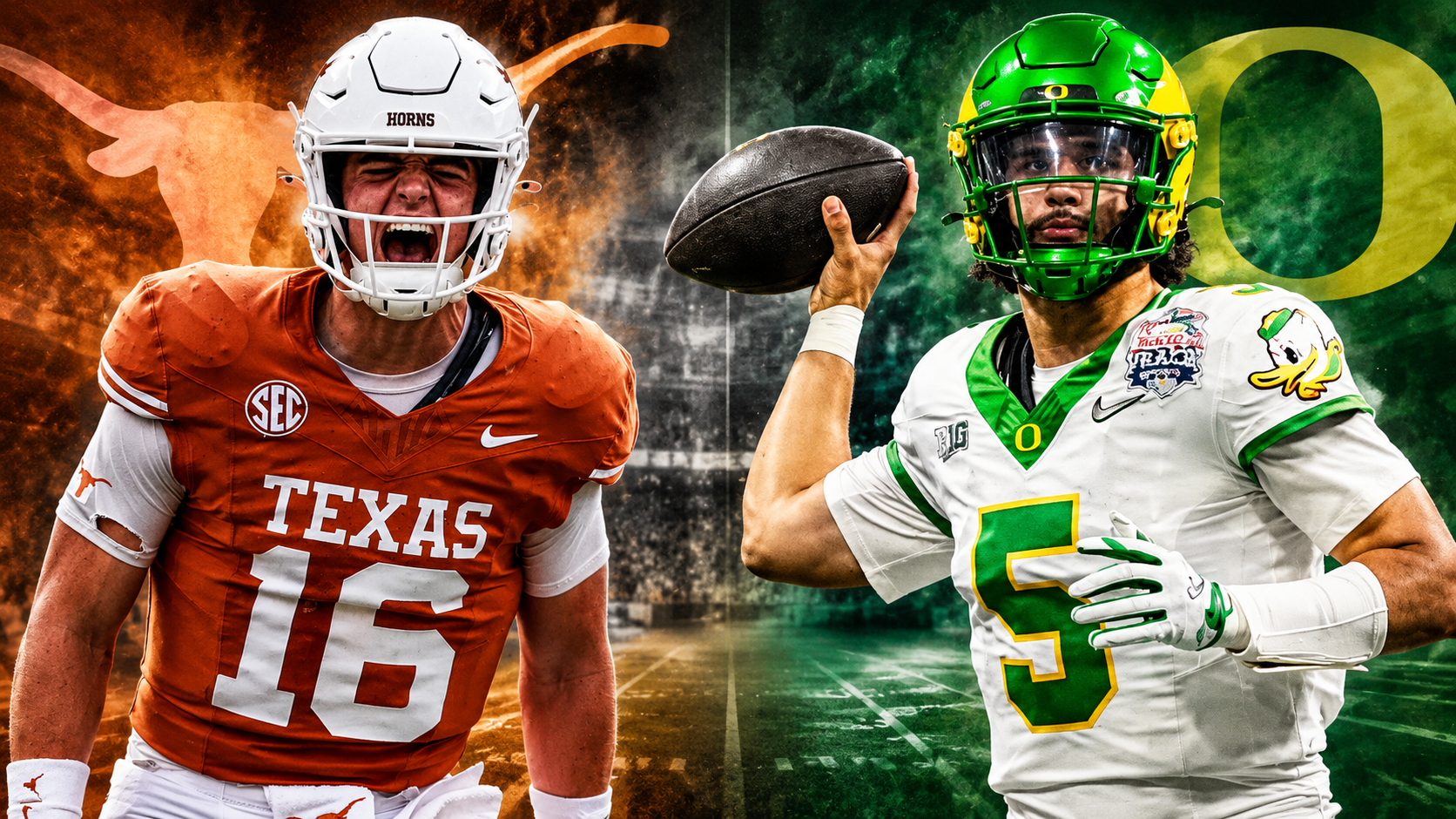
The 2027 NFL Draft quarterback class is shaping up to be one of the widest and most diverse groups in recent draft history.
From Texas quarterback Arch Manning to Oregon’s Dante Moore, Notre Dame’s CJ Carr to South Carolina’s LaNorris Sellers, the range of traits, tools, and developmental timelines across this class makes ranking the top 10 an exercise in defining what you value at the position. After completing summer scouting on the latest episode of Best Pod Available, the picture is both exciting and complicated.
Arch Manning: elite athlete, unfinished quarterback
Manning checks in at 6-4 and 230 pounds, verified by scouts this offseason, with a body type reminiscent of Andrew Luck.
The problem is that Manning isn’t the cerebral, technically refined prospect most people assumed he would be as the nephew of Peyton and Eli Manning. He’s a ridiculous athlete who could run in the 4.5s, accelerates in an instant, makes defenders miss, and is physical enough to run through contact.
The arm talent is real. Manning makes some of the most difficult throws in college football look effortless. The Mississippi State game two years ago featured instant pressure in his face followed by a beautiful go ball outside the numbers. When he’s on, the throws are jarring.
The issue is consistency.
Manning doesn’t set his feet off secondary reads, and the ball ends up in the dirt at a receiver’s feet because he relies too heavily on sidearm and off-platform throws. When he sets his feet, the velocity is easy. He just rarely does it.
The improvements from the Ohio State game through the final games of last season are encouraging, though. His tools are fun, and the support system around him, both from the coaching staff and his family, gives reason for optimism that the development will come. A Trevor Lawrence comparison (from Joe DeLeone) fits in a broad sense: all the tools are there, and you can see the elite upside, but something is always slightly off.
Dante Moore: the most CJ Stroud quarterback that has ever CJ Strouded
Moore’s comp is easy. He’s CJ Stroud. The natural throwing ability, the ball placement, the clean mechanics, the tight release. Moore puts the football exactly where it needs to be for receivers to turn upfield without adjusting. The spin on the ball is excellent, and the arm strength is in the plus category, stronger than expected heading into summer evaluation.
At around 6-2.5 and 221 pounds, Moore has good size for an NFL starting quarterback. From his days as a high school senior at the All-American Bowl, it was clear that from a technical and processing perspective, Moore has it. He sees the game well and throws a beautiful ball.
The concern mirrors Stroud’s early limitations.
When the protection broke down last season, Moore struggled. Both of his top two receivers dealt with injuries, the offensive line was inconsistent, and the run game faltered. Against Texas Tech and Indiana, the drop-off when asked to do everything was clear. Moore is also a better athlete than he plays like, rarely relying on his mobility to extend plays or pick up easy first downs. Pressure remains his biggest weakness.
Moore’s decision to return was wise. He acknowledged that the long term mattered more than the short term. Physically, he needed to get bigger and stronger. Mentally, the additional experience as a starter should help him process at more consistent rates. He still has the opportunity to be a top-5 pick in the 2027 NFL Draft.
Trinidad Chambliss (Ole Miss): Russell Wilson vibes in a compact frame
At around 5-11 and 3/4, Chambliss defies the typical limitations of shorter quarterbacks because of a pretty live arm and elite improvisational skills. His ability to plant and rip the football without much of a base while maintaining velocity makes him increasingly dangerous in modern NFL offenses built around play-action and moving the pocket.
The Russell Wilson comp (DeLeone again!) fits well: a thicker, shorter quarterback with a plus arm who hangs in the pocket but is too hard to wrangle and makes devastating plays on the move.
Chambliss is a fearless thrower who fires with conviction, and despite being a tremendous athlete, he wants to stay in the pocket and keep his eyes downfield as a scrambler. For a first-year starter who went from D2 to SEC football and wasn’t even the starter to begin the year behind Austin Simmons, the film was impressive.
A day-2 grade feels right, though a late first-round selection wouldn’t be shocking.
LaNorris Sellers (South Carolina): Josh Allen tools, development concerns
Sellers has the strongest arm in the class, and it isn’t close. At 6-3 and 245 pounds, he looks like a defensive end playing quarterback. He’s physical as a runner, explosive, fast, and possesses a cannon. If you’re building a Josh Allen-type quarterback in a lab, Sellers is the template.
The problem is that last season was rough. A terrible offensive line, a weak receiver room, and poor play-calling left Sellers looking panicked every time he dropped back. What used to be a strength, his pocket presence and power, evaporated. He looked frantic before anyone even arrived to hit him. The Daunte Culpepper comp fits the physical profile.
South Carolina invested heavily in offensive line this offseason and brought in Kendal Briles as the new play-caller. The Briles offense eliminates a lot of extra thinking for quarterbacks, which could be exactly what Sellers needs. The traits are off the charts, but he remains a work in progress.
Whether he takes a massive jump or stays exactly where he was last year, his athletic gifts will likely carry him into the first round.
CJ Carr: elite processor with decision-making issues
Notre Dame quarterback CJ Carr may be the best processor in the class. He scans the field quickly, gets through his reads with speed, and when he’s making the right decisions, it’s boom, boom, boom, fire. The arm strength is there, and his mobility is underrated.
The issue is that Carr is almost too decisive.
He locks onto reads without fully assessing everything around him, leading to some cartoonish interceptions last season. His worst decisions come outside of structure, where his aggressiveness and competitiveness override his judgment. The USC interception last year, where he threw into triple coverage instead of dirtying the football, is a perfect example.
Processing and decision-making are not always intertwined in evaluation. Carr sees the game well, scans for backside routes, and goes through his progressions. He just needs to learn when to play to fight another day rather than forcing a rash throw. As a second-year starter, that improvement should come.
Darian Mensah (Miami) and Drew Mestemaker (Oklahoma State): upside with questions
Mensah is a beautiful touch thrower whose deep ball is phenomenal. He throws such a pretty, smooth, natural ball that there are moments on film where he’s getting away from pressure, flicks the football, and it still arrives as a tight spiral into a tight window. Statistically, he has been outstanding despite limited surrounding talent.
The concern is arm strength. The ball dies on him at times, especially outside the numbers. There is upside on the NFL level, but the assumption that moving to Miami will produce a Cam Ward-like rise might be getting ahead of itself.
Mestemaker has tools. He can rip the football, the spin is phenomenal, and the base traits of playing quarterback are present.
The issue is that his game doesn’t feel natural. A former high school safety and punter who hasn’t played quarterback since 9th grade, Mestemaker’s decision-making against top competition was ugly. The Daniel Jones comp (me this time!) works physically: big, athletic, strong-armed, but awkward and prone to baffling decisions.
He’s likely more of a 2028 prospect, though NFL scouts are already generating 2027 hype. The development jump from North Texas to Oklahoma State will be worth watching closely.
The 2027 quarterback class has rare depth and a wide range of outcomes. It’s a two-quarterback class at the top with Manning and Moore, and then a fascinating, volatile group fighting for positioning behind them. Summer scouting is just the beginning.
