
True freshmen who could make an immediate impact for Notre Dame’s offense heading into the 2026 CFB season
Are there any Notre Dame freshmen who can make an immediate impact for the offense in 2026? Keep a close eye on several talented youngsters.

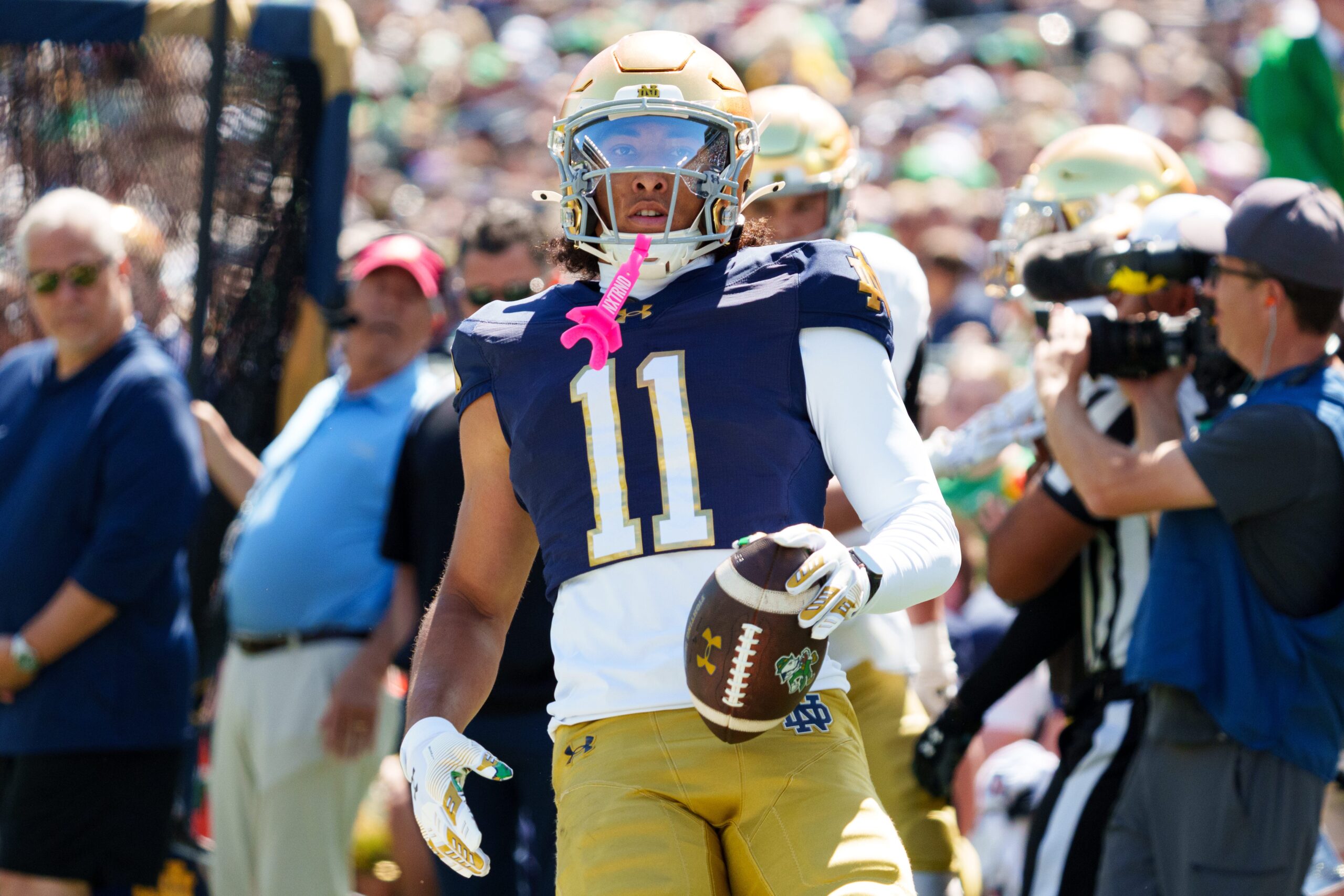
Notre Dame football enters the 2026 college football season with one of its more talented offensive units in recent years.
Quarterback CJ Carr returns as the starter, the passing game projects to create explosive plays, and a revamped running back room should remain one of the more productive groups in the country. Head coach Marcus Freeman and offensive coordinator Mike Denbrock have plenty of established talent to work with, but the true freshmen from the 2026 recruiting class could provide a significant boost.
Several young players have a real chance to carve out roles and contribute to the Fighting Irish offense this fall.
Ian Premer is the headliner
The most likely true freshman to make a huge impact on Notre Dame’s offense is 5-star tight end Ian Premer. The 6-foot-6, 240-pound athlete was one of the more dynamic players at the quarterback position in high school, coming out of the state of Kansas with elite athletic tools that translate to the tight end spot at the college level.
The Fighting Irish return some quality tight ends in Cooper Flanagan, James Flanigan, and Ty Washington, and all three should play a role to varying degrees. None of them, however, has the athletic upside and receiving potential that Premer brings. Even though he did not enroll until the summer, I expect Premer to eventually ascend toward becoming the top pass-catching weapon in that tight end room at some point this fall.
Notre Dame has always had a proud tradition of tight end production, and although it hasn’t been quite as prolific under Denbrock’s tutelage, a player like Premer could change that formula. Even if he doesn’t become a star in 2026, this is the year he lays the foundation for what could be a sophomore breakout.
Expect the Irish to utilize Premer in multi-tight end sets for his mismatch potential.
Wide receivers to watch
Aside from Premer, a few younger pass catchers could fight for playing time, though none are foregone conclusions to play a major role. All of the true freshman wide receivers enrolled early, which is always paramount to earning snaps.
While my favorite of that group remains Kaydon Finley, the two most likely wide receivers to make an impact are Devin Fitzgerald and Bubba Frazier. Fitzgerald, the son of NFL legend Larry Fitzgerald, is a big-body boundary receiver listed between 6-foot-2 and 6-foot-3. Frazier, though only 5-foot-9, is absolutely explosive after the catch.
Notre Dame does not need either player to break out, but if one of them can carve out a role as a depth piece in an already talented wide receiver room, it would be a huge bonus for the passing attack.
Running backs with home run speed
The top of the running back depth chart features established names, but Jonaz Walton and Javian Osborne are two true freshmen worth tracking. Walton had a good spring and has continued to build momentum this offseason. He’s a dense runner at 208 pounds with 10.5-second 100-meter speed. You could argue that Osborne is even more talented of the two backs.
If either cracks the rotation at some point, they could add home run speed that the Notre Dame running back room does not currently have a ton of heading into 2026. You don’t necessarily need them to break out, but if they do, that would be a tremendous momentum boost for the run game.
Quarterback could be the sneaky storyline
This might be the biggest wild card of the group.
As of today, redshirt freshman Blake Hebert projects as the primary backup behind Carr. Two true freshmen are in the conversation, though. Noah Grubbs enrolled early and was on campus during the spring. Teddy Jarrard did not arrive until the summer because he reclassified from the 2027 to the 2026 recruiting class.
Does either of those players have enough momentum to become the backup, especially with the new 5-year eligibility rule? That will be a fascinating dynamic to watch during fall camp.
You’re hoping not to see much of anybody other than Carr in 2026 outside of potential blowout victories, but the backup quarterback competition could be a sneaky addition to a true freshman class that makes a bigger impact than many expect.
