
Evan Williams delivers clear message on officiating inconsistency after Packers’ Week 1 loss to the Vikings
Safety had the perfect approach to address the controversial calls in the first game of the season.


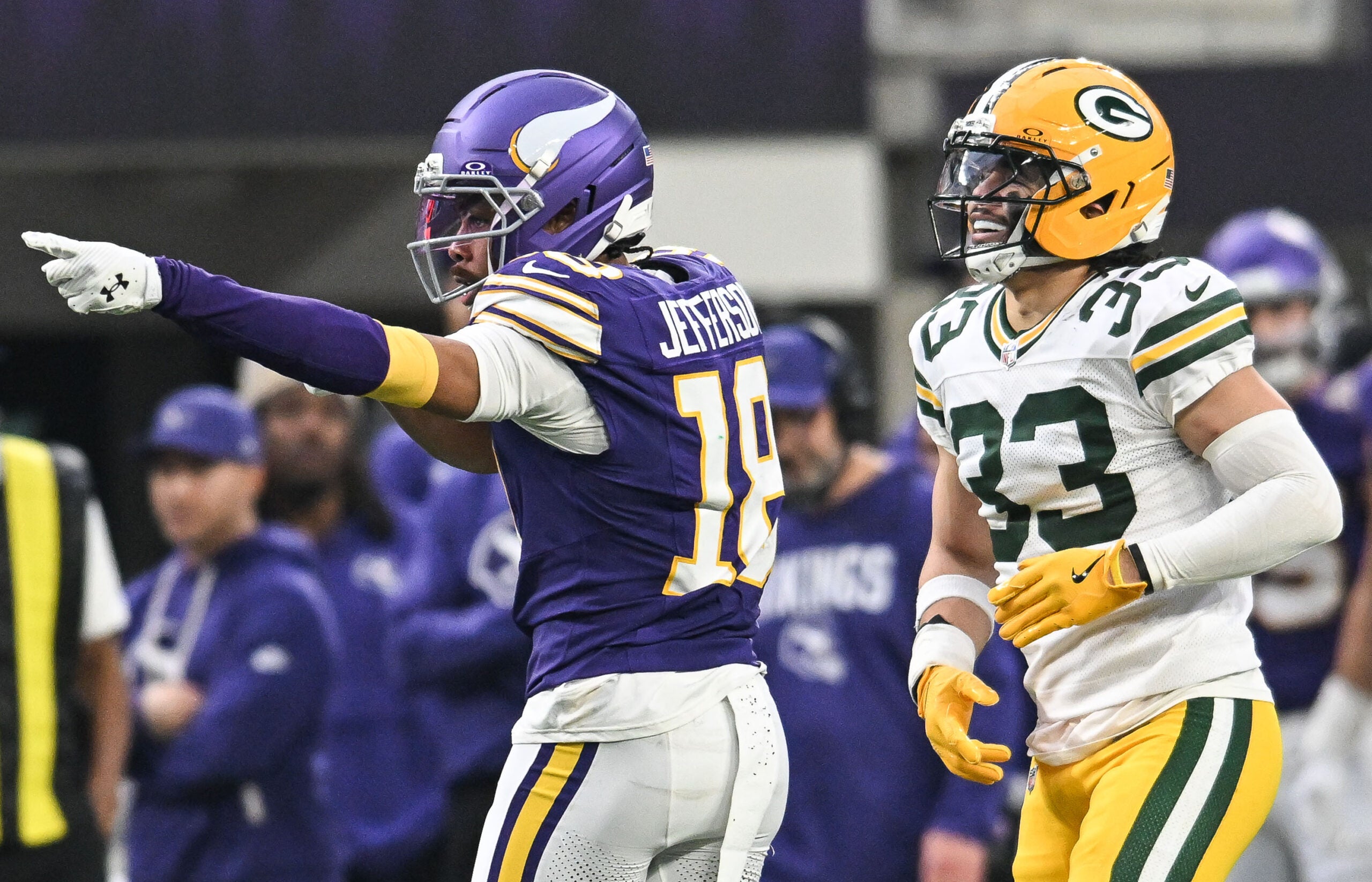
The Green Bay Packers had legitimate reason to take issue with the officiating after the Minnesota Vikings rallied to a 39-22 victory on Sunday, and safety Evan Williams provided the most measured response from the locker room.
Three questionable penalties against Green Bay on the same drive helped swing the game’s momentum, and Williams addressed the situation without pointing fingers at the referees for the loss.
The drive that changed everything
The sequence that altered the outcome came on a single Vikings drive that put Minnesota ahead and effectively decided the game. On that drive, the Packers were hit with three flags. An illegal contact penalty on safety Javon Bullard, a roughing the passer call on defensive lineman Chris McClellan for landing his weight on quarterback Carson Wentz, and a holding penalty that negated an interception by Williams himself.
The penalties were particularly frustrating because similar contact had gone uncalled throughout the rest of the game. Green Bay also had two facemask infractions that the officials did not flag, so the point is not necessarily to say the Packers were exclusively on the wrong end of those bad calls.
“We’re definitely looking for some elements of consistency,” Williams said on ‘Wilde and Tausch.’ “It definitely helps us as players to kind of get a feel for what the refs are calling that day, what they’re trying to emphasize, and that’s fine. So, if you’re gonna call holding, call it both ways in that type of aggressive aspect. But yeah, there were some tough ones for sure on a couple drives that made you scratch your head.”
Williams knows it’s about the future
Williams did not blame the referees for the Packers’ loss. His message was straightforward, about players needing consistency from the officials. The illegal contact and holding calls on that drive were not being flagged in comparable situations earlier in the game. They only surfaced on that critical possession.
That is a reasonable ask. Referees establish a standard early in a game, and players adjust their technique accordingly. When the parameters shift mid-game, it creates confusion and removes the ability for players to correct mistakes in real time.
“I’m not trying to get into any trouble with any authority figures,” Williams said. “But nah, man, it was just an unfortunate circumstance that we kind of kept putting it in the refs’ hands to change the game for that drive, and, yeah, couldn’t get off the field and get the stops when we needed.”
LaFleur echoes the frustration
On Tuesday, Packers head coach Matt LaFleur reinforced the same point. LaFleur said he believed McClellan made a good play on the roughing the passer call, which essentially means it becomes impossible to teach a different technique if the penalty is not applied consistently. Some hits on Packers quarterback Jordan Love from Vikings defenders were more violent and involved more weight on the quarterback’s body than McClellan’s play, yet those went unflagged.
The coaching staff wants teachable moments for a young roster. Without a consistent standard from the officiating crews, those teaching opportunities disappear. If McClellan’s hit is a penalty one time but a nearly identical hit from the opposing team is not, the coaching staff cannot give its players a clear directive on how to adjust.
Green Bay lost by 17 points, and there were plenty of other factors that contributed to the outcome. Williams and the coaching staff acknowledged that. The concern is forward-looking, though. If these calls are going to be made, they need to be made both ways and throughout the entire game.
