
The New England Patriots must understand the one factor that has determined A.J. Brown’s happiness at every NFL stop
A.J. Brown gets a fresh start with the New England Patriots, but history says the honeymoon will only last for so long. But will it?

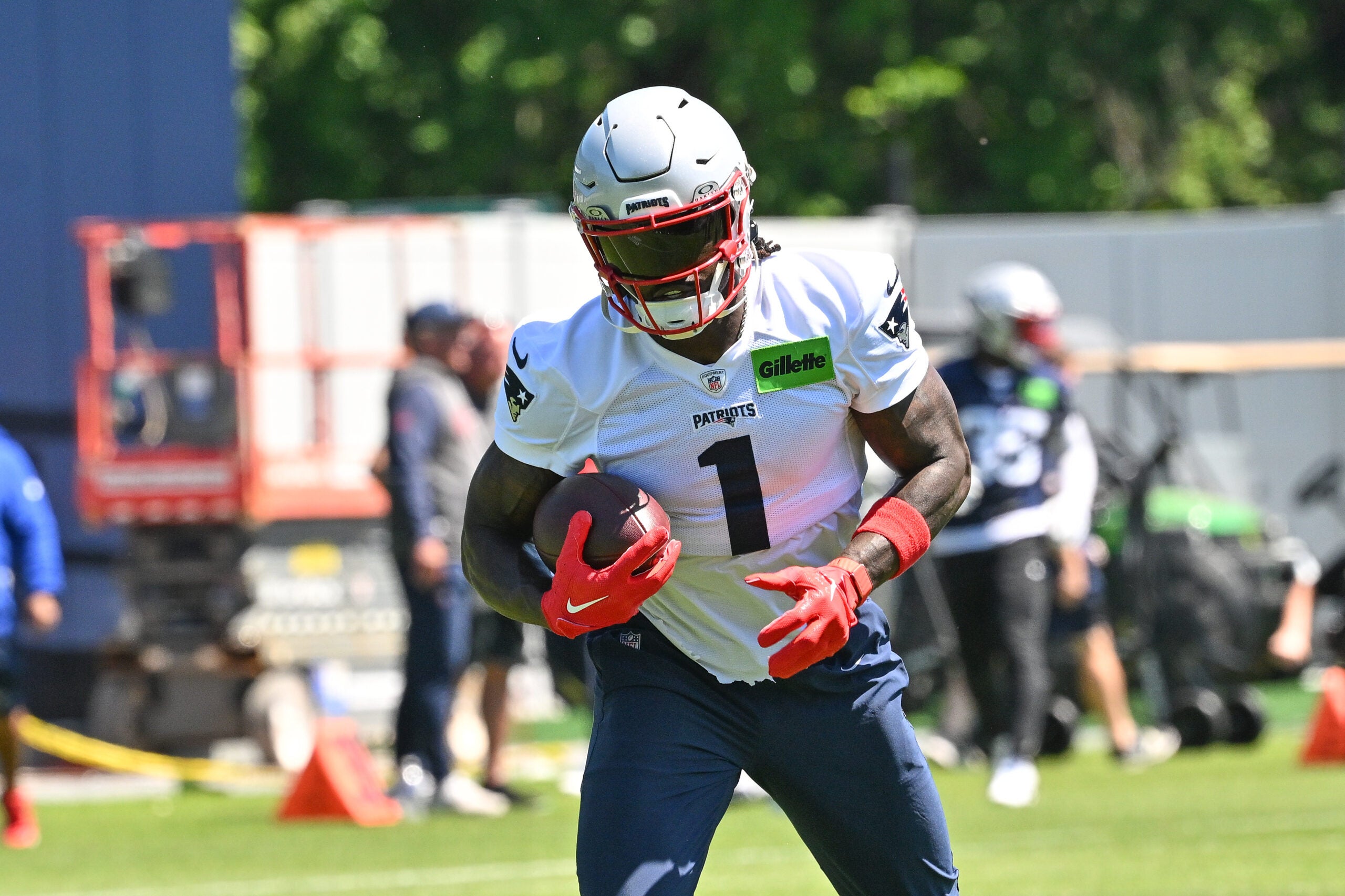
Wide receiver A.J. Brown operates on a three-year clock.
Three years at Ole Miss, happy. Three years with the Tennessee Titans, happy, then unhappy, then gone. Three happy years with the Philadelphia Eagles, a fourth year of discontent, and now a fresh start with the New England Patriots.
The question facing Brown as he enters his age-29 season with a new team is whether quarterback Drake Maye and the Patriots can extend the honeymoon beyond that familiar three-year window.
The pattern is well-documented, but the reasons behind each exit matter more than the timeline itself. Brown’s departures from Tennessee and Philadelphia share a common thread that has nothing to do with quarterback talent or team success and everything to do with volume.
Tennessee was about the ball, not the quarterback
Brown and Ryan Tannehill were close friends during their time together with the Titans. The relationship between quarterback and receiver was never the issue.
The problem was Tennessee’s offensive philosophy under head coach Mike Vrabel, which leaned heavily on running back Derrick Henry to the tune of 25 carries per game. Brown wanted the football, and the Titans’ commitment to the ground game made it nearly impossible for him to produce at the level he believed he was capable of reaching.
The contract dispute that ultimately pushed Brown out of Nashville was a direct byproduct of that philosophy. Brown wanted to get paid like a high-volume receiver, and the Titans’ front office couldn’t justify that investment when the offensive system wasn’t built to feed him.
There were communication breakdowns and frustrations on both sides, but the root cause was clear: Brown wasn’t getting the ball enough to feel valued.
Philadelphia proved it’s not about winning
Brown landed with the Eagles and immediately thrived alongside his self-described best friend, quarterback Jalen Hurts. Philadelphia made him a focal point of the offense, and the results were obvious. The Eagles won, and Brown produced.
He even won a Super Bowl ring. And yet, within a week of hoisting the Lombardi Trophy, Brown took to social media and posted something revealing. In what should have been a celebratory moment, he expressed that he was already over it, suggesting that winning the championship wasn’t the ultimate driver for him.
That admission told the full story. Brown’s happiness isn’t tied to wins, losses, or rings. It’s tied to production, to catching the football, to asserting his dominance on the field. He wants to be the best player on the field every Sunday, and he wants the targets to prove it.
The Philadelphia exit reinforced this. The Eagles didn’t have a problem making Brown the focal point of their passing attack. The issue was that Hurts has clear limitations as a pure passer, particularly throwing to the middle of the field.
Brown wanted high volume from his quarterback, and Hurts simply isn’t a high-volume passer by nature. Whether the blame falls on Hurts or on the offensive design, the result was the same: Brown felt something was preventing him from producing at the level he demanded of himself.
Why New England could be different
Drake Maye is the most talented quarterback Brown has ever played with. That alone changes the equation. Brown’s previous stops featured Jordan Ta’amu at Ole Miss, the back end of Tannehill’s tenure in Tennessee, and Hurts in Philadelphia. None of those quarterbacks were capable of being true volume passers in the way Maye projects to be.
The Patriots also lack the kind of dominant rushing presence that consumed targets in Brown’s previous situations. There is no Derrick Henry. There is no Saquon Barkley. Romeo Dobbs is in the receiving room now, and the group is better than it was a year ago, but Brown should still command a significant target share in this offense.
There is also the Vrabel factor. Brown and Vrabel are kindred spirits in some ways. Both burn bright, and both eventually burn out on each other. Brown admitted on the Josina Anderson Podcast that Vrabel stopped being fun by the end of his time in Tennessee, even while he was having the time of his life during that first year in Philadelphia.
Now reunited with Vrabel in New England, the dynamic will be worth monitoring. When they’re both locked in, the results can be electric.
If Brown’s happiness truly comes down to volume, New England checks every box. A young quarterback with the arm talent to feed him, an offense without a ball-dominant running back stealing possessions, and a coaching staff that understands what makes him tick.
The three-year clock is ticking, but for the first time in Brown’s career, the circumstances suggest it might not have to ring.
