
2027 NFL Mock Draft: Eagles land elite pass rusher while the Dolphins, Jets, Cardinals, Browns, and Steelers make QB decisions
The Best Pod Available crew is back with another first-round mock draft. A brand-new team on the clock at No. 1 changes how the whole night unfolds.

The 2027 NFL mock draft landscape looks a lot different this week.
On the latest episode of Best Pod Available, my co-host Joe DeLeone and I ran our weekly first-round mock draft through the A to Z Sports Mock Draft Simulator, and the order got a major shake-up. The Los Angeles Chargers now sit at No. 1, and the Philadelphia Eagles are picking in the top five.
That shift sent quarterbacks, pass rushers, and a few surprise risers flying off the board early. Five quarterbacks came off the board in the first round, while five wide receivers also found new homes. There were some familiar names near the top, a couple of aggressive reaches, and a few selections that could completely change the direction of a franchise.
Here is how the first round played out.
The top 5 of our 2027 NFL mock draft
1. Los Angeles Chargers: WR Jeremiah Smith, Ohio State
The Jeremiah Smith sweepstakes goes to Los Angeles. The Chargers probably need help more at interior offensive line, edge, or interior defensive line. When you are a team sitting with no wins, though, you take the best player available and don’t think twice.
It is also time to stop pretending Quentin Johnston is a legitimate, consistent outside threat. Smith gives Justin Herbert the type of receiver he has been missing and pairs with what Los Angeles hopes is a healthier Ladd McConkey. Smith has the physical tools, ball skills, and ability to take over games that make him worthy of the No. 1 overall selection. The Chargers would have an opportunity to build one of the most dangerous passing attacks in football.
2. Tennessee Titans: CB Leonard Moore, Notre Dame
Joe took Moore over Colin Simmons by a hair. Cam Ward had a nice performance against the Bengals, and the case for building around him still holds. Tennessee’s cornerback room is one of the worst in the NFL, and Moore is one of the best cornerback prospects to come out in some time.
I did point out that Ward and JaMarcus Russell are the only two quarterbacks in the Super Bowl era to go their first 24 games without a 300-yard passing game. Joe’s counter is that you can’t bail after two seasons unless you truly love a quarterback in this class.
Moore gives Tennessee a potential cornerstone on defense. He has the coverage ability and instincts to match up with top receivers, and the Titans need someone who can consistently hold up on the outside. If Ward continues to develop, adding a player like Moore makes plenty of sense.
3. Miami Dolphins: QB Drew Mestemaker, Oklahoma State
With every quarterback still available, I kept this one short and sweet. Mestemaker becomes the long-term answer in Miami. We have talked about him several times as the likely first quarterback off the board, and a trade up to No. 1 wouldn’t shock either of us.
Miami needs to figure out its long-term direction at quarterback, and this selection allows the franchise to start fresh. Mestemaker is an intriguing prospect who could become the centerpiece of a new offensive identity. There is plenty of pressure that comes with being the third overall pick, but the Dolphins need to take a swing at the most important position in football.
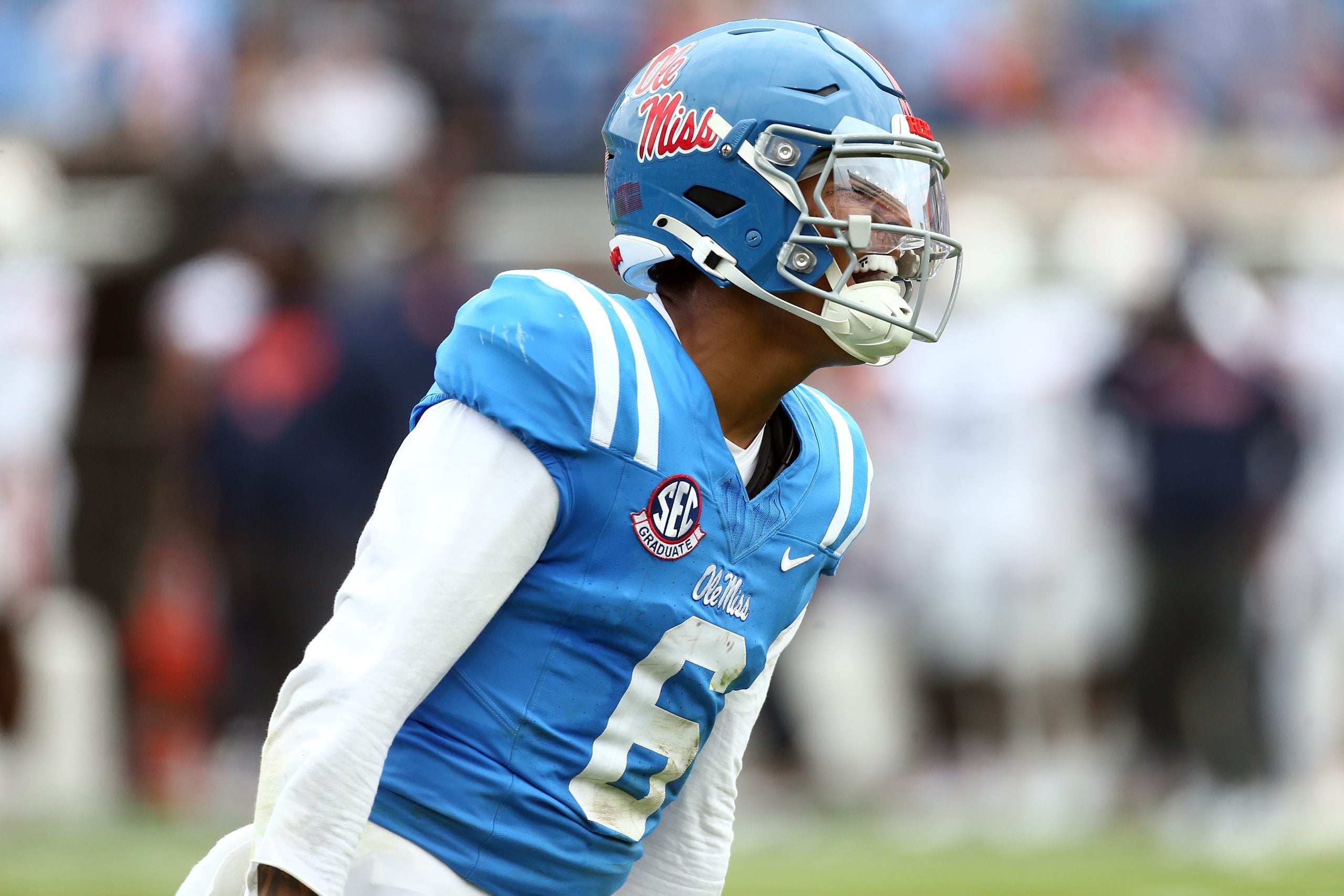
4. New York Jets: QB Trinidad Chambliss, Ole Miss
Joe changed things up here. The Jets could be ready to win quickly, and the more experienced passer helps make that happen. New York also doesn’t know who its next head coach is, so the offensive philosophy remains unclear.
If you ask me, the Jets roster is not bad at all. It is a head coach and a quarterback away from being a real riser.
Chambliss gives the Jets an experienced option who could potentially accelerate that timeline. The biggest question is how his skill set translates to the NFL and what kind of offense the next coaching staff wants to run. Still, New York cannot afford to keep kicking the quarterback problem down the road.
5. Philadelphia Eagles: EDGE Colin Simmons, Texas
This is the pick I’m most confident in. Philadelphia invested in Jonathan Greenard, and that has been a disaster so far. Nolan Smith is hitting free agency, and Jalyx Hunt has been banged up. The Eagles’ edge impact has been bad in 2026, so Simmons gives them a high-floor pass rusher who should pay dividends immediately.
Simmons is exactly the kind of defensive player Philadelphia should be targeting. He has the explosiveness to threaten tackles off the edge and the ability to make life difficult for opposing quarterbacks. The Eagles have built much of their identity around winning in the trenches, and this selection gets them back to what has traditionally made their defense successful.
Rest of the top 10
6. New York Jets: CB Ashton Hampton, Clemson
The Jets have two picks this early because of how bad the Colts are. Joe looked at a clump of defensive linemen and receivers and landed on Hampton as another starting outside corner.
Hampton gives New York another young defensive building block. After addressing quarterback at No. 4, the Jets can turn their attention to a secondary that needs more talent. Taking two potential starters on different sides of the football in the top six would be a pretty good start to a franchise turnaround.
7. Houston Texans: OT Zereoue Williams, Utah
I would put a wager on this one right now. I think Williams is going to be the first offensive tackle off the board. He is a late bloomer without a ton of film, but he is massive, long, and has incredible core strength. He also fits the recipe of the midseason riser from a school nobody expected.
Houston has to continue investing in its offensive line. Protecting C.J. Stroud is one of the biggest priorities for this organization, and Williams has the physical makeup to become an important piece up front. There is obviously some projection involved given his limited body of work, but the upside is worth considering this early.
8. New Orleans Saints: EDGE Dylan Stewart, South Carolina
Stewart has quieted a lot of the availability and composure concerns since returning. His ability to respond to adversity and coaching actually makes him look better.
New Orleans desperately needs another difference-maker on the defensive front, and Stewart has the athletic profile to become one. His combination of length, explosiveness, and pass-rush potential makes him an appealing option. The Saints need to find ways to consistently pressure opposing quarterbacks, and this is a good place to start.
9. Washington Commanders: WR Charlie Becker, Indiana
I just don’t want to draft Jadan Baugh at No. 9. Stefon Diggs and Terry McLaurin are both getting older, and Washington needs impact size in that receiver room.
Becker is an interesting addition for a Washington offense that needs to keep adding weapons. Getting another big-bodied target would give the passing game a different dimension and help take some of the attention away from its established playmakers. At No. 9, the Commanders get a player with the potential to become a significant part of their offensive future.
10. New York Jets: WR Reed Harris, Arizona State
New York’s third top-10 pick brings Harris back into the fold after a couple of nice plays against BYU.
Three selections in the top 10 is an incredible opportunity for the Jets, but they need to make them count. After addressing quarterback and cornerback, adding another weapon gives the offense some much-needed help. Harris is a reach based on where he sits in the simulator rankings, but the Jets have enough needs that they can afford to take a swing on a player they believe is trending in the right direction.
Notable picks from the back half
11. Arizona Cardinals: QB LaNorris Sellers, South Carolina
I’m back in on Sellers. Give me the Cardinals running zone read with him and Jeremiyah Love.
Sellers has the physical tools to give an offense a completely different dimension. His size, mobility, and ability to make plays outside the pocket could make him a dangerous weapon in the right system. Arizona needs to figure out its long-term quarterback situation, and pairing Sellers with a dynamic running game could give the franchise an intriguing offensive foundation.
12. Tampa Bay Buccaneers: TE Trey’Dez Green, LSU
Green is a pass catcher who moves around as a big slot. He isn’t replacing Cade Otton inline.
Tampa Bay could use another mismatch weapon in the passing game, and Green gives the offense something different. His size and receiving ability could create problems for linebackers and safeties, particularly when he is moved around the formation. The Buccaneers would be adding another option for their quarterback without necessarily changing what Otton brings to the offense.
13. Atlanta Falcons: LB Chris Cole, Georgia
Atlanta’s linebackers are a major work in progress, and Cole is a dynamic athlete on the second level.
The Falcons need more speed and playmaking ability at linebacker. Cole brings the athleticism to cover ground, match up in space, and contribute against the run. Staying in Georgia to land a player who could immediately help address a major defensive need makes plenty of sense.
14. Las Vegas Raiders: WR Nick Marsh, Indiana
The Raiders continue building around their offense by selecting Marsh at No. 14. Wide receiver is listed as their top need, and this is an opportunity to add another young target to the group.
Marsh gives Las Vegas another option to develop alongside its existing offensive pieces. With so much uncertainty surrounding the franchise’s long-term direction, adding young talent at a premium position is a reasonable approach. The Raiders have to find more consistent production from their passing game, and Marsh could help get them there.
15. Baltimore Ravens: DT Xavier Gilliam, Tennessee
I’m not comparing him to Aaron Donald, but he moves so differently than a typical interior defensive lineman.
Gilliam has the kind of movement skills that make him an exciting prospect. Interior defensive linemen who can consistently disrupt plays without needing a perfect situation are incredibly valuable, and Baltimore could use another player who creates problems between the tackles. The Ravens have always valued physicality in the trenches, and Gilliam would give them another potential difference-maker up front.
16. Cleveland Browns: QB Darian Mensah, Miami (FL)
Joe doesn’t want any further investment in Deshaun Watson.
The Browns need to stop avoiding the quarterback conversation and find a legitimate long-term solution. Mensah gives them that opportunity at No. 16. There is a lot of work to do in Cleveland, but quarterback has to be at the top of the list. Landing a potential franchise passer outside the top 10 would be a pretty interesting outcome for the organization.
17. Seattle Seahawks: TE Jamari Johnson, Oregon
Seattle goes to the tight end position with Johnson, who is one of the more intriguing offensive selections in this range.
The Seahawks could use another weapon who can create mismatches in the middle of the field. Johnson gives them an opportunity to add a receiving threat who can complement their wide receiver group. Tight ends who can threaten defenses vertically and make plays after the catch are valuable, and Seattle would be adding another layer to its offense.
18. Cleveland Browns: OT Jordan Seaton, LSU
The Browns double down on offense by selecting Seaton with their second first-round pick. After addressing quarterback at No. 16, Cleveland gets another opportunity to improve the protection in front of its new passer.
Seaton is an especially interesting selection considering he sits among the top five players in the simulator rankings. Getting him at No. 18 could be tremendous value. The Browns have to do a better job of building an offensive line that can keep their quarterback upright, and this would be a significant step in that direction.
19. Carolina Panthers: OT Trevor Lauck, Iowa
Carolina continues to invest in the offensive line by taking Lauck. Offensive tackle is a major position, and the Panthers need to make sure they have enough talent up front to support their young offensive core.
Lauck has the opportunity to develop into a starting-caliber tackle, although this selection comes with some projection. Carolina could have addressed other positions here, but protecting its quarterback and improving the running game are important parts of building a sustainable offense.
20. Dallas Cowboys: DT Will Echoles, Ole Miss
Pairing him with Quinnen Williams would make for a nasty interior.
Dallas gets one of the more interesting defensive selections of the first round. Echoles is ranked among the top players in the simulator, and getting him at No. 20 is a pretty significant opportunity. The Cowboys need to continue building their defensive front, and adding another disruptive interior presence alongside Williams could make life miserable for opposing offensive lines.
21. New England Patriots: EDGE Yhonzae Pierre, Alabama
New England goes to the defensive line with Pierre, addressing a need that should remain a priority for the organization.
The Patriots need more consistent pressure off the edge, and Pierre gives them another young pass rusher to develop. Coming out of Alabama, he has been exposed to a high level of competition, and the opportunity to learn within a defense that needs more disruptive players could be a good situation for him.
22. New York Giants: IOL Greg Johnson, Minnesota
The Giants continue working on their offensive line by selecting Johnson. Interior offensive line isn’t always the flashiest position to address in the first round, but it can make a massive difference in how an offense operates.
New York needs to give its quarterback a cleaner pocket and create more consistency in the running game. Johnson could help address both issues while giving the Giants another young piece to build around up front.
23. Cincinnati Bengals: S Kingston Lopa, California
I went a little different with the first safety off the board. The 6-foot-5, 210-pound Oregon transfer has been quite good when healthy.
Cincinnati needs help on the back end of its defense, and Lopa offers an intriguing combination of size and physicality. His ability to play around the football makes him an interesting fit for a Bengals secondary that needs more playmakers. The injury history is something to monitor, but his physical profile gives him a chance to be a difference-maker.
24. Kansas City Chiefs: WR Ryan Coleman-Williams, Alabama
Kansas City adds another weapon for Patrick Mahomes, selecting Coleman-Williams at No. 24.
The Chiefs have spent plenty of time searching for consistent production at wide receiver, and adding another young target makes sense. Kansas City needs players who can separate, create after the catch, and give Mahomes confidence that someone will be in the right spot when a play breaks down. Coleman-Williams gives the offense another option to develop.
25. Jacksonville Jaguars: RB Jadan Baugh, Florida
Baugh finally comes off the board at No. 25, and Jacksonville gets a player who addresses its biggest positional need.
The Jaguars need to continue building a more physical and dependable running game. Baugh gives them an opportunity to add a young back who can become an important part of the offensive identity. Getting him outside the top 20 is a pretty good outcome for Jacksonville, especially considering the need at the position.
26. Detroit Lions: CB Ellis Robinson IV, Georgia
Detroit gets one of the better values of the entire first round by landing Robinson at No. 26.
The Lions need to continue adding talent to their secondary, and Robinson has the potential to become an important piece of that group. Detroit has built its identity around playing physically and competing at every level of the defense. Adding a talented cornerback who can develop into a starting option fits that philosophy.
27. Pittsburgh Steelers: QB Arch Manning, Texas
We’re pretending he declares.
And if Manning does enter the 2027 NFL Draft, this is a pretty interesting landing spot. Pittsburgh has consistently been searching for its next long-term answer at quarterback, and Manning would give the franchise a potential centerpiece for the future.
There is plenty of attention that comes with being a Manning, but the Steelers would be betting on his own development and potential rather than the family name. Getting him at No. 27 would be a fascinating scenario, especially for an organization that needs some stability at the position.
28. Tennessee Titans: EDGE Boubacar Traore, Notre Dame
A lot of draft analysts have given Traore a push as a potential late first-rounder, and Tennessee lands him at No. 28.
This is an interesting second selection for the Titans after taking Leonard Moore at No. 2. Tennessee gets a potential difference-maker in the secondary and then comes back to address its biggest defensive need with Traore.
The Notre Dame edge rusher has the physical tools to develop into a productive NFL pass rusher. His ability to get after the quarterback makes him an intriguing option in the back half of the first round. Pairing him with the other young defensive talent Tennessee is bringing in could help reshape that side of the football.
29. Denver Broncos: DT Devan Thompkins, Alabama
Denver adds another body to the defensive front with Thompkins. The Broncos have built a defense that wants to create pressure and make opposing quarterbacks uncomfortable, and adding interior defensive line help can make that entire operation more effective.
Thompkins gives Denver another potential contributor in the trenches. The Broncos need to keep investing in their defensive front, particularly if they want to maintain their ability to disrupt opposing offenses without relying exclusively on blitzing.
30. Minnesota Vikings: S Jelani McDonald, Texas
He is physical, big, and willing to hit, which makes him a natural fit for Brian Flores’ blitz-heavy defense.
Minnesota’s defensive approach puts a premium on versatility and physicality from its safeties. McDonald has the kind of profile that could allow Flores to move him around, bring him into the box, and use him in different coverage situations. The Vikings need more impact players in the secondary, and McDonald gives them another option to develop.
31. San Francisco 49ers: IOL Kade Pieper, Iowa
San Francisco addresses its interior offensive line with Pieper at No. 31. The 49ers have consistently prioritized winning up front, and adding another young interior lineman would help keep that identity intact.
Pieper is an interesting late-first-round selection because of the value the position can provide over time. San Francisco needs to keep its offensive line stocked with talent, and this is an opportunity to bring in someone who can compete for a starting role and provide depth.
32. Buffalo Bills: S KJ Bolden, Georgia
Buffalo closes out the first round with another Georgia defensive back. Bolden gives the Bills a young safety who could become an important part of their secondary.
The Bills need to keep adding athleticism and playmaking ability to their defense, and Bolden has the tools to fit what they want to do. Landing him at No. 32 is a pretty good way to close out the first round, particularly with the opportunity to develop him into a long-term contributor.
Final thoughts on our 2027 NFL mock draft
This was one of the more interesting first rounds we’ve put together on Best Pod Available. The biggest storyline is obviously the quarterback movement, with five passers coming off the board before the end of the first round.
Miami, the Jets, Arizona, Cleveland, and Pittsburgh all made investments at the position. Some of those selections feel more obvious than others, but the quarterback market is always going to dictate how the rest of the board unfolds.
The Jets might have had the most fascinating night. Three selections in the top 10 give them an opportunity to completely change the direction of the franchise, landing Trinidad Chambliss, Ashton Hampton, and Reed Harris. The Eagles also come away with a potentially impactful selection in Colin Simmons, while the Titans add two talented defensive prospects in Leonard Moore and Notre Dame’s Boubacar Traore.
From a positional standpoint, the first round was heavily tilted toward offense. Five quarterbacks, five wide receivers, and three offensive tackles came off the board, while four edge rushers highlighted the defensive selections. That is a pretty good reflection of how valuable those positions are becoming in the NFL.
The simulator will continue to update its draft order every Tuesday, meaning there will be plenty of changes before our next edition. We’ll be back next week with another round of Best Pod Available and another opportunity to debate which teams are making the right decisions.
Let us know what you think of this week’s mock draft. Who got the best value, which team made the biggest mistake, and what selection would you change?
