
Ole Miss has the talent to make another 2026 playoff run, but can Pete Golding overcome the first-year head coach hurdle?
The Ole Miss Rebels bring back a lot of roster talent next season. Can they make another deep playoff run in 2026?

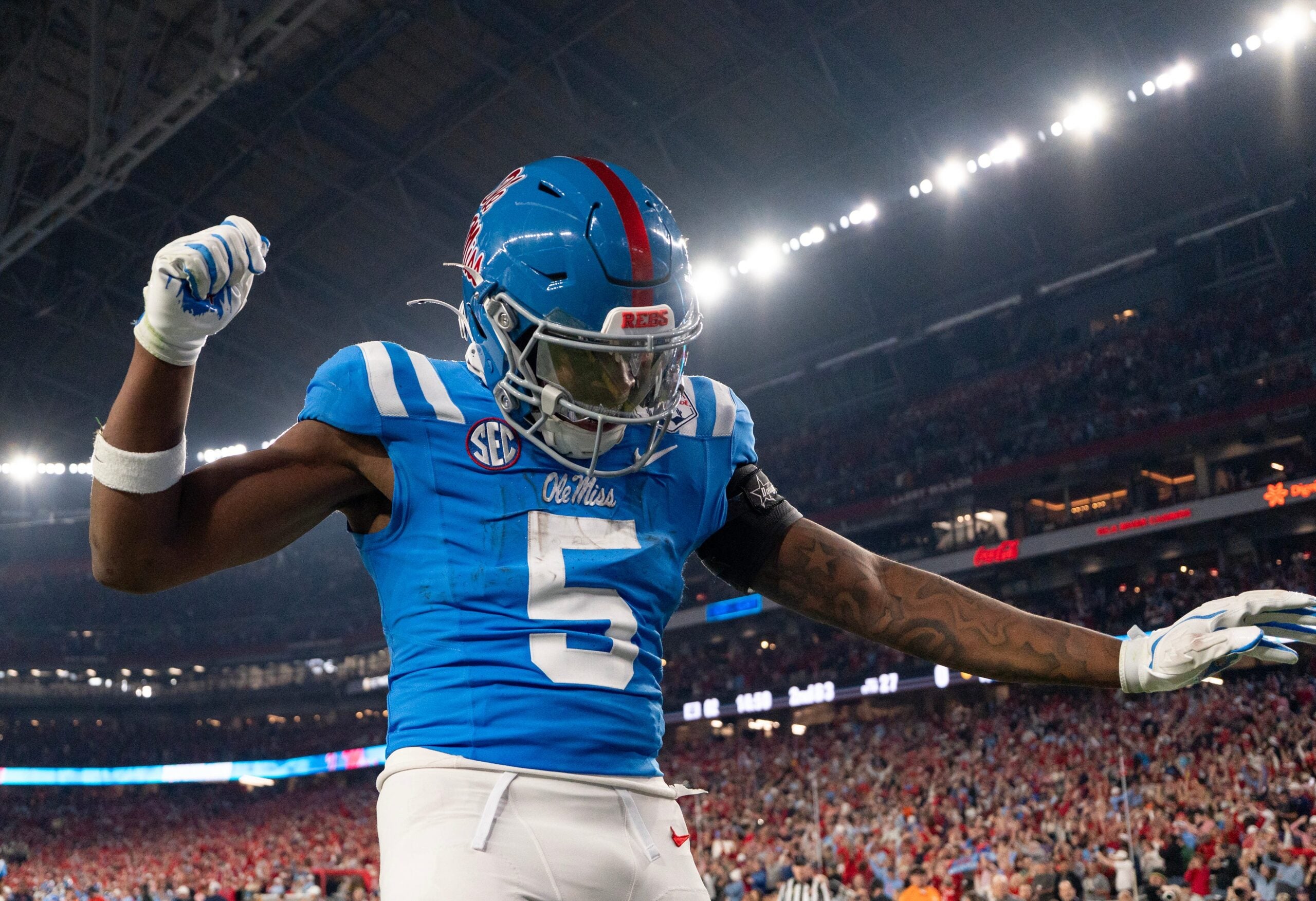
Ole Miss football returns one of the most talented rosters in the SEC heading into the 2026 season, with quarterback Trinidad Chambliss, running back Kewan Lacy, and defensive tackle Will Echoles forming a nucleus capable of carrying the Rebels deep into the college football playoff.
Pete Golding enters his first full season as head coach after directing Ole Miss to a surprising CFP semifinal appearance following Lane Kiffin’s departure to LSU. The Rebels rank 4th nationally in total snaps returning and 6th in starts, giving them an experienced foundation despite significant roster turnover through the transfer portal.
The question isn’t whether this team has enough talent to compete. It does.
The question is whether Golding, who has never managed a program from start to finish as head coach, can navigate the challenges that come with a full offseason of roster construction, in-game management, and identity-building. Joe DeLeone and I discussed the Rebels on a recent episode of Best Pod Available.
Here is everything to know about this Ole Miss team.
Chambliss and Lacy form college football’s most dynamic backfield duo
Everything offensively for the Rebels flows through Chambliss. His ability to extend plays, create off-schedule, and attack downfield made Ole Miss dangerous in moments where they had no business winning last season.
From an NFL Draft perspective, there are Day Two (rounds 2-3) grades on Chambliss around the league right now. He is sub-6-foot despite listed measurements suggesting otherwise, and that will factor into his draft evaluation. But his eyes, his timing, and his athleticism give him a relatively high floor as a prospect. Think a Tyrod Taylor-type NFL career at minimum, where he serves as a serviceable starter or high-end backup for years.
In the college game, though, Chambliss can be Superman. He has the ability to elevate an entire team when things are clicking around him.
Retaining Lacy was arguably the biggest win of Ole Miss’s offseason. After Kiffin left, the number of schools that reached out to Lacy was almost certainly in the high double digits. He went from relative unknown after transferring from Missouri to one of the biggest stars in college football. The combination of Chambliss and Lacy in the backfield creates an RPO and play-action threat that makes life significantly easier for the offensive line.
Speaking of which, the Rebels return the 19th-most experienced offensive line in the country by snaps. There isn’t a top-100 NFL Draft prospect among them, but that doesn’t matter. Think about Indiana last season: Pat Coogan went in the 6th round, Carter Smith projects as a day 2 pick, and the rest of that group was simply solid.
College offensive lines don’t need stars when the backfield features two of the most dynamic playmakers in the sport.
Echoles has top-15 pick upside and could be the best defensive tackle in the SEC
The defensive side of the ball is going to be carried by the defensive line, which returns the 9th-most snaps nationally and 2nd-most at edge. Will Echoles is the headliner, and he deserves every bit of attention he’s receiving.
Echoles moves differently than most interior defensive linemen in college football. His explosiveness, his ability to finish, and his hand usage are all advanced for a player who is still only 20 years old. He reminds me of Tyleik Williams, who went No. 28 overall to the Detroit Lions, but Echols is a better version. A top-20 selection feels achievable.
He has the traits to fight with David Stone (Oklahoma) and Ahmad Moton (Miami) for the title of DT1 in the 2027 NFL Draft class.
Ole Miss was also aggressive in adding massive nose tackle types through the portal, including Michai Boireau from Florida and Jahiem Oatis, which should free Echols to play more 3-technique and generate more disruptive numbers.
Kam Franklin provides a physical, versatile presence at 295 pounds who can kick inside or set the edge. Among the transfers, Blake Purchase from Oregon flashed as a designated pass rusher, and Jonathan Maldonado brings intriguing length at 6-6 with extremely long arms. Joenel Agüero, the former Georgia nickel who is now listed at free safety, is a fascinating wild card worth monitoring.
Suntarine Perkins remains the enigma he’s always been. At 6-1, 216 pounds, he’s too small to rush the edge consistently and hasn’t shown the instincts to play inside linebacker. He’s a very good college football player, but he’s a positionless NFL prospect.
The verdict on Ole Miss’s 2026 ceiling
This team is a playoff contender. Chambliss and Lacy are legitimate Heisman candidates. The defensive line has the potential to be one of the best in the country. But winning a national championship requires more than talent, and the history of first-year head coaches mounting title runs is nearly nonexistent.
The parallel for Golding to Marcus Freeman’s first year at Notre Dame is instructive. Freeman is now considered one of the best coaches in the sport, but that first season featured clock management issues, preparation lapses, and the growing pains inherent to learning on the job. Ole Miss faces a harder schedule than Freeman did in year one.
Golding has more top-10 victories than Brian Kelly does in his entire coaching career. That’s a fun fact, but context matters. Last year’s playoff run was built with Kiffin’s roster. This is Golding’s first full offseason putting his stamp on the program.
The Rebels can win a playoff game or two. They have the talent to make noise when the lights shine brightest. But the coaching factor is what will likely prevent them from winning it all. Playoff contender? Absolutely. National championship winner in 2026? I’m selling that.
