
The Jeffery Simmons trade introduced a major question for the Chicago Bears that won’t be answered anytime soon
The Chicago Bears sent two first-round picks away to land Jeffery Simmons at the trade deadline. That price tag changes the math on this season.


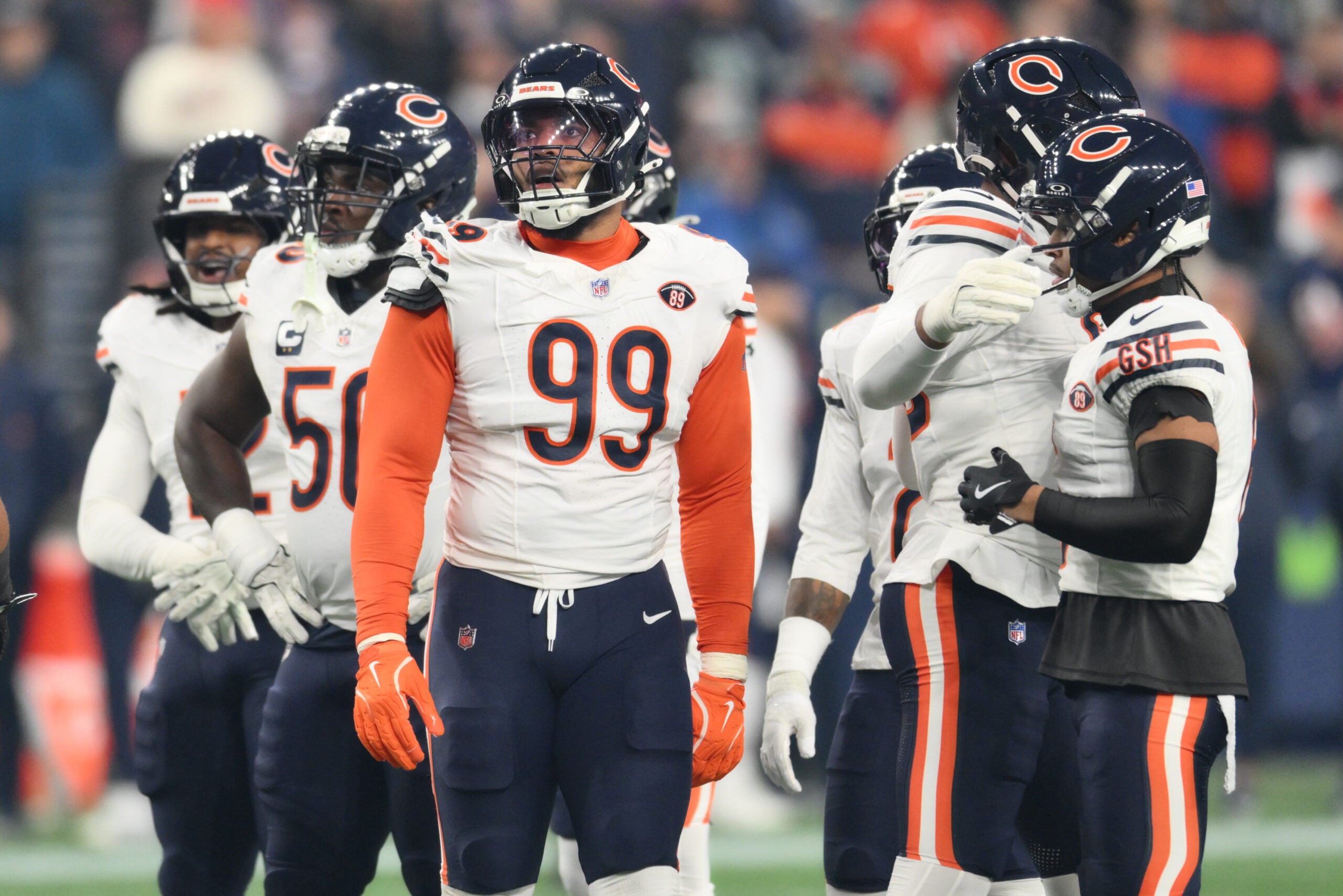
The Chicago Bears made THE move of the NFL trade deadline when they acquired defensive lineman Jeffery Simmons. Simmons unquestionably makes the Bears better and changes the math of playing them as a defense. There is a question worth asking with his acquisition, however.
What does the outcome of this season need to be for the move to be worth it, given the price? That question was recently explored on an episode of 4th & Football, one of A to Z Sports’ original programs.
Does the Chicago Bears’ premium trade require a premium outcome to be considered a success?
“I love Jeffery Simmons. I’d be surprised if that (trade) ends up being a dumpster fire, but you do wonder, do they have to win it all for it to pay off and be justified…Multiple first-round draft choices for defensive players has not been a thing (historically) that’s turned out too hot.”
— Kyle Crabbs, 4th & Football
Chicago believes its championship window is open right now. They should, especially with Simmons in the fray. He gives the Bears a disruptive interior presence who can change protection schemes by himself.
Offenses have to account for him on every snap, which means sliding protection his way and leaving other rushers in more favorable one-on-one matchups. That trickle-down effect is what makes an interior disruptor so valuable. He creates opportunities for the pass rushers around him and strengthens a defense built to survive January.
But consider the other side of the ledger. Future first-round picks are the cheapest way to add premium talent to a roster that will eventually become more expensive. Rookie contracts are where good teams find their value, especially once the bills come due for established stars.
Trading two of them away means Chicago is giving up a pair of potential cost-controlled cornerstones in exchange for a player on a veteran deal. That’s a handsome but understandable tradeoff for a contender. But it means the evaluation of this trade won’t happen in a vacuum. It will happen against the backdrop of what the Bears accomplish with Simmons on the roster.
None of it matters with a championship
If Chicago makes a deep playoff run, this trade will end up being the cost of doing business. If the Bears win the Super Bowl, nobody cares about the picks.
But if they fall short early, or if the roster takes a step backward before those future picks are made, the conversation changes. Those draft slots would then become a lingering reminder of what the team could have added on a rookie scale deal, and every hole on the depth chart would get traced back to this moment.
That’s what makes this deal so compelling to watch. Jeffery Simmons can be a great player for Chicago and still be part of a trade the Bears eventually regret. Those two outcomes aren’t mutually exclusive, and the next few months will go a long way in determining which side of that line this one lands on.

Chicago Bears News