
The first thing the Lions need to know about Green Bay: The Packers are built to attack Detroit’s biggest problem
Green Bay has two very different ways to create hesitation Sunday: get the ball out before Detroit’s pass rush can arrive, then disguise coverage and force Jared Goff to hold it just a little longer.


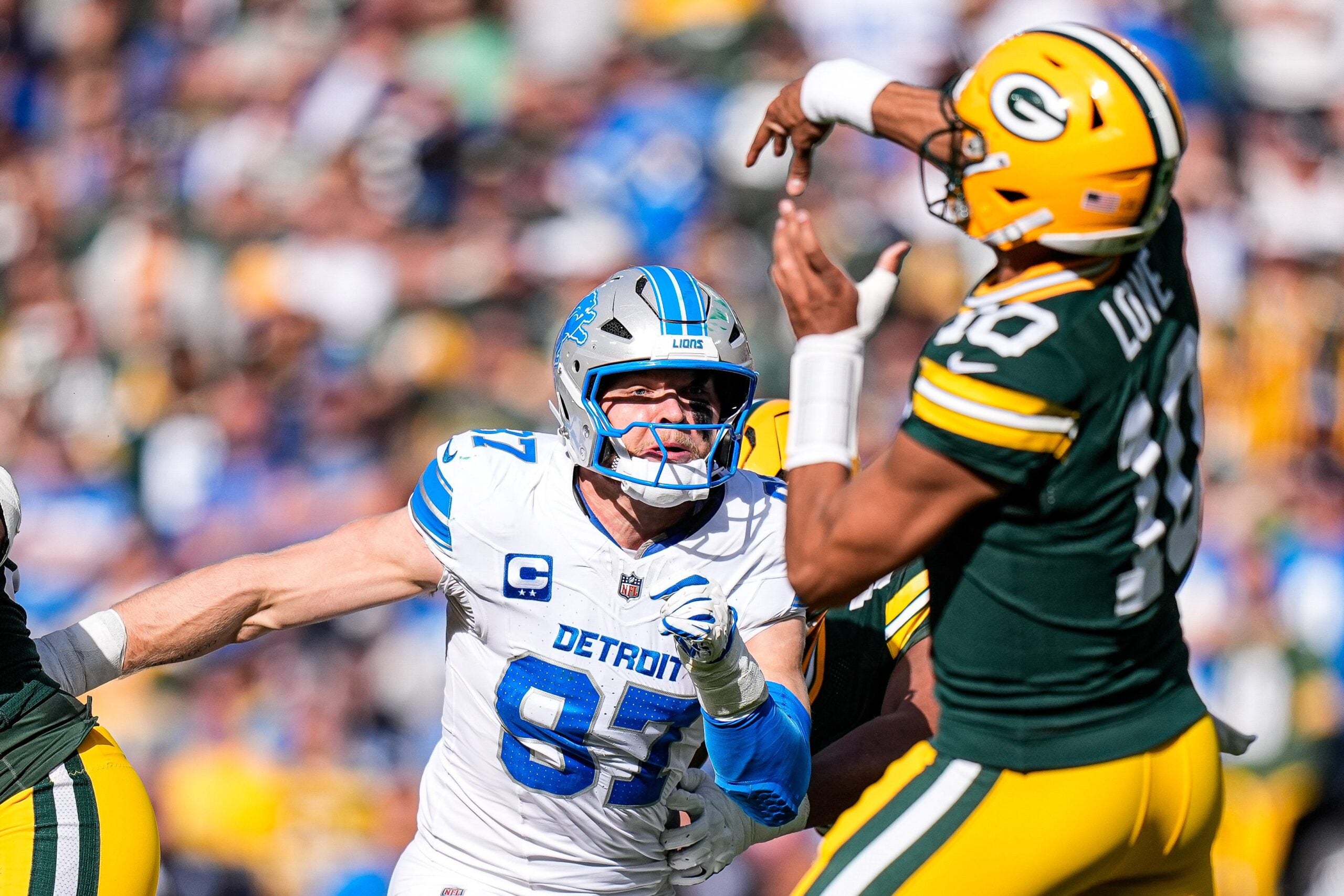
The Detroit Lions are coming off their bye week, and the Green Bay Packers are about to find out whether anything actually got fixed. That test comes on both sides of the ball Sunday.
On offense, Green Bay has every reason to get the ball out of Jordan Love’s hands quickly, the same way the Carolina Panthers did against Detroit before the bye. On defense, the Packers have been making quarterbacks question what they’re seeing. They want Love to have an answer immediately. They want Jared Goff to need another second to find his.
That’s where this matchup gets tricky for the Lions. We’ve spent a lot of time talking about Detroit’s pass rush, its coverage, and whether the problem is the players or the coaching. This game is going to require all of those things to work together. Green Bay has already shown the Lions it can complete passes before the rush has a realistic chance to arrive.
Why the Packers will want the ball out fast
Think back to Thanksgiving last year. Everybody was frustrated that the Lions didn’t sack Love, and I get it. Blame went to Aidan Hutchinson and just about everybody else on the defensive line. You want those guys to get home, and this year they’re doing that.
When Lions coach Dan Campbell went back through the film, though, he explained there were relatively few opportunities where Detroit had enough time to generate pressure in that game. When the Lions did get those chances, they failed to cash in. On a lot of the other plays, the ball was already out, or Detroit disrupted Love and Green Bay still made the play.
The numbers back that up. Love’s overall time to throw in that game was 3.09 seconds. On plays where he wasn’t pressured, it dropped to 2.31 seconds. That split doesn’t tell us how fast every pass came out. However, it does explain why the overall average didn’t capture what Detroit was dealing with. Some plays ended quickly. Others lasted longer because Love moved, extended the play, or had to work through his reads. That matters when you’re deciding whether the defensive line ever had a chance to make an impact.
Now add what Carolina did. Why wouldn’t Packers coach Matt LaFleur explore that approach again? We don’t know Green Bay’s game plan, but Detroit has put enough on film to give the Packers a reason to test it.
The Panthers recently explained how their run-pass options worked against the Lions. Their coaches said Detroit kept presenting space they could use, and Campbell acknowledged it too. Those plays put Detroit’s underneath defenders in conflict. They had a responsibility against the run, but they also had a receiver entering the space they needed to cover. That’s a tough assignment when quarterback Bryce Young can identify the opening and get the ball there immediately.
He did exactly that. Young completed 14 in-breaking passes for 160 yards and a touchdown against the Lions. That’s a lot of production attacking the middle of the field, and it’s why “get more pressure” isn’t a complete answer. If the quarterback knows where he’s going and the throw is there right away, you can win your rush matchup and still never get close enough to affect the play.
That’s the thing to watch with Green Bay again. A 4-yard completion turns into a 14-yard gain because the Packers find space, throw short, and pick up yards after the catch. Detroit needs a coordinated answer. The Panthers moved the ball at will, and the Lions can’t let that happen again.
Even worse, Detroit can’t let Love escape the pocket and extend plays. When he does, Green Bay likes to throw deep. The Packers live by a “get the ball or get the call” approach, hoping to either make the catch or draw defensive pass interference. Nobody does it better. Green Bay draws more DPI flags than any team in the league.
That’s everything the Lions have done wrong on defense this year, and the Packers are built to take advantage of it. If Detroit doesn’t come in with the right answers, this could get ugly.
Jonathan Gannon’s defense wants Goff to hesitate
Flip it around, and Green Bay’s defense is trying to create hesitation of its own. Defensive coordinator Jonathan Gannon has this group disguising what it’s doing, and the Dallas game offered a good example. Safety Evan Williams showed pressure, dropped into coverage, and intercepted Dak Prescott near the goal line.
Think about what that does to a quarterback. Before the snap, you’re accounting for a possible rusher and where the ball can go if he comes. Then that defender drops into the area you wanted to attack. Now you have to recognize the change, get off that answer, and find another one. It’s pressure without an edge rusher ever getting there. The Packers did a ton of it against the Cowboys, and they’ve done more of it this season.
The good news is Detroit has a unique counter. Lions offensive coordinator Drew Petzing was Gannon’s offensive coordinator in Arizona. If anybody understands what Gannon wants to do on defense, it’s Petzing. He should know a lot of disguises are coming. Campbell was asked about it Monday, so he’s aware of it too.
More than anything, the Lions need to have their ducks in a row on defense. It can’t look like last year’s game, and it definitely can’t look like Carolina. This is the first divisional game of the year, and Detroit has to win it. We’ll see what it looks like on the field Sunday.

Detroit Lions News