
Miami Dolphins face massive 2027 NFL Draft decision between a franchise quarterback and a truly generational player
The Miami Dolphins are at the beginning of a massive rebuild. There is a very important 2027 NFL Draft decision that is on the horizon.

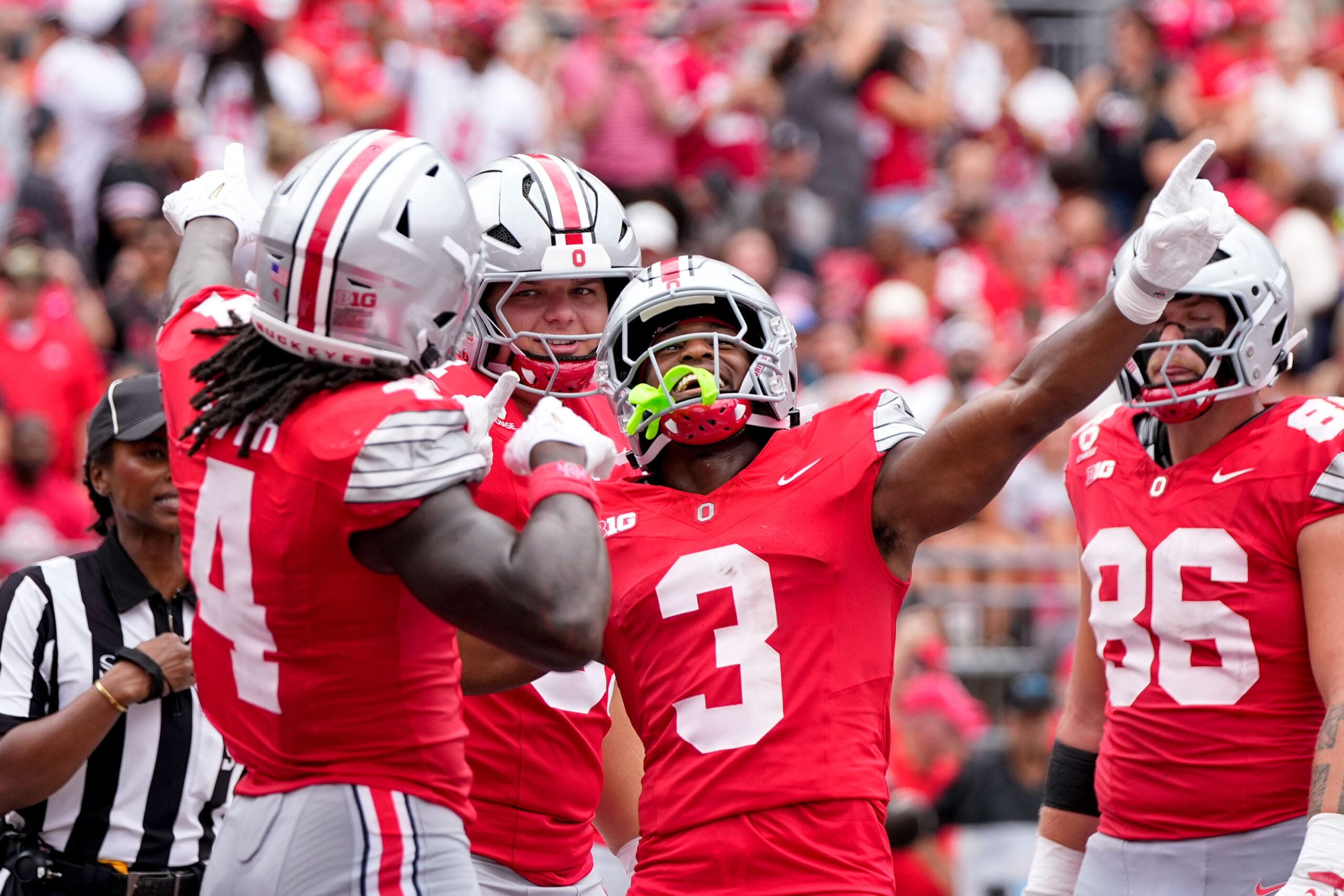
The Miami Dolphins enter the 2026 NFL season with one of the weakest rosters in the NFL, and the 2027 NFL Draft conversation is already heating up.
From the quarterback question surrounding Malik Willis to the generational talent of Ohio State wide receiver Jeremiah Smith, Miami’s path forward depends heavily on what happens over the next several months. On the latest episode of the Best Pod Available podcast, we broke down the Dolphins’ offensive and defensive needs and where the franchise fits into the early first-round picture.
The quarterback question hinges on the wide receiver room
The first thing I want to see is what this young Miami wide receiver room looks like this season. The early mock draft debate has already surfaced the central tension: do you take a potentially very good quarterback prospect, or do you select a generational wide receiver in Jeremiah Smith?
Wide receiver Chris Bell is back healthy after a serious injury, returning quicker than most anticipated. Bell is a player my co-host Joe DeLeone and I have both compared to AJ Brown in the past. He was picked in a slot that allows for that kind of trajectory, where maybe people didn’t know a ton about him and he didn’t get drafted highly, but those in the draft community recognize he has the tools to be a No. 1 wide receiver.
Then there’s Caleb Douglas, who the Dolphins drafted much earlier than expected in the 2026 NFL Draft. Douglas made some waves during the preseason and could sneakily be a key target in this offense.
If Bell and Douglas show legitimate flashes, it could give Miami more ammo to say the skill position players around a young quarterback are better than expected. That might justify taking the plunge on a signal-caller. But if Willis plays reasonably well and the receivers struggle, the formula flips entirely.
At that point, Jeremiah Smith outweighs whatever positives you saw from Willis.
The case for patience at quarterback
Here is the thing about Malik Willis: he is a low investment right now. You’re only paying him just north of $20 million a year for the next two seasons. That is well below market for a starting quarterback.
Unless you’re picking first overall and feel like you have to take a quarterback, if you’re sitting at No. 2 or No. 3, you need to talk yourself out of Jeremiah Smith. We have a rare prospect on the table.
There is also a legitimate question of whether the Miami Dolphins are ready for a young quarterback. This is a full rebuild. If they pick second in a hypothetical where Arch Manning (Texas) goes first and they decide on Oregon’s Dante Moore at No. 2, is it fair to throw a very good quarterback prospect into a dumpster fire?
There is some legitimacy to the argument that taking Smith, being patient with Willis, and circling back for a quarterback in 2028 or 2029 might be better for the long-term rebuild. The 2028 class appears to have some strong options, especially if some 2027 quarterbacks decide to return to school.
The counterpoint is that Miami has the 5th-most cap room heading into 2027 free agency at just under $104 million. The Las Vegas Raiders followed a similar blueprint, spending money to boost their offensive line by making Tyler Linderbaum an offer he couldn’t refuse. If the Dolphins take a similar approach and the young offensive pieces develop, the infrastructure for a rookie quarterback could materialize faster than people think.
The offensive line might not be as bad as you think
I’m not worried about the interior of the offensive line for Miami. Center Aaron Brewer played tremendously well last year. Jonah Savaiinaea reportedly has been a lot more natural after switching from left guard to right guard. Kadyn Proctor is an easy evaluation inside. I
did not like him as a tackle, but I like him a lot as a guard, and if he lives up to his first-round billing, this interior could be solid.
Patrick Paul played well in his second year after an uneven rookie season. The biggest question is at right tackle, where Austin Jackson has not been very good and has dealt with injuries. Maybe Miami enters the offensive tackle conversation to continue building, but in a vacuum, this is a decent offensive line with some upside.
The defense needs significant work
Miami spent a lot of draft picks on defense, particularly at linebacker, but the edge room stands out as a glaring weakness. Chop Robinson has been exactly what I thought he was: disruptive at times as a pass rusher, but he doesn’t finish. He’s not impactful consistently enough.
Beyond Robinson, you’re bargain bin hunting. Josh Uche, Malik Herring, Robert Beal Jr. Herring was claimed off waivers from the Tennessee Titans to come in and be a top-4 edge rusher. That tells you everything about where this group stands.
The Colin Simmons (Texas) and Dylan Stewart (South Carolina) conversation could get interesting if the Dolphins are picking closer to 10 than to 1. Cornerback Chris Johnson was a first-round investment, and JuJu Brents is an intriguing offseason acquisition despite his struggles in Indianapolis. Safety is ugly for Miami, but no safety in this class warrants a top-10 pick for a team with this many holes elsewhere.
A lot of work needs to be done for the Miami Dolphins in the 2027 NFL Draft. We will be paying close attention to what happens this season as the picture becomes clearer.
