
Vikings trading for Kirk Cousins is due to a collective of decisions by Kevin O’Connell, and it could lead to multiple outcomes
Minnesota Vikings general manager Nolan Teasley took a big swing to get Kirk Cousins, and it’s due to a multitude of issues.


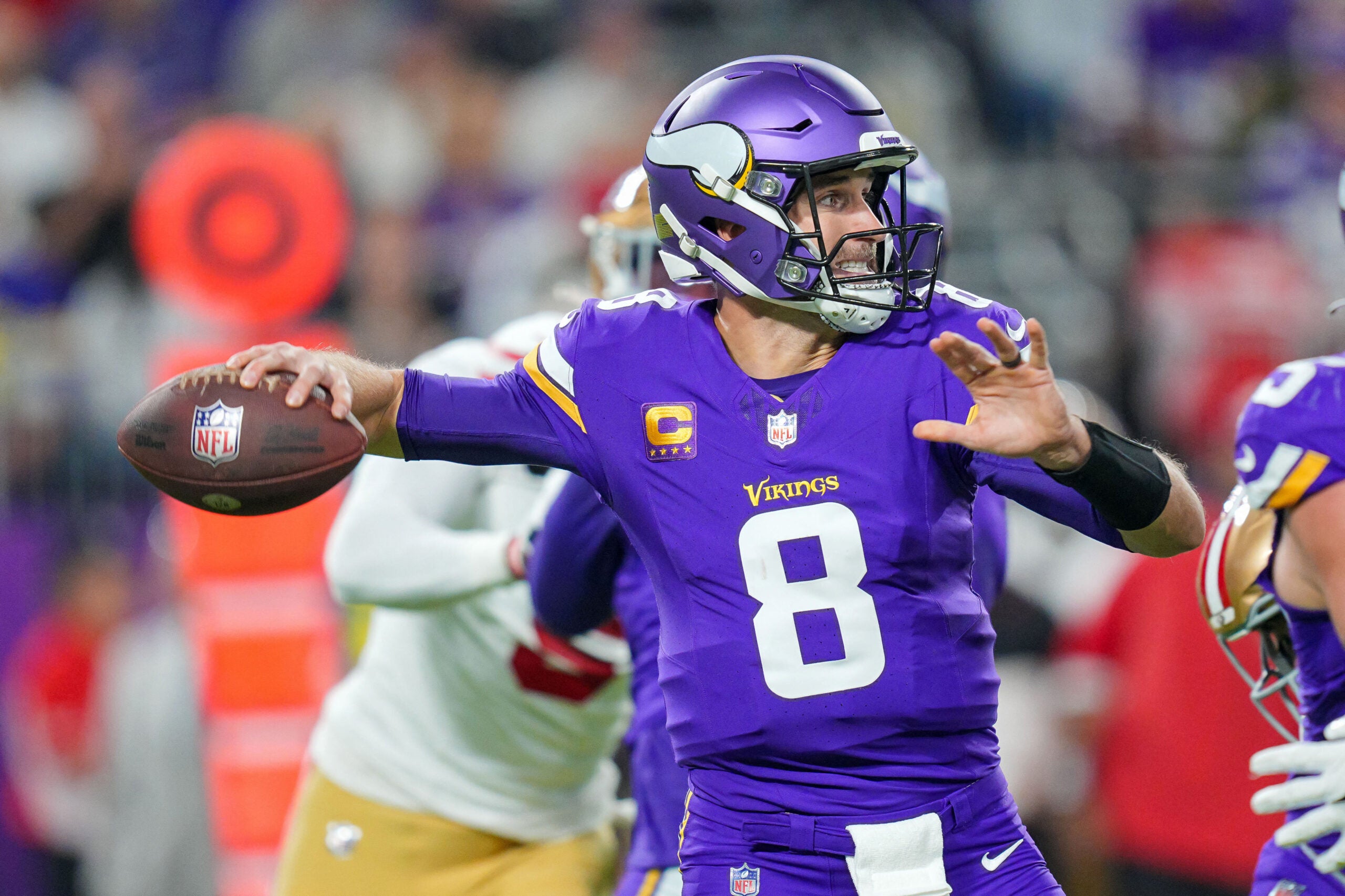
At the trade deadline, the Minnesota Vikings traded a third-round pick for quarterback Kirk Cousins out of pure desperation. It was still the right move. The Vikings sit at 6-2 with a historic defense, and the offense has given that unit almost nothing to work with.
This wasn’t the trade deadline move anyone expected. Kyler Murray was supposed to keep developing as the starter, and that hasn’t happened. Right now, Murray is dealing with a hamstring injury, and Carson Wentz had one of the worst games in Vikings history Monday night. The lack of success prompted general manager Nolan Teasley to act swiftly.
Unfortunately, Minnesota has put itself in this spot, and it traces back to how Vikings head coach Kevin O’Connell built his quarterback room.
How the Minnesota Vikings ended up here
Each decision by O’Connell made sense on its own. The Vikings moved on from Cousins after he tore his Achilles tendon and wanted a big contract, because they knew his run as a high-level quarterback was ending. Then, they drafted J.J. McCarthy 10th overall and signed Sam Darnold as a bridge quarterback.
Then McCarthy tore his meniscus, and Darnold got a full year as the starter. He went 14-3 and entered the MVP conversation before two brutal games to close the season. Minnesota offered him a contract, as well as Daniel Jones, whom they brought in during the season, which helped land an extra compensatory pick when Darnold left.
The problem is that the Vikings didn’t add anyone capable of competing with McCarthy going into the 2025 season. They signed Carson Wentz in September, and he ended up starting five games that didn’t go very well. McCarthy started 10 games before Minnesota moved on from him, and things might be different if they had a quality bridge player. That left Murray and Wentz for this season, and the Vikings now don’t trust either one to run the offense.
Meanwhile, the defense held the Buffalo Bills to 4.3 yards per play across 79 plays. Wasting a unit like that isn’t an option, and Teasley knew it.
What Kirk Cousins brings to the table
For starters, Cousins is 38 years old. He isn’t a long-term answer. What he does provide is stable, competent quarterback play, and the Vikings have none of that right now.
The offensive numbers are ugly. Minnesota ranks 31st in EPA per play, 27th in EPA per dropback, 32nd in EPA per rush, and 29th in success rate. Somehow, the Vikings are 23rd in explosive play rate. You can’t function with an offense that can’t move the football.
Cousins has been solid this season. He isn’t great, but he’s solid per Fantasy Points Data:
- EPA per dropback: 0.113 (13th)
- CPOE: 0.7 (26th)
- Yards per attempt: 7.43 (13th)
- Average net yards per attempt: 7.10 (10th)
- Turnover-worthy throws rate: 3.2% (19th)
- Pressure-to-sack rate: 14.1 percent (eighth)
- Time to throw: 2.60 seconds (19th)
That pressure-to-sack rate stands out above the rest. Anything under 20 percent is a good number, and Cousins being good in this area is a nice surprise, especially since he’s getting older and less mobile. Time to throw can be misleading depending on context, but the overall picture is clear. Cousins can hit 10-yard in-breaking routes and string together completions, and that adds up.
Then there’s continuity, something Wentz and Murray never had with these receivers. Cousins spent three and a half years throwing to wide receiver Justin Jefferson, the best receiver in football. That rapport and trust should show up quickly.
Kevin O’Connell’s seat is getting warmer
The bigger question is what this means for O’Connell. Parts of the fan base are already calling for his firing. He’s 49-27 as a head coach, has posted a five-game winning streak in all five of his seasons, and just finished an 11-game win streak. He has been fantastic in a lot of ways.
The offense, though, hasn’t been great, especially over the last year and a half. Minnesota was terrible on offense during McCarthy’s year, and McCarthy struggled for most of his tenure. How much of that falls on O’Connell? Or was he right to move on from McCarthy because of the maturity issues that have surfaced? It’s a fair question to ask.
What frustrates me is that O’Connell didn’t fail to adapt to Murray and McCarthy. He would adapt, build momentum by tailoring the offense to them, and then revert to force-feeding what he wanted to run. You have to lean into what your quarterbacks do well, and he hasn’t done that nearly enough.
That was on display against the Bills. O’Connell kept asking Wentz to throw, expecting different results each time. It produced the Vikings’ worst CPOE since 1999 and their third-worst EPA per play, with some outlets placing it around negative one per play.
Add defensive coordinator Brian Flores to the mix, who has massive buy-in throughout the building, and the situation gets complicated. If O’Connell doesn’t make a run, his departure after the season suddenly feels like a real possibility.
A third-round pick is a steep price. Still, Minnesota had to give this team, and this defense, an offense that can function. If it doesn’t work with Cousins, don’t be surprised if O’Connell is the one who pays for it.

