















































Matt LaFleur and Brian Gutekunst have the Packers in a difficult position as one familiar criticism refuses to disappear
Green Bay extended its head coach and general manager during the offseason, and the problem now goes deeper than one bad stretch of football.


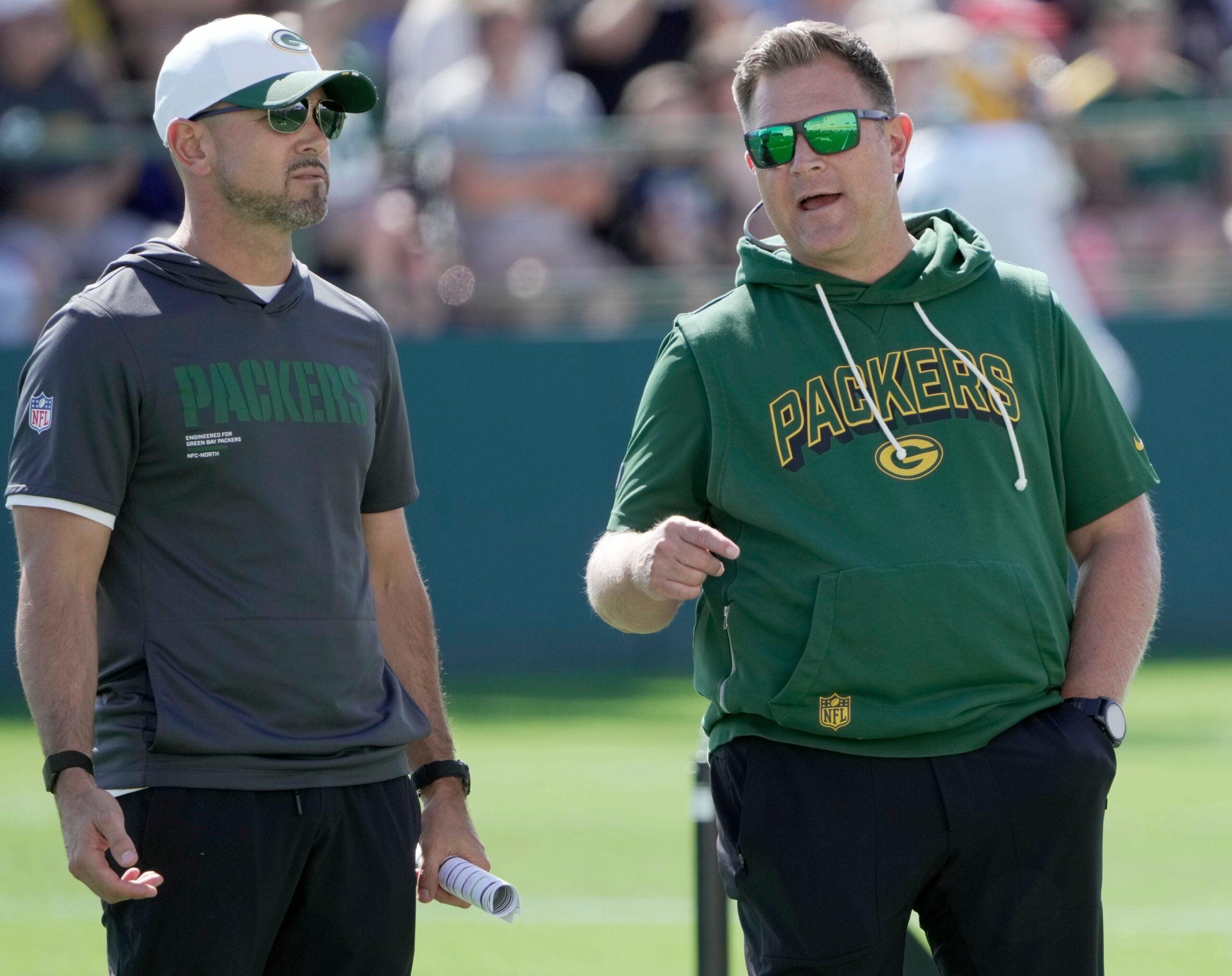
The Green Bay Packers extended general manager Brian Gutekunst and head coach Matt LaFleur during the offseason. Nonetheless, a feeling around this team is hard to overcome, and it has nothing to do with whether the Packers have been a good team. They have. The question is whether this leadership structure can make them a great one.
Under LaFleur, Green Bay has made the playoffs in six of seven seasons. The only exception was 2022, Aaron Rodgers’ final season with the team. The Packers also reached the postseason in all three years with Jordan Love as the starter, which is impressive considering how much turnover the roster went through.
At the same time, Green Bay hasn’t won the NFC North since 2021. Every other team in the division has won it since. That encapsulates what the Packers have been: good, but never quite great or truly competitive at the top of the NFC. The best version of the team in that span was probably 2023, Love’s first year as the starter, when Green Bay reached the divisional round and gave the San Francisco 49ers everything they could handle.
The bigger problem is that the Packers seem to have exhausted their resources with this version of the roster. It’s hard to see a path from good to great.
Matt LaFleur’s late-game problem
President and CEO Ed Policy isn’t going anywhere, so the conversation has to center on LaFleur and Gutekunst. Those are the two pieces Green Bay could realistically change, even though any extreme move is unlikely at this point.
Most of the criticism around LaFleur comes from how the Packers perform late in games, especially in the big ones. Last season ended with several fourth-quarter blunders and second-half collapses, most notably against the Chicago Bears in the playoffs. The same pattern has shown up in big games this year. Against the Minnesota Vikings and the Los Angeles Rams, two key games in the playoff hunt, the offense couldn’t operate in the second half at all.
LaFleur hasn’t lost the locker room. His message still resonates, and that’s a positive. But his decision-making has been inconsistent, including kicking a field goal on fourth-and-1 against the Rams.
His biggest issue might be how he built the offensive coaching staff. Offensive coordinator Adam Stenavich and offensive line coach Luke Butkus have held their current roles since 2022, and the results haven’t followed. It’s hard to judge a staff entirely fairly from the outside. Still, Green Bay hasn’t been willing to bring in new voices who could extract fresh ideas and help LaFleur.
The defensive side shows what change can do. Adding Jonathan Gannon and Bobby Babich to the staff has worked. Special teams is a different story: the Packers have had four special teams coordinators under LaFleur, and nothing has stuck. That’s more of an organizational failure in how the roster is built for special teams than a coaching problem alone with Cam Achord.
LaFleur remains one of the top offensive minds in football. He just hasn’t consistently put the Packers in position to win big games lately. Self-inflicted mistakes are part of the team’s identity.
Brian Gutekunst and the strategy question
With Gutekunst, the issue is his profile. He’s a scout, and the modern NFL demands strategists in the general manager chair. The background can be scouting, finance, or analytics, but the job requires a strategic mindset. Howie Roseman is probably the best example of that.
Green Bay’s process problems show up in several places. Paying close to $20 million a year to Aaron Banks, an average guard, is a strategy problem rather than a talent evaluation issue. The Packers also spent first-round picks on non-premium positions with Quay Walker, and Devonte Wyatt was an older prospect.
More than that, Green Bay has leaned too heavily on raw developmental players early in the draft. Lukas Van Ness, Jordan Morgan, Walker, and Rashan Gary fit that description. They weren’t bad players. The problem is the timing. Since the 2011 CBA, roster turnover is so high that teams need production from players on rookie contracts, where the surplus value lives.
When those players finally become good in Years 3 or 4, it’s time to pay them close to top-of-the-market money. The Packers never capture the surplus value. Several extensions, including Wyatt’s, haven’t paid off, whether because of injuries or results on the field.
Later-round picks like Evan Williams and Tucker Kraft are exceptions. Christian Watson is too, to a degree, though he was drafted in 2022 and this is the first season he has broken out as a massive contributor. Green Bay had to make a short-term investment in him and then a long-term one on top of that.
The Packer Way, with its emphasis on development and sometimes exaggerated patience with players and coaches, hasn’t aged well under the current NFL financial reality.
