
Regrading all 8 Packers trades of 2026 shows where Brian Gutekunst found value and where Green Bay paid too much
General manager Brian Gutekunst has worked the trade market far more than usual this year, and Green Bay still has one more chance before Tuesday’s deadline.


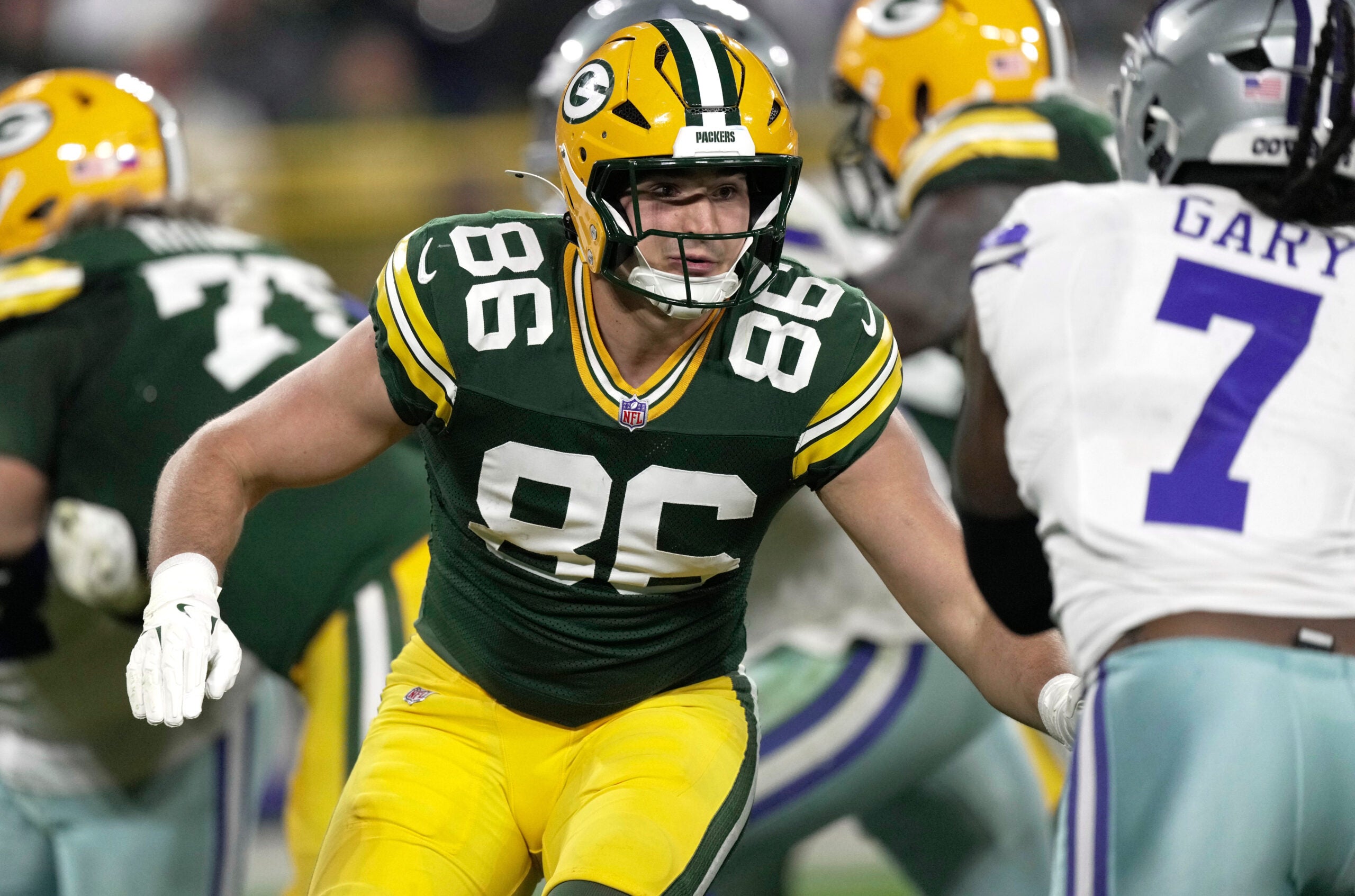
Green Bay Packers general manager Brian Gutekunst isn’t typically one of the most active traders in the NFL. In 2026, though, the Packers have been busy in the trade market, from the start of the league year through the draft and the roster cuts deadline.
With the trade deadline set for Tuesday, it’s a good time to regrade every trade Gutekunst has made this year. So, let’s discuss them in chronological order.
March: Strong start with two moves
Green Bay executed two trades on March 11, the first day of the league year. The first one sent edge defender Rashan Gary to the Dallas Cowboys for a 2027 fourth-round pick. Gary later restructured his contract with Dallas, taking a real paycut.
At the time of the trade, however, he was set to make $19.5 million in 2026 with a $28.021 million cap hit. By moving on, the Packers absorbed $17.042 million in dead money but opened $10.978 million in cap room in 2026 and $31.021 million in 2027. Because it was a trade and not a release, Green Bay couldn’t use the post-June 1 designation to spread that dead money.
Gary has faced criticism for his performance in Dallas. Meanwhile, the Packers got more production from players already on the roster, such as Lukas Van Ness, Brenton Cox, and rookie fourth-rounder Dani Dennis-Sutton. Gutekunst turned a player the team would probably have released anyway into a fourth-rounder in a strong 2027 draft class. Grade: A+
The second deal was a rare player-for-player swap without draft compensation. Green Bay acquired off-ball linebacker Zaire Franklin from the Indianapolis Colts for defensive tackle Colby Wooden. The Packers adjusted Franklin’s contract and gave him a raise after the trade, which was a strange detail. Still, Franklin became a starting linebacker, solid against the run and a smart veteran presence. He suffered a shin injury, but it’s a short-term issue and he should be back soon.
The Colts waived Wooden at final roster cuts, and the New Orleans Saints claimed him. Green Bay got a starter, and Indianapolis got a player who couldn’t make its 53-man roster. Between the contract adjustment and Franklin not being a high-level player, it falls short of a perfect mark. Grade: A-
April: A Wicks trade with mixed returns
Ahead of the draft, the Packers sent wide receiver Dontayvion Wicks to the Philadelphia Eagles for a 2026 fifth-round pick and a 2027 sixth-rounder. Green Bay used the fifth-round pick on offensive lineman Jager Burton.
In terms of value, two picks for a former fifth-round selection was fair. The question was whether the Packers needed to trade Wicks at all. He was in the final year of his rookie deal, and Green Bay had already lost Romeo Doubs in free agency.
That concern proved valid. Jayden Reed was lost for the season in Week 2. Matthew Golden and Christian Watson are producing at an extremely high level, but beyond them, Savion Williams is the only true wide receiver with a somewhat meaningful offensive role. Wicks, who has dealt with some injury issues, has 19 receptions for 284 yards and a touchdown in six games with Philadelphia. That’s acceptable production for a WR3.
The Eagles gave Wicks a one-year extension. Green Bay, though, could have let him play out his rookie contract and still recouped a compensatory pick in 2028. Burton’s early returns haven’t been good, but the 2027 sixth-rounder remains. The process was fine, but the results haven’t followed to the same extent. Grade: C
Draft weekend: A costly climb and a bad bet
Green Bay sent the 84th overall pick plus the 160th overall pick to the Tampa Bay Buccaneers to move up to No. 77 and select defensive tackle Chris McClellan. According to the Fitzgerald-Spielberger NFL Draft Trade Value Chart, the Packers gave up 1,183 points and received 799. That 384-point gap equals a fifth-round pick, a steep price to move up seven spots.
McClellan has played almost half of the Packers’ defensive snaps, and he has been a viable, if not spectacular, piece of the rotation. That matters even more after Javon Hargrave suffered a season-ending ruptured Achilles. He’s contributing about as well as a third-rounder should, but the cost was significant. Grade: B-
Late in the draft, the Packers sent their two seventh-round picks, Nos. 236 and 255, to the Seattle Seahawks to move up to No. 216 in the sixth round. The difference is roughly a late seventh-rounder, and players in that range often end up available as undrafted free agents. The trade itself was fine.
The problem is the selection: kicker Trey Smack. Drafting kickers is bad process. NFL teams generally struggle to scout them, kickers must start right away, and no team can carry two on the 53-man roster to develop one. Smack has the most misses of any kicker in the league, which included game-deciding misses against the Detroit Lions. Both the process and the early results have been flat out bad. Grade: D
Roster cuts: One question, a miss, and a hidden gem
Gutekunst made three trades at the Aug. 30 roster cuts deadline. First, he sent quarterback Kyle McCord to the Miami Dolphins for a 2028 sixth-round pick. McCord had a fantastic preseason and outplayed Tyrod Taylor, Jordan Love’s backup, who is on a one-year deal. McCord could have been the long-term No. 2.
However, keeping him would have meant carrying three quarterbacks on the 53-man roster, which Green Bay didn’t want, or releasing Taylor. Love hasn’t missed time, so the move hasn’t mattered, even after the Baltimore Ravens signed practice squad quarterback Kedon Slovis to their active roster and forced the Packers to add Cam Miller. Grade: B-
The bigger move in terms of draft capital sent a 2028 sixth-round pick to the Pittsburgh Steelers for running back Kaleb Johnson, a former third-round pick under contract through 2028. Green Bay needed him, and he hasn’t been that reliable. However, he finally showed what he’s capable of doing against the New England Patriots.
Johnson has had 42 carries for 172 yards (4.1 per attempt), one reception for 10 yards, and two fumbles. Pass protection has been somewhat an issue. Since Josh Jacobs returned from the Commissioner’s Exempt List, Johnson had been a healthy scratch behind MarShawn Lloyd and Pierre Strong, but Lloyd’s knee injury opened the door for his potential resurgence. Grade: B–
The final deal sent a 2028 seventh-round pick to the Los Angeles Rams for tight end Mark Redman. The Rams had a surplus after spending consecutive second-round picks on Terrance Ferguson and Max Klare, with Tyler Higbee, Colby Parkinson, and Davis Allen also on the roster. Redman spent his rookie season on their practice squad.
He has only two receptions for 29 yards, but blocking is exactly why Green Bay acquired him. Redman is executing the role John FitzPatrick had last year, likely at a higher level, while adding special teams value. Behind Tucker Kraft, he has helped stabilize a position that gave the Packers plenty of issues. Grade: A-
