
Packers Trade Deadline Notes: Green Bay’s approach reveals how Gutekunst views the team’s biggest needs
Green Bay called about linemen and running backs ahead of the deadline, and the reasons nothing happened go beyond price.


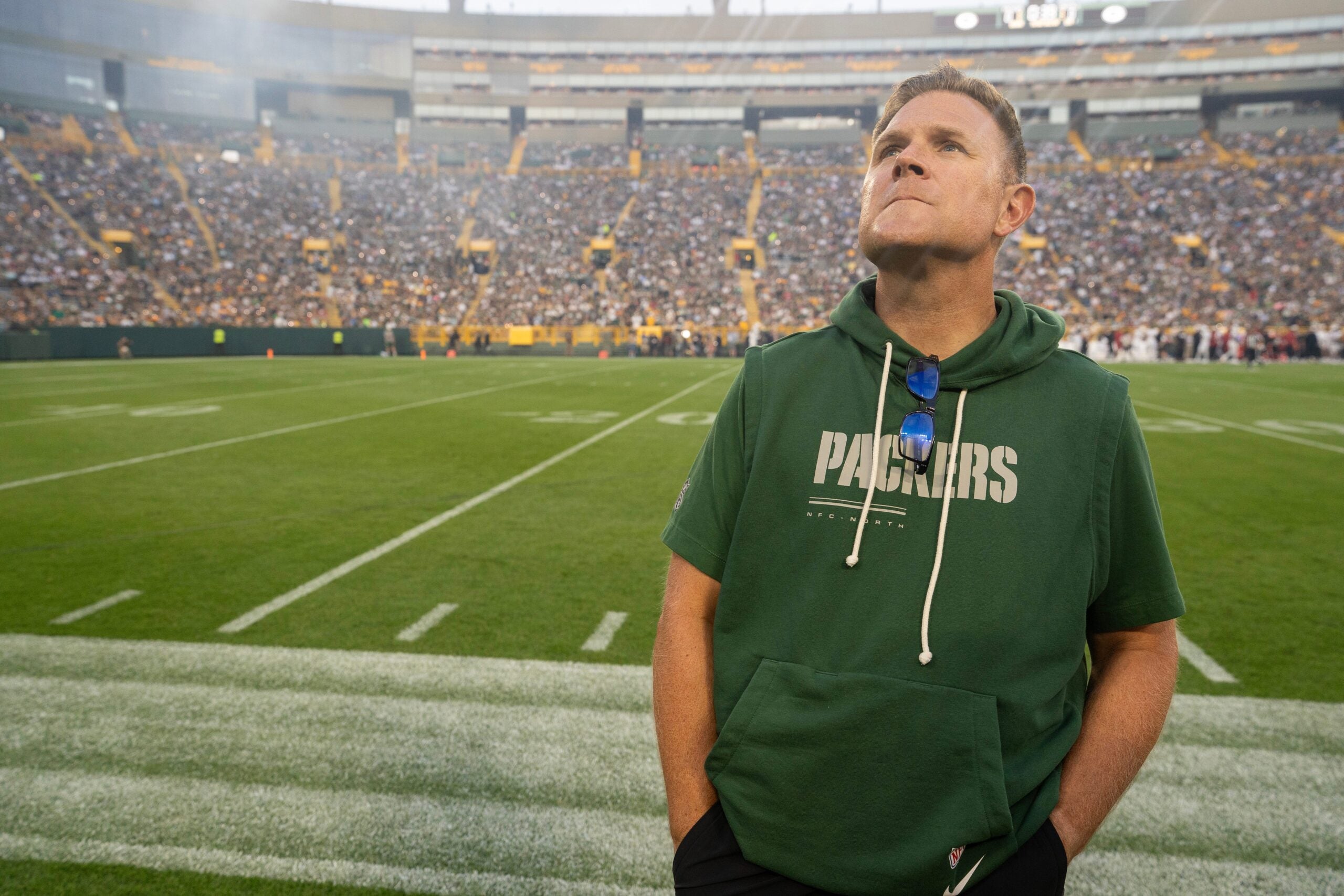
It was trade deadline day, and the one Green Bay Packers’ roster move of Tuesday was adding undrafted rookie tight end Kenny Fletcher Jr. to the practice squad. Could this outcome have been more Packers-y?
The Green Bay Packers stood pat at the NFL trade deadline once again. General manager Brian Gutekunst made calls, as he usually does, but Green Bay didn’t acquire a single player before the deadline passed.
It wasn’t necessarily a surprise. The Packers haven’t traded for a player ahead of the deadline since 2010, when Ted Thompson was still the general manager. At the time, Green Bay acquired safety Anthony Smith, who served as a backup defensive back.
“When you trade a high pick for a veteran player, you’re trading a young, really good contract for a player who’s proven, but probably expensive, so you’re giving up a pick and salary cap space,” Gutekunst said after the 2024 season. “You gotta weigh that. If it’s the right player, if you feel he can be a dynamic player that can change your football team, you gotta consider that, because there’s not many of those guys out there. But you also have to understand what you’re giving up.”
The calls the Packers made still reveal how the front office views the roster, nonetheless. Green Bay’s interest centered on three areas: the offensive line, the defensive line, and the running back position.
The calls Green Bay made
The Packers checked in with the Indianapolis Colts on multiple players. They asked about guard Quenton Nelson, who ended up being traded to the Seattle Seahawks. Green Bay also asked about defensive tackle DeForest Buckner, who went to the San Francisco 49ers for a fourth-round pick. They also circled around tackle Matt Goncalves, whom Indianapolis decided to keep.
The Packers also had interest in Colts running back Jonathan Taylor. Rumors suggested they also considered Baltimore Ravens’ Derrick Henry. Any running back deal had to make sense on a long-term basis, and Taylor, at 27 years old, fit that description better than most. However, Indianapolis was looking for first-round value. That was simply too much for Green Bay, especially at a non-premium position like running back.
Draft capital or salary, never both
The problem for the Packers was the combination of trade compensation and salary for older players. Gutekunst is careful with that mix, and it explains why he rarely trades for veterans who require significant draft capital.
The Micah Parsons trade is the exception, for obvious reasons. Green Bay viewed Parsons as a generational, transformational talent and truly wanted him. Outside of that deal, the Packers have never traded anything more than a sixth-round pick under Gutekunst. That pattern continued this year.
Green Bay isn’t against minor moves. The Packers traded a sixth-round pick for running back Kaleb Johnson and a seventh-rounder in another small deal for tight end Mark Redman. They even acquired linebacker Zaire Franklin, a fairly expensive veteran at $9 million a year. But the Franklin trade didn’t cost any draft compensation, since the Packers sent only defensive tackle Colby Wooden to the Colts.
That’s the formula, it’s always one thing or the other. Green Bay will absorb salary when the draft cost is minimal, or spend a late-round pick.
The deadline makes that formula even harder to fit. By most metrics, this is the time of year when teams overpay the most. Contenders want to make a run, and they pay a premium for half a season of a player, often on an expiring deal. For the acquiring team, the long-term value is hard to find.
Cap concerns and internal answers
The salary cap was another obstacle. Green Bay has around $6 million in cap space but only $4.3 million in effective space, considering the inevitable roster management moves required throughout the rest of the season. The only realistic restructure candidate was quarterback Jordan Love, and that move would have opened only $3.4 million.
The future isn’t much easier. Green Bay faces a complicated cap situation over the next few years, largely because several young defenders are in line for extensions. That group includes safeties Evan Williams, Javon Bullard, and Xavier McKinney, linebacker Edgerrin Cooper, and potentially edge defender Lukas Van Ness. Saving space for those deals matters more than adding a rental.
The Packers also believe they can manage each need internally. On the offensive line, Kevin Zeitler played well against the New England Patriots, and Mekhi Becton played his first few snaps in that game too. A player like Nelson would add value, but the gap in performance didn’t justify the salary and draft cost.
At running back, Kaleb Johnson also played well against the Patriots. The team believes in him as a long-term piece because he’s only 23 years old. On the defensive line, the Packers lost Javon Hargrave for the season. At the same time, Karl Brooks has stepped up and played at a high level.
Green Bay understood the market and explored it. But all three positions it considered are spots the Packers feel they can handle with the pieces already on the roster.
